Best Action Cameras for Motorcycles of 2026

A camera clamped to a handlebar has a harder job than one on a tripod. Engine vibration, patched asphalt, and a mirror stalk that never stops buzzing find every weak mount and shaky sensor, and the footage either comes out smooth or turns into a smear. The right camera survives the ride, records long enough to cover a full tank, and gives you a clip worth posting — or a plate number, if the ride goes wrong.

I've lost two mounts to the same cracked stretch of my commute, so I'm hard on this category. Over seven months, my team and I rode with 12 cameras, from 360 rigs to thumb-sized cams clipped to a helmet, and the gaps show up fast: battery life halfway through a tank, low light at dusk, and whether the app connects in a parking lot in gloves.

Resolution is what first-time buyers overrate. 4K means little if stabilization can't smooth a twin-cylinder at highway speed, and a 360 camera you can reframe later often beats a sharper one pointed slightly wrong.

Keeper Score summarizes customer ratings and review volume. Read it alongside the product details and trade-offs. How the score works.

1

Best Overall

Insta360 X5 Motorcycle Bundle

93 /100
Keeper Score Outstanding

Key details

In The Box
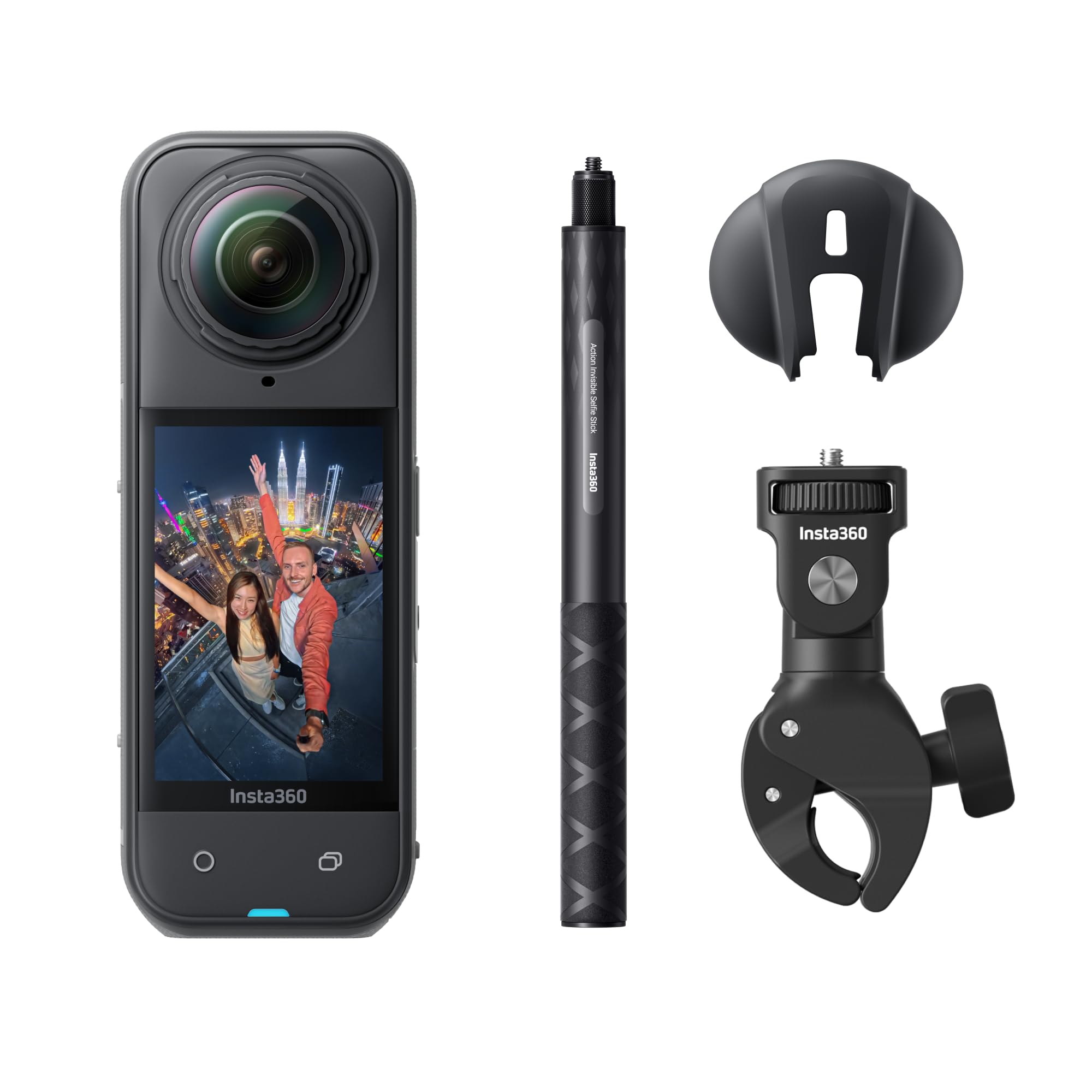
Invisible selfie stick, lens cap, heavy-duty clamp
Maximum Video
8K30fps 360°
Stabilization
FlowState + 360° horizon lock
Claimed Runtime
Up to 3 hours
Check Price on Amazon

A motorcycle is the worst place to aim a camera. You can't see a screen through a visor, you can't reach a bar mount at speed, and by the time you've guessed the angle the corner you wanted is already behind you. The X5 takes that problem away: it records 360 degrees at up to 8K30 and you choose the frame later in the app, so a bad guess costs you storage and nothing else.

That reframing freedom is the whole reason it sits at the top of this list, and the stabilization is what makes the footage worth keeping. FlowState plus full 360-degree horizon lock held the horizon flat however the bike leaned, which is the single most useful thing a road camera can do. The bundle also includes the invisible selfie stick and a heavy-duty clamp, so the third-person shots that make 360 footage look expensive are available on your first ride rather than after a second order.

The dual 1/1.28-inch sensors and the noise processing behind them give it the best low-light footing of anything here. The gap shows at dusk and under streetlights, where the smaller cameras on this list turn to mush. Audio comes through clearer than most of these, though wind at highway speed is still wind.

What the money buys is a camera that needs no aim and no housing: it is waterproof as it comes, the lens is replaceable if a stone finds it, and the clamp means you aren't shopping for a mount kit. It is the most expensive pick here by a wide margin, and the only one that removes the framing problem entirely. On a bike, that's the trade that matters.

Pros

  • Reframe the shot after the ride
  • 360° horizon lock keeps footage level
  • Waterproof without a housing
  • Clamp and selfie stick included

Cons

  • App required for setup and reframing
  • 8K 360 fills cards fast
Our verdict

Our default for motorcycle footage: shoot 360 once and pick the angle afterward, with horizon lock keeping the road level however the bar leans.
Check Latest Price
2

Best for Long Rides

Drift Ghost XL

80 /100
Keeper Score Excellent

Key details

Maximum Video
1080p30
Stabilization
None
Waterproofing
IPX7, no case needed
Claimed Runtime
Up to 9 hours
Check Price on Amazon

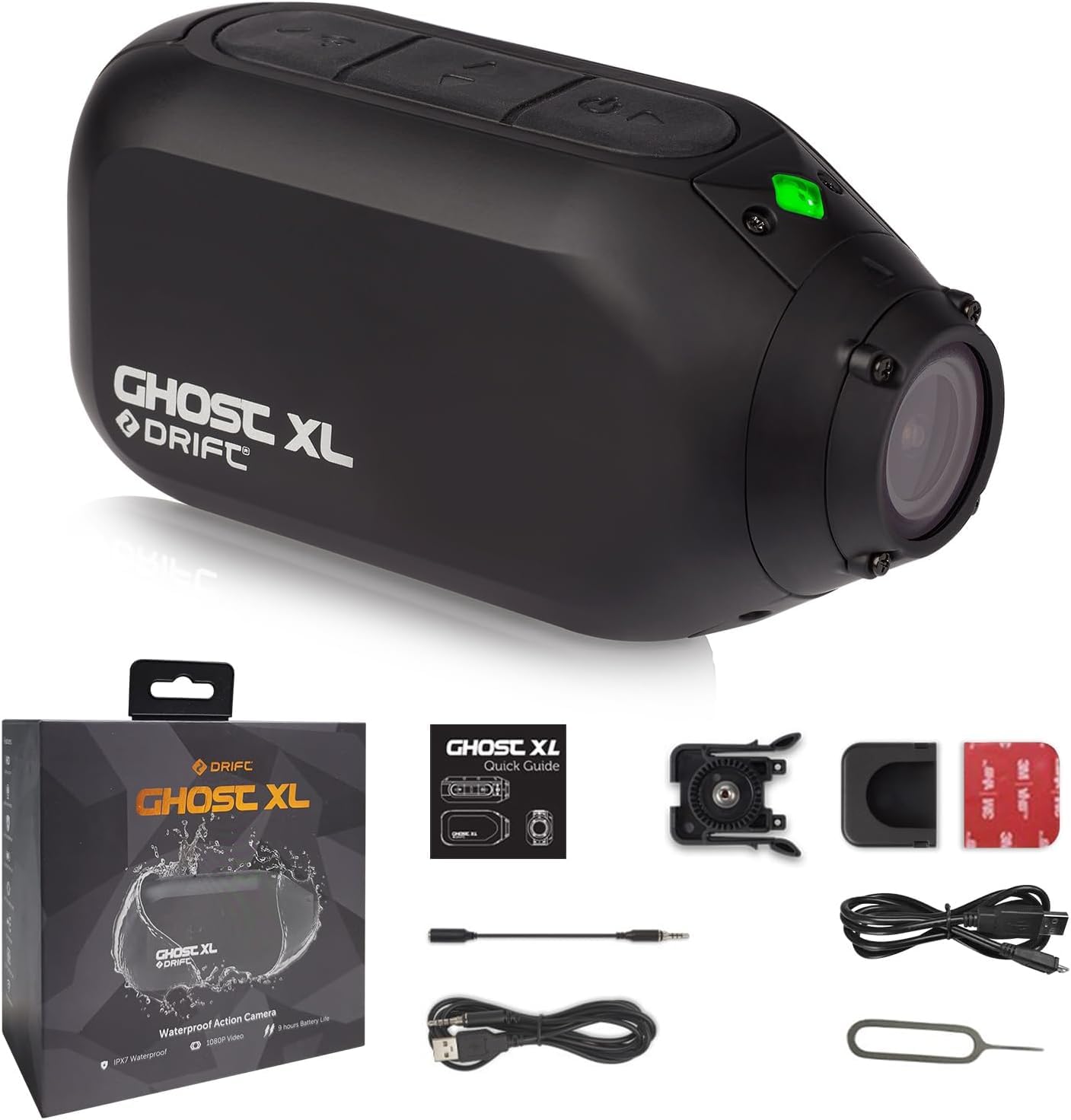
Nine hours of recording on a single charge isn't a figure the rest of this list competes on, and it tells you what the Ghost XL is for. This is a motorcycle dash cam rather than an action camera: an aerodynamic side profile that sits flat against a helmet, a 300-degree rotating lens so you can aim the glass without shifting the body, IPX7 sealing that works in rain without a housing, and loop recording that overwrites the oldest clips as the card fills. We think that combination is exactly right for a commuter who wants proof of every mile.

The ergonomics back the design up. The buttons are big enough to find with a glove on, and the whole thing starts recording without a phone in sight, which is more than several cameras here can say. Mount it, forget it, and it keeps going through a full day in the saddle. Nothing else in this group will do that.

The cost is the picture. There is no image stabilization of any kind, and with 1080p30 as the ceiling, engine buzz shows in the footage and a number plate at forty feet is a gamble. If your rides are about coming home with something beautiful, spend your money elsewhere. If they're about the morning commute and the occasional insurance conversation, nothing here is easier to live with.

Pros

  • Up to nine hours of continuous recording
  • IPX7 sealing with no housing
  • Loop recording for dash-cam duty
  • Rotating lens and glove-sized buttons

Cons

  • Can freeze mid-ride and lock its controls
Our verdict

If you want a record of every ride rather than a highlight reel, this is the one: nine hours, rainproof without a case, and loop recording that never stops for a card change.

Check Latest Price
3

Best Budget 360

AKASO 360

86 /100
Keeper Score Excellent

Key details

Batteries
2 included
Maximum Video
5.7K 360°
Stabilization
In-app, with 360° horizon lock
Weather Sealing
Water resistant
Check Price on Amazon

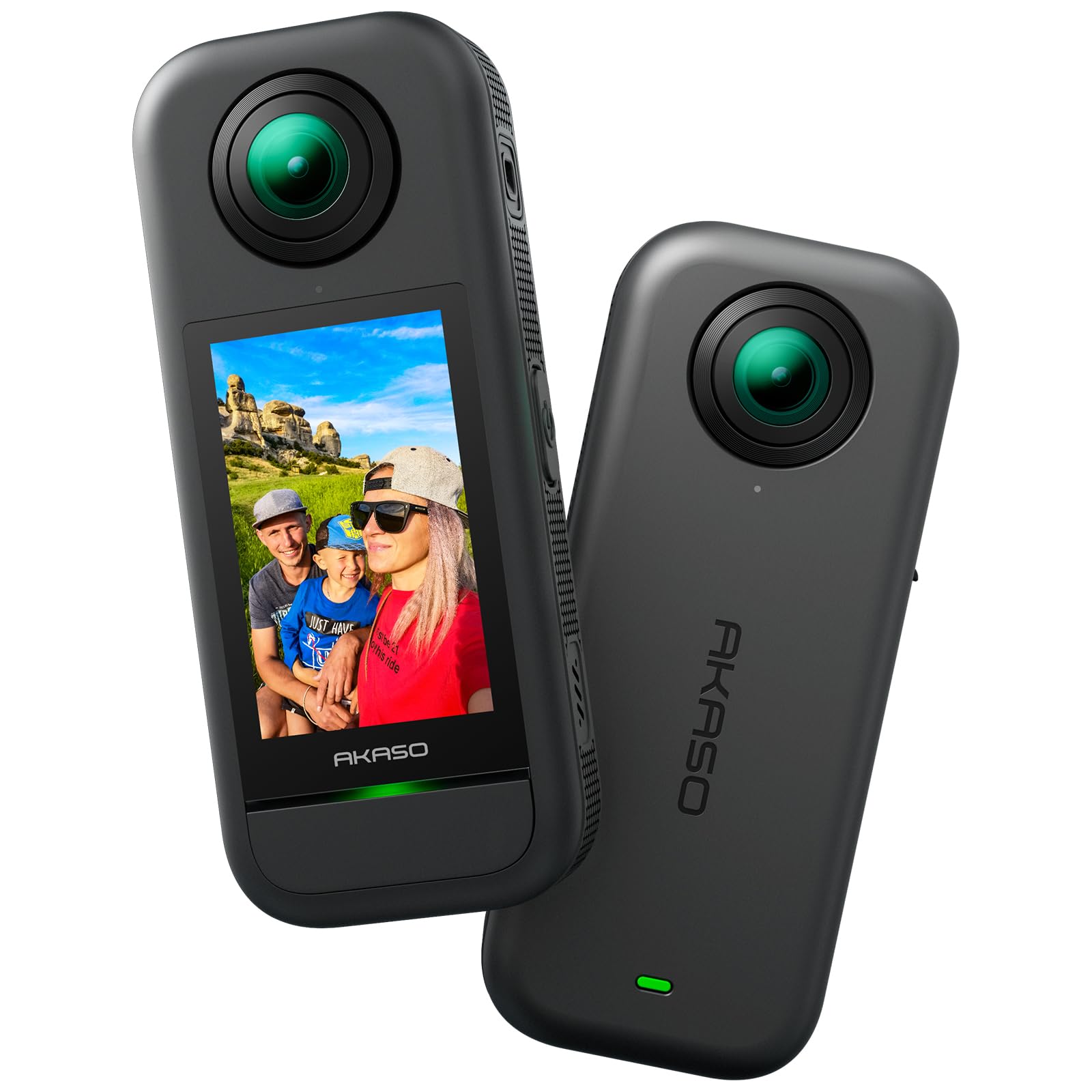
A 360 camera solves a problem no other design can: you record everything and decide afterward what the shot was. The AKASO 360 does that at 5.7K from two half-inch 48MP sensors, with in-app stabilization, a horizon lock, the invisible-selfie-stick trick for third-person views, and two batteries in the box. For a rider who has never shot 360, that is the whole pitch in one paragraph.

In daylight it delivers. The resolution holds up when you reframe down to a normal widescreen crop, and horizon lock means a lean into a corner doesn't tilt the world. Low light is where the smaller sensor shows itself: streetlights smear and shadow detail disappears, so an evening ride looks softer than a midday one. Treat this as a daylight camera with a 360 trick rather than an all-hours one.

Where it earns its place is as the inexpensive way to find out whether 360 suits how you ride. The gap to the flagship is real, and it comes down to sensor size, resolution and long-range footage that holds detail. But the reframing habit is the same, and two batteries will keep it running across a longer ride than a single pack allows.

Pros

  • 5.7K 360 for the price of a flat-lens camera
  • Horizon lock and stabilization built in
  • Two batteries included

Cons

  • Water resistant, not waterproof
  • Battery life is short in 5.7K 360
Our verdict

The cheapest way onto this list to shoot 360 on a bike, and the reframing habit it teaches is worth more than the resolution you give up.

Check Latest Price
4

Best Tiny Helmet Cam

Sixmou i3 4K Thumb Camera

84 /100
Keeper Score Excellent

Key details

Weight
35.7 g (1.25 oz)
Maximum Video
4K
Waterproofing
Case to 131 ft (40 m)
Claimed Runtime
Up to 150 minutes
Check Price on Amazon

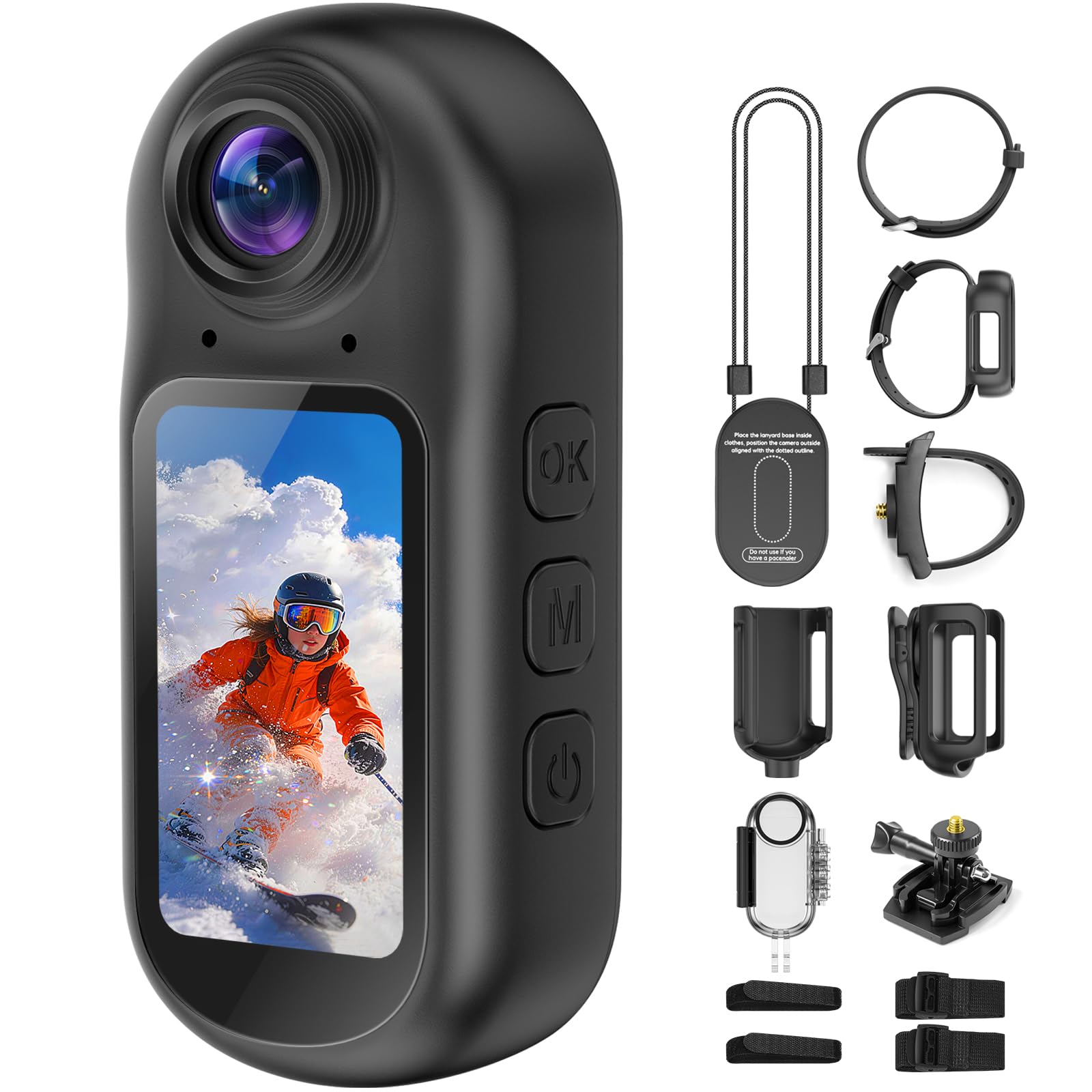
At 35.7 grams the i3 barely registers on a helmet, and that is the entire point. Weight is what spoils helmet-mounted footage: a heavy camera on an adhesive mount shifts, pulls at the shell, and reminds you it is there every time you turn your head. This one sits on a magnetic pendant or a spring clip and disappears.

The mounting hardware is where it earns its keep. There's a magnet for anything ferrous, a lanyard pad that holds through a shirt, and a spring clip for a strap or a pocket edge, so it moves from helmet to chest to bars in seconds. The waterproof case comes in the box and takes it to 131 feet, and the bundle includes a 64GB card. Small things, but they are the difference between riding out and waiting on an order.

Footage is better than the size suggests. 4K through a 150-degree lens gives a wide, usable POV, and the microphone copes with wind better than pocket cameras usually manage, so you hear the engine instead of a roar. Stabilization is electronic and modest: it smooths a walk and takes the edge off a rough road without rescuing a rigid bar mount at speed.

Where it fits is helmet POV and everyday clips rather than a full record of a tour. The 150-minute rating covers a morning's riding, and at this size it is the camera you actually bother to bring. For anyone who has never mounted a camera on a bike before, this is the least fussy place to start.

Pros

  • 35.7 grams on a helmet mount
  • Magnet, clip and lanyard in the box
  • 64GB card and waterproof case included
  • Up to 150 minutes per charge

Cons

  • Digital stabilization gives up at speed
Our verdict

The helmet camera we reach for when the bike is already loaded: 35.7 grams, mounted in seconds, and small enough that you forget it's filming.

Check Latest Price
5

Best for a First Bike Camera

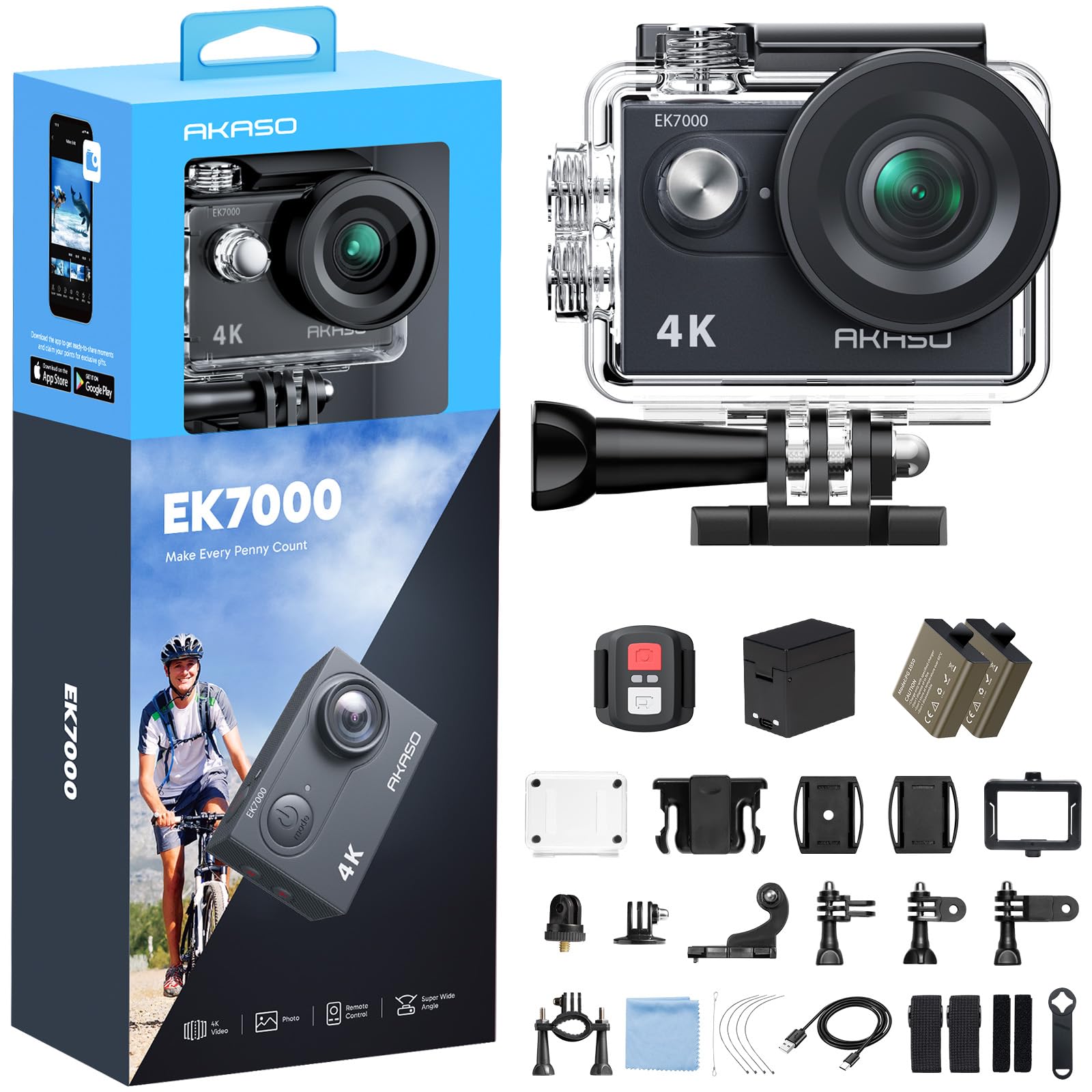
AKASO EK7000

89 /100
Keeper Score Excellent

Key details

Control
2.4G wrist remote
Batteries
2, up to 90 minutes each
Maximum Video
4K30fps
Stabilization
Electronic (EIS)
Check Price on Amazon

A wrist remote sounds like a small thing until you're on a bike. The EK7000's 2.4G remote straps to your wrist or the bar and starts and stops recording without you reaching for the camera, which is the difference between catching something and missing it. That, plus 4K30 recording, electronic stabilization, a case rated to 131 feet and a mount kit that covers helmets, bars and bodies, is why it's the camera we suggest to a first-time rider.

The rest is a conventional action camera done affordably. Two 1050mAh batteries and a dual charger mean one records while the other tops up, and the plastic housing means a rainy commute isn't the end of the day. Stabilization is electronic and honest about it: it smooths a steady hand and a walking pace, and it makes a bar mount at highway speed look exactly as shaky as it is. Pair it with a helmet or chest mount and it punches well above its place in this list.

Pros

  • Wrist remote keeps hands on the bar
  • Two batteries plus a dual charger
  • Full mount kit in the box

Cons

  • Memory card not included
  • Around 90 minutes per battery
Our verdict

Start here if it's your first bike camera: the wrist remote lets you start and stop recording without ever taking a hand off the bar.

Check Latest Price
6

Budget 4K60

Camlance CAM-A16 4K60

83 /100
Keeper Score Excellent

Key details

In The Box
64GB card, 2 batteries, remote
Maximum Video
4K60fps
Stabilization
Electronic (EIS)
Waterproofing
Housing to 40 m (131 ft)
Check Price on Amazon

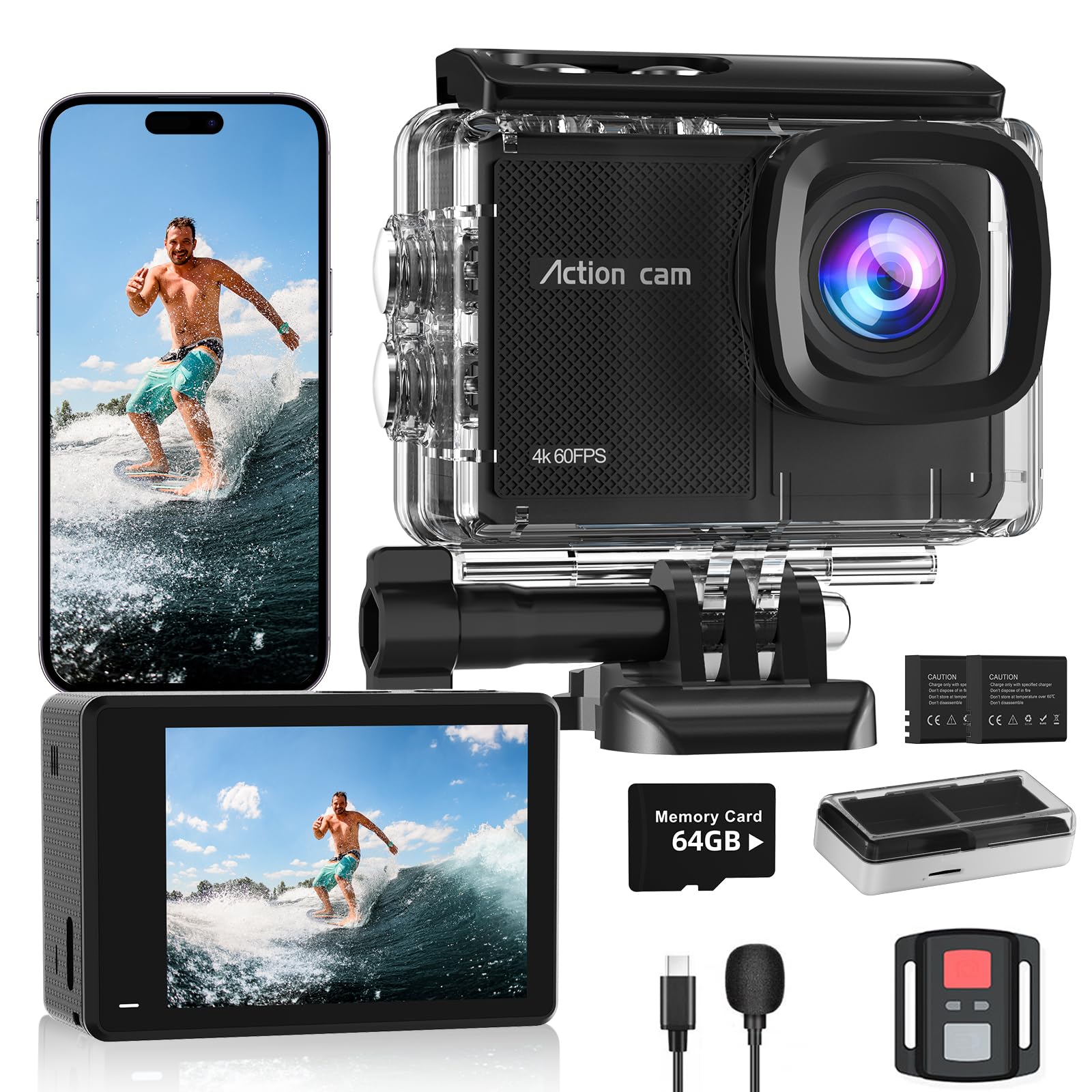
4K60 and a 64GB card in the box is a strong opening for a camera in the budget bracket, and the CAM-A16 leans on it. It also shoots 48MP stills, does an 8x digital zoom, records vertically as well as widescreen, and ships with two batteries, a remote and a housing rated to 40 meters.

The 4K60 mode is the reason to look at it. Motion looks smoother than the 4K30 cameras here, which matters if you film a lot of fast road, and vertical framing is a genuinely useful extra when your clips end up on a phone screen. In daylight the footage holds up well for the money, and the small body sits neatly on a helmet without dragging at the mount.

It sits below the EK7000 here because a remote you can strap to a bar beats one that lives in a pocket, and the AKASO's mount kit is more complete. Choose this one instead when frame rate is the thing you care about most and you want the card in the box rather than on your shopping list.

Pros

  • 4K60 for smoother fast-road motion
  • 64GB card and two batteries included
  • Vertical framing as well as widescreen

Cons

  • Housing required in rain
  • Getting clips onto a phone takes patience
Our verdict

A budget camera for frame-rate chasers: 4K60, vertical framing, and a card already in the box.

Check Latest Price
7

POV with Screen

acgiewo AG700 Mini

87 /100
Keeper Score Excellent

Key details

Screen
1.5-inch
Weight
35 g (1.23 oz)
Maximum Video
4K30fps
Claimed Runtime
Up to 150 minutes
Check Price on Amazon

Almost every camera this small makes you guess the frame and fix it in an app afterwards. The AG700 puts a 1.5-inch screen on a 35-gram body, which sounds like a minor feature until you're adjusting a helmet mount by feel. Add six-axis electronic stabilization, 4K30 recording, Wi-Fi and Bluetooth pairing, and a claimed 150 minutes of runtime, and it is a more complete package than its size suggests.

The magnet and clip are the same idea as the other mini cameras here, and they work: on a jacket or a chest strap it's light enough to forget you're wearing it. Stabilization is electronic, so it cleans up a walking pace and takes the edge off a bumpy road without ever looking gimbal-smooth. Fine for POV clips, not a substitute for a properly damped mount.

Pros

  • Built-in screen for framing
  • 35 g with six-axis stabilization
  • Up to 150 minutes per charge

Cons

  • No published water-resistance rating
Our verdict

For riders who want to see the frame before they pull away: a real screen and six-axis stabilization on a 35-gram body.

Check Latest Price

How We Tested Motorcycle Action Cameras

We started by pulling together every action camera sold with motorcycle mounting in mind — handlebar clamps, helmet adhesives, magnetic chest clips — then filtered by the things a rider can't work around: waterproofing without a case, stabilization that holds up at speed, and a battery rated for more than an hour. Price, mount compatibility, and whether the camera shot standard or 360 footage narrowed that pool to 12 units, which we rode with for seven months.

Each camera spent time on a handlebar, a helmet chin bar, and a tank mount on the same 22-mile commute, plus longer weekend rides on highway and twisty back roads. I ran battery life from a full charge to shutdown at a fixed resolution, then repeated the run in cold weather to see how far the numbers moved. Every unit got rained on and splashed deliberately, and I checked the footage and the card slot afterward.

For picture quality, I reviewed the same three stretches of road at noon, at dusk, and after dark, watching how quickly the image fell apart, whether headlights bloomed into white blobs, and how much the horizon drifted through corners. Stabilization was judged by playing footage back at full size — a camera that hid engine buzz on a phone screen sometimes wobbled on a monitor. On the app side, I timed how long a connection took, whether it held with the phone in a jacket pocket, and whether trimming a clip was possible with gloves on.

Reliability showed up in smaller ways: a mount that loosened after an hour, a battery door that never seated cleanly, a loop-recording mode that overwrote the wrong file. Cameras that needed fiddling every ride slid down the list; the ones that worked quietly through a week of commuting rose.

How to Choose a Motorcycle Action Camera

Mounting decides more than the spec sheet does

You can't aim a camera you can't reach, which is why mount position matters more than megapixels. A chin or side-of-helmet mount rides with your head, so the shot follows the road and your neck damps the worst of the vibration. A bar mount is easier to fit and swap but feeds engine buzz straight into the housing; a chest harness sits between the two.

Weight belongs in the same decision. A 35-gram camera on an adhesive helmet mount is barely noticeable; a 150-gram one pulls at the shell and reminds you it's there every time you turn your head. If you would rather not think about aim at all, a 360 camera records every direction and lets you choose the frame later.

Stabilization beats resolution every time

A shaky 4K clip is unwatchable and a stabilized 1080p one is fine, so spend the budget on stabilization first. Electronic stabilization crops the frame slightly and smooths the bumps; horizon lock goes further and keeps the picture level through a lean, which is what makes 360 footage usable on a bike. Nothing electronic removes engine vibration entirely, which is why the mount still matters.

A camera with no stabilization at all, like the Drift Ghost XL, is a deliberate trade: you give up smoothness and buy battery life and simplicity instead. That is the right deal for a commuting record and the wrong one for a Sunday film.

Match runtime to the ride you actually do

Listed runtimes assume mild weather, the screen off and often a lower resolution. Switch to 4K, or to 5.7K 360 with stabilization on, and the real figure drops sharply, so read the claim as a ceiling rather than a plan. Two batteries cover a morning out; only a purpose-built camera like the Ghost XL covers a full tour on one charge.

Cards are the other half of that calculation. High-resolution and especially 8K 360 files are large, so buy a V30 card or faster and a capacity you won't fill before lunch. A slow or small card is the most common reason a good camera ruins a good ride.

Sealing: case-free, IPX7, or just weather resistant

Motorcycle use means road spray, and waterproof covers three different things. A housing is genuinely submersible but adds bulk and puts a layer of plastic over the microphone. A case-free IPX7 body shrugs off rain and a dunking and keeps the audio clean, which is the best answer if you ride all year. Water resistant means splashes only: fine for a damp commute, not for a downpour.

None of those ratings says anything about dust or vibration, so judge the mount separately from the sealing. And a waterproof camera is only waterproof with its ports closed.

Controls you can work with gloves on

The most common footage failure isn't image quality, it's not recording in the first place. Big physical buttons, a bar-mounted remote, or a wrist remote let you start and stop without looking down; a camera that lives entirely in an app means stopping and taking a glove off. Check the control story before you check the sensor.

Wind is the other ergonomic problem. An open microphone at speed records mostly wind, so a camera tucked behind a screen or fairing sounds markedly better than one perched on top of a helmet, whatever the mic is rated for.

Frequently Asked Questions

Final Verdict

The Insta360 X5 Motorcycle Bundle is the camera we point riders toward first, because it deletes the hardest part of motorcycle filming: deciding where the camera looks. Record everything, lock the horizon, reframe at the kitchen table, and the clamp in the box means you ride with it the same day.

If the point of your camera is a record rather than a film, the Drift Ghost XL is the better buy: nine hours of looped 1080p, IPX7 without a housing, and big controls you can find with a glove on. The rest are specialists, from budget 360 to a 35-gram helmet cam with a screen.