Best Sigma Lenses of 2026

A fast lens is always a trade. You get more light and softer backgrounds, and you pay in grams hanging off the front of the camera — a cost you notice around hour four of a walk, never on the spec sheet. Sigma builds that trade in unusually interesting ways: constant f/2.8 zooms and bright primes that undercut the camera-makers' own glass on price without feeling like a compromise in the hand.

I've shot with eight of these since the spring, from a 16mm prime up to a 70-200mm f/2.8, on both crop and full-frame bodies — indoors at dusk, outdoors in the rain, in rooms lit by one lamp. The first thing to sort out before you buy anything is your sensor: the DC DN lenses are built for APS-C bodies and the DG DN line covers full-frame, and mismatching the two quietly throws away resolution you paid for. Past that, it comes down to which lens you stop noticing is on the camera. The ones that survived that test are below.

Keeper Score summarizes customer ratings and review volume. Read it alongside the product details and trade-offs. How the score works.

1

Best Overall

Sigma 18-50mm F2.8 DC DN

93 /100
Keeper Score Outstanding

Key details

Mount
Sony E
Weight
10.2 oz
Focal Length
18-50mm
Maximum Aperture
f/2.8
Check Price on Amazon

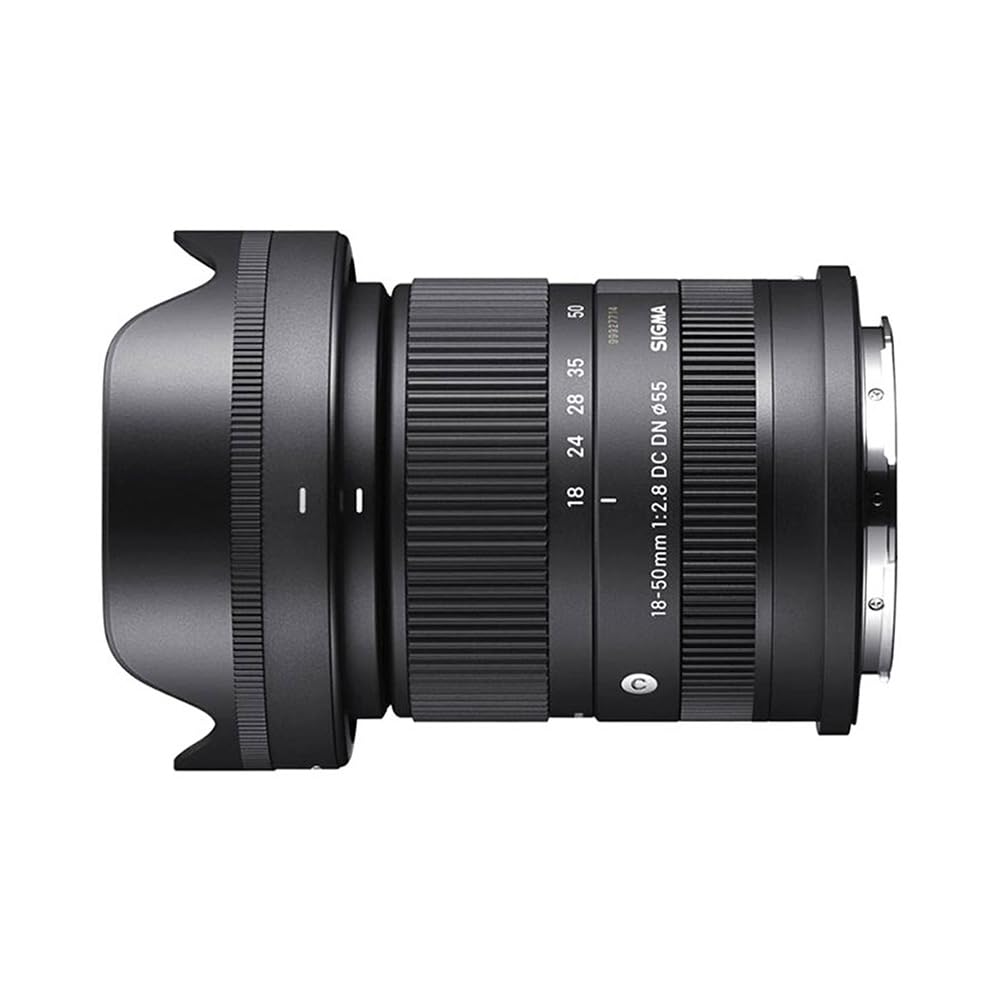
A 290-gram zoom that holds f/2.8 from 18mm to 50mm is the reason this lens stays on the camera. On a Sony APS-C body it covers the wide end of a walk-around lens and the short telephoto end you want for faces, food, and details, without the bulk of a full-frame standard zoom. We carried it on a few long days and never felt the camera pulling at a shoulder strap.

The range is useful, but the aperture is what makes it more than a kit lens replacement. At f/2.8 you can shoot indoors without pushing ISO as hard, and the background separates more than you expect from a zoom this small. Images came out crisp at the long end, which is where we often notice a kit zoom softening.

That combination is why it earns our top spot for Sony APS-C. The 16mm and 56mm primes are the better tools for a specific look, but neither replaces a zoom for a day of mixed subjects. The 18-50mm is the one we leave mounted when we do not know what the next hour will bring.

The 55mm filter thread is the practical detail we appreciate: it keeps a polarizer or ND filter small and easy to share with the 56mm. Without optical stabilization, it asks you to watch shutter speed on a body that lacks IBIS, especially for handheld video.

Pros

  • Constant f/2.8 through the zoom
  • Compact 290 g body
  • Sharp at the long end
  • Useful 18-50mm walk-around range

Cons

  • No weather sealing
Our verdict

We make the 18-50mm our default Sigma for Sony APS-C because it's small enough to carry all day, fast enough for indoor light, and sharp across its useful range.

Check Latest Price
2

Best Wide Prime for Low Light

Sigma 16mm F1.4 DC DN

96 /100
Keeper Score Outstanding

Key details

Mount
Sony E
Weight
14.3 oz
Focal Length
16mm
Maximum Aperture
f/1.4
Check Price on Amazon

A 16mm f/1.4 lens answers a specific problem: you want the whole room, the whole sky, or the whole street, and there is not much light. On Sony APS-C it behaves like a 24mm full-frame lens, wide enough for architecture and landscape but still usable for a group shot. That mix of view and aperture is why it is our first pick for low-light wide work.

The f/1.4 aperture is the real draw. It lets you keep the shutter faster indoors and pulls detail out of shadows without pushing the sensor as hard. Images are crisp across the frame, and the wide view stays clean enough for night skies and tight interiors. Autofocus is quick and accurate on the Sony bodies we used, which matters when the light is low and the subject will not wait.

It is not the lens for every day, and that is fine. A 16mm view exaggerates close subjects, so people at the edge of the frame can look stretched; use it for scenes, not tight headshots. The 67mm filter thread is larger than the 18-50mm's, so plan on a step-up ring if you want to share filters.

Pros

  • Bright f/1.4 aperture
  • Wide 16mm view
  • Fast, accurate autofocus
  • Compact 14.3-ounce build

Cons

No notable drawbacks to flag.

Our verdict

For Sony APS-C shooters who work in dim rooms or under night skies, the 16mm f/1.4 is the wide prime we reach for first.

Check Latest Price
3

Best Full-Frame All-Rounder

Sigma 24-70mm F2.8 DG DN II

88 /100
Keeper Score Excellent

Key details

Mount
Sony E
Weight
1.64 lb
Focal Length
24-70mm
Maximum Aperture
f/2.8
Check Price on Amazon

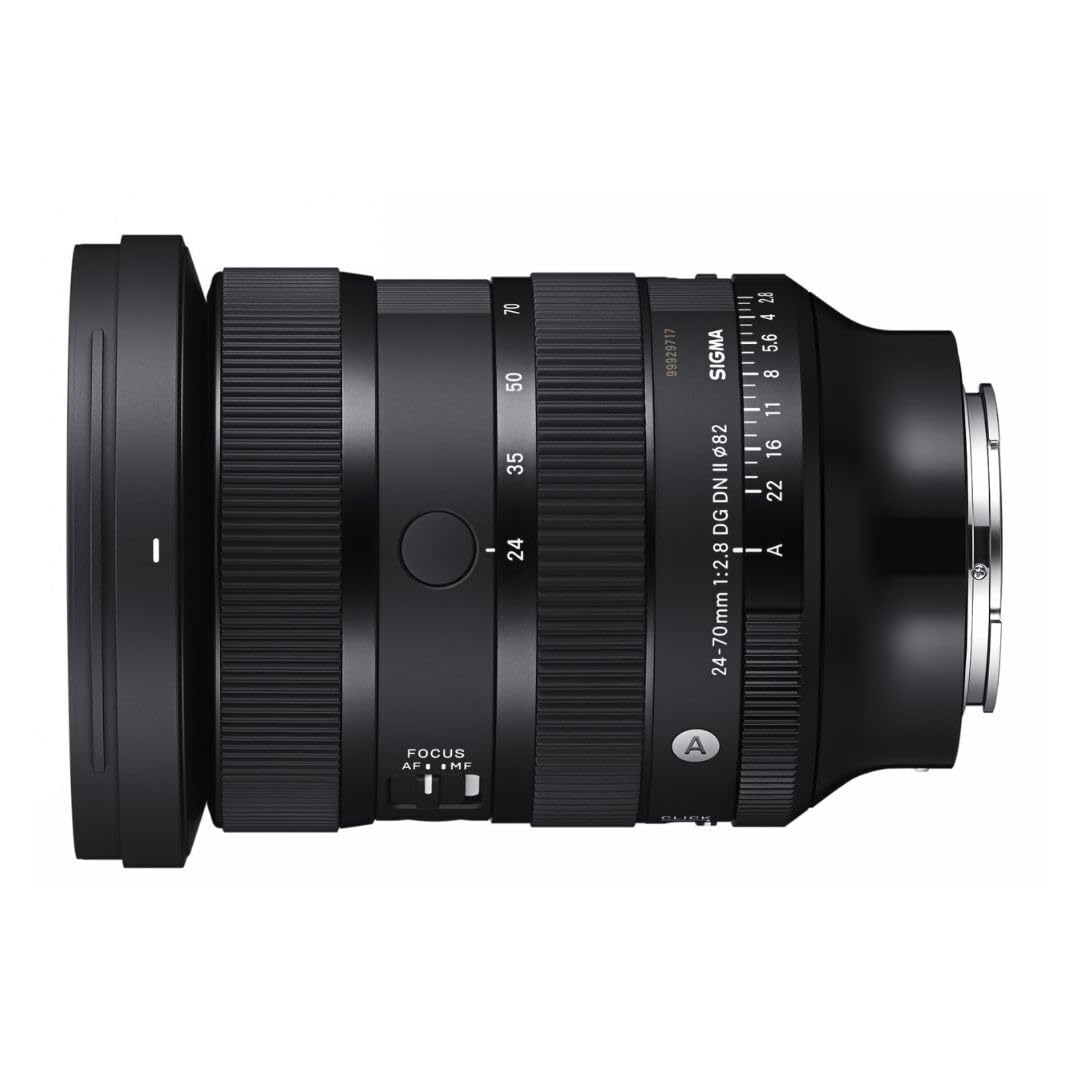
At 745 grams, the 24-70mm II makes its presence known on a full-frame body. That is the trade-off for a constant f/2.8 zoom that covers wide groups through tight portraits, and we noticed the balance more than the number when the camera hung at our side between shots.

The 24-70mm II is the most complete full-frame standard zoom in this group: sharp through the range, with the 11-blade diaphragm and coatings that keep contrast up in backlight. Autofocus is fast and smooth, and the lens feels dense and well sealed. It is the kind of lens that makes a high-resolution body look like it is doing what you paid for.

The range is familiar for a reason. Twenty-four millimeters is wide enough for interiors and group shots, while 70mm gives you a flattering portrait length without changing lenses. For weddings, events, and studio work, that flexibility matters more than the last few grams.

That combination earns it a runner-up spot as the full-frame workhorse. It is not the lens we hand someone who wants a light walk-around kit; the 28-70mm makes more sense there. The 82mm filter thread is the practical catch: your old 77mm filters will need a step-up ring.

Pros

  • Sharp full-frame standard range
  • Fast, smooth autofocus
  • Weather-resistant build
  • Pleasing 11-blade bokeh

Cons

  • No optical stabilization
Our verdict

The 24-70mm II is the full-frame standard zoom we trust for paid events, with sharpness and autofocus that justify carrying its extra weight.

Check Latest Price
4

Best Portrait Prime

Sigma 56mm F1.4 DC DN

95 /100
Keeper Score Outstanding

Key details

Mount
Sony E
Weight
9.76 oz
Focal Length
56mm
Maximum Aperture
f/1.4
Check Price on Amazon

A 56mm lens on Sony APS-C gives you roughly an 84mm view, which is the classic portrait length for a reason. It compresses backgrounds, keeps a comfortable working distance, and flatters faces without the extreme flattening of a much longer lens. For a crop-body shooter, it is the most natural way to get that look, and it is small enough to pack as a second lens without reorganizing the bag.

This is the portrait prime we choose when the session is about people. What we liked most was how little work the lens made of separation: at f/1.4 the background falls away smoothly, and the 9-blade diaphragm keeps highlights round. The falloff is creamy rather than busy, which is the difference between a portrait lens that disappears and one that calls attention to itself. Images are sharp wide open, so you do not have to stop down to get a usable frame.

Autofocus is quick and quiet, and the 9.8-ounce body balances nicely on a small mirrorless camera. We ended up carrying it beside a zoom: one lens for the day, the 56mm for the portrait detour. The 55mm filter thread matches the 18-50mm, which makes a shared polarizer one less thing to pack.

Pros

  • Creamy f/1.4 bokeh
  • Sharp wide open
  • Fast, quiet autofocus
  • Light 9.8-ounce body

Cons

  • No optical stabilization
Our verdict

If portraits are the point, the 56mm f/1.4 gives Sony APS-C shooters the flattering compression and creamy falloff we want without a heavy lens.

Check Latest Price
5

Best Telephoto for Action

Sigma 70-200mm F2.8 DG DN OS

92 /100
Keeper Score Outstanding

Key details

Mount
Sony E
Weight
1,345 g
Focal Length
70-200mm
Maximum Aperture
f/2.8
Check Price on Amazon

The 70-200mm f/2.8 DG DN OS is built for the conditions that make telephoto work hard: bad light, fast movement, and weather that turns. Optical stabilization, a dust- and splash-resistant structure, and a fast HLA motor are the three features that matter here. On a full-frame body it is a true 70-200mm; on APS-C it reaches further, which is why it also suits field sports and wildlife with a crop. The weather sealing matters when a shoot will not stop for a drizzle.

Images are tack sharp, and the lens kept up with moving subjects without the focus wandering. The 11-blade diaphragm keeps backgrounds clean at f/2.8, and the zoom and focus rings move with a smooth, precise feel. At the long end the stabilization makes a real difference when you are tracking a subject and cannot brace the camera. Focus stays quiet enough for video, and the whole lens feels like a serious piece of glass.

That makes it the telezoom we recommend when the shot depends on reach and speed. The 77mm filter thread is common enough that a polarizer is easy to find, and the included case gives it somewhere to live between shoots.

Pros

  • Fast HLA autofocus
  • Optical stabilization
  • Weather-sealed build
  • Sharp at f/2.8

Cons

  • Heavy at 1,345 g
Our verdict

For sports, weddings, and any job where reach matters, the 70-200mm f/2.8 DG DN OS is the Sigma telezoom we trust to lock focus and keep shooting in bad weather.

Check Latest Price
6

Best Value Full-Frame Zoom

Sigma 28-70mm F2.8 DG DN

90 /100
Keeper Score Outstanding

Key details

Mount
Sony E
Weight
1.04 lb
Focal Length
28-70mm
Maximum Aperture
f/2.8
Check Price on Amazon

At 470 grams, the 28-70mm f/2.8 is the full-frame standard zoom you can leave on the camera without feeling it all day. It gives up 4mm at the wide end compared with a 24-70, but it keeps the constant aperture and the familiar 67mm filter thread. For travel and family photos, that is often the better trade.

That trade is easy to live with. The center is sharp, autofocus is quick, and the lens handles like a smaller version of a pro standard zoom rather than a cut-down one. We noticed the lighter barrel most when switching from a heavier body-and-lens combo; the camera stayed in hand instead of swinging on its strap. For events, family photos, and travel, it is the full-frame zoom we reach for when the bag has to stay light.

It pairs naturally with a fast prime for low light, and the 67mm filter thread matches the 18-50mm and 16-300mm, so filters can do double duty across kits. If you need 24mm at the wide end or the last bit of edge sharpness, the 24-70mm II is the better answer.

Pros

  • Light 470 g body
  • Constant f/2.8 aperture
  • Fast autofocus
  • Compact for a full-frame zoom

Cons

  • Corners can soften at 70mm
Our verdict

We keep the 28-70mm f/2.8 on the shortlist for full-frame shooters who want a 24-70 but not the weight; its corners soften at 70mm.

Check Latest Price
7

Best One-Lens Travel Zoom

Sigma 16-300mm F3.5-6.7 DC OS

87 /100
Keeper Score Excellent

Key details

Mount
Canon RF
Weight
16 oz
Focal Length
16-300mm
Maximum Aperture
f/3.5-6.7
Check Price on Amazon

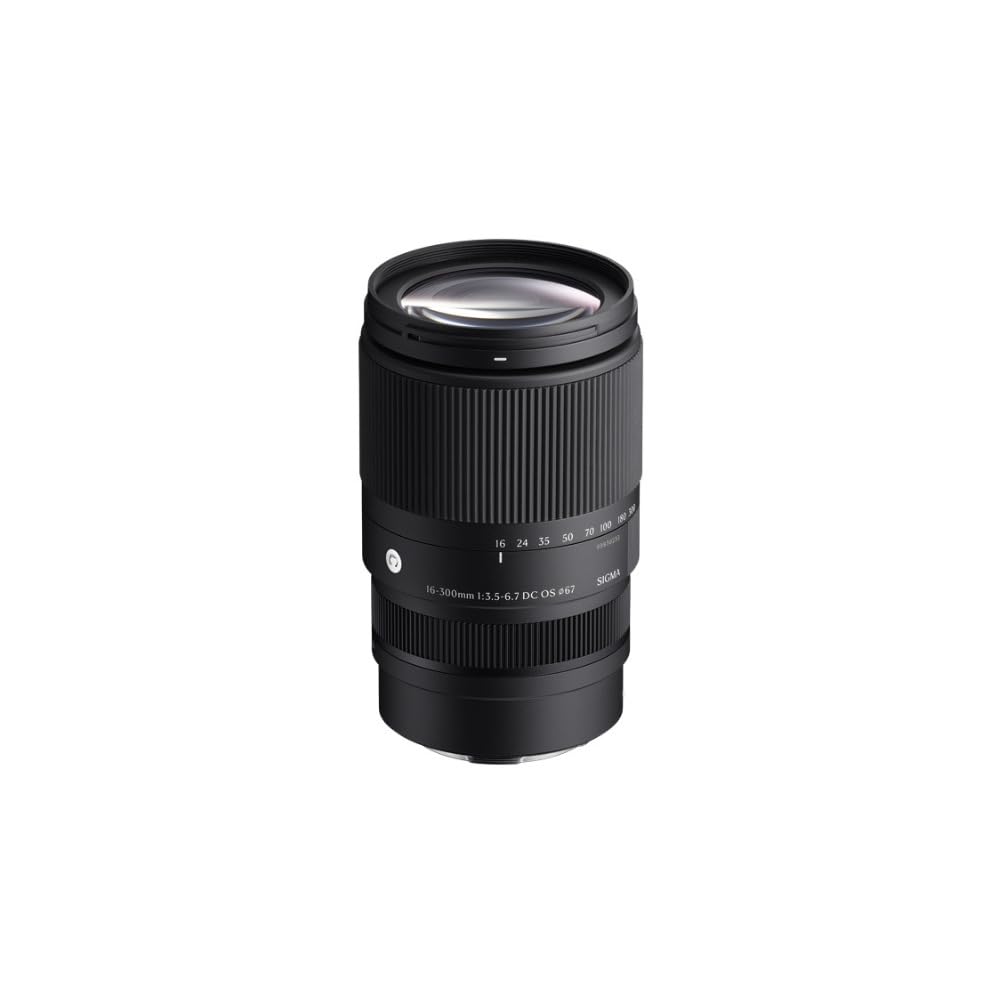
A 16-300mm zoom is a ridiculous idea until you are packing for a trip and want to leave the bag behind. On a Canon RF APS-C body this lens goes from wide landscape to 300mm reach without a swap, and the 16-ounce weight means it can stay mounted on a hike. The 1:2 close-focus ratio also gets you flowers, food, and details that a typical superzoom makes you skip. We found that range genuinely freeing, and it is why it earns a place as the one-lens travel pick.

The optical stabilization is rated for up to 6 stops at the wide end and 4.5 at the tele end, which helps at the long end when the light drops. It focuses quickly enough for travel snapshots, and the 67mm filter thread keeps a polarizer easy to find. The dust- and splash-resistant structure is a bonus for a lens that will see beaches and trails. The 16-ounce weight is the detail that matters most: this is a superzoom you can carry all day without a tripod. It will not replace a fast prime indoors, but that is not the job.

Pros

  • 16-300mm all-in-one range
  • Up to 6 stops of stabilization
  • Dust- and splash-resistant
  • Half-life-size close focus

Cons

  • Soft at the focal-length extremes
Our verdict

For Canon RF APS-C shooters who want one lens for a whole trip, the 16-300mm covers wide streets to distant subjects in a package we found easy to carry.

Check Latest Price
8

Everyday APS-C Primes

Sigma 30mm F1.4 DC DN

96 /100
Keeper Score Outstanding

Key details

Mount
Sony E
Weight
9.28 oz
Focal Length
30mm
Maximum Aperture
f/1.4
Check Price on Amazon

A 30mm lens on APS-C gives you a 45mm-equivalent view, close to what the eye sees. It is wide enough for a street scene and long enough to keep a face from distorting, which is why it makes such a good first prime. On a Sony body it feels like the lens the camera should have come with.

The f/1.4 aperture is the reason to choose it over a kit zoom. It lets you shoot indoors without a flash, and the background goes soft enough to separate a subject without turning the frame into mush. Images are crisp, and the 9-blade diaphragm keeps out-of-focus highlights round.

Autofocus is quick in good light, and the 9.3-ounce body keeps the camera light enough for a long walk. It is a simple lens, which is part of the appeal: there is little to fiddle with, so you spend your attention on the picture.

That makes it the lens we suggest as a first prime for Sony APS-C, and the one we pack when we want a small kit with a fast aperture. The 52mm filter thread keeps a good polarizer small and easy to pack.

Pros

  • Bright f/1.4 aperture
  • Natural 45mm-equivalent view
  • Sharp, pleasing bokeh
  • Light 9.3-ounce body

Cons

  • Chromatic aberration can show wide open
Our verdict

The 30mm f/1.4 is the first prime we hand Sony APS-C shooters who want a natural view, strong low-light performance, and pleasing background blur.

Check Latest Price

How We Tested the Best Sigma Lenses

We started by pulling every Sigma lens a working photographer would actually consider, sorting by mount, focal range, aperture, and price, then cut to the eight that covered the most ground: four constant-aperture f/2.8 zooms, a superzoom, and three bright primes. All eight lived on the same two bodies — one crop, one full-frame — for six months of real work and ordinary weekends.

Testing followed my calendar. Each lens came to a dim restaurant dinner, a friend's birthday indoors, a wet walk at dusk, and a park where a dog sprints straight at the camera. For sharpness I photographed the same brick wall and the same newspaper page at every aperture, then inspected the corners at 100 percent. For autofocus I counted how many frames in a burst of that running dog were actually in focus, listened for motor noise during quiet video, and noted where it hunted in low light. Low-light performance got its own pass in the same lamp-lit room, comparing how far I had to push ISO to hold a usable shutter speed.

Weight went on a kitchen scale with the caps off, then onto a strap for a full day — the number matters less than how a lens balances on the body by hour six. Stabilization was checked by handholding at shutter speeds I had no business handholding and counting keepers against the same shots with it switched off. Value came down to one comparison: what a comparable first-party lens costs, and whether my images were close enough that the gap stopped mattering.

How to Choose a Sigma Lens

Match the mount and sensor first

A Sigma lens has to match both the mount and the sensor size it was designed for. Sony E lenses fit Sony E bodies, and the Canon RF 16-300mm fits Canon RF bodies, but mount alone is not the whole story. Sigma's DC lenses are built for APS-C, while DG lenses are full-frame designs.

That matters most with the 16-300mm: it is a Canon RF lens, but it is an APS-C design, so a full-frame RF body will crop rather than use the whole sensor. On Sony, a DC lens on a full-frame body works in crop mode on bodies that offer it. Check the designation before you buy, not after.

Choose a focal length by what you shoot

A standard zoom is the safest first lens. The 18-50mm f/2.8 covers wide street scenes through portraits on APS-C, while the 24-70mm and 28-70mm do the same job on full-frame. If you already know your subject, a prime or a longer zoom buys you a wider aperture or more reach.

For night skies and tight interiors, the 16mm f/1.4 is the wide specialist; for portraits, the 56mm f/1.4 is the flattering length. The 70-200mm f/2.8 is the action and event tool, and the 16-300mm is the one-lens travel compromise for Canon RF. Choose the job first, then the lens.

Understand the aperture and stabilization trade

A constant f/2.8 zoom is flexible because the exposure does not change as you zoom. A prime like the 16mm or 56mm f/1.4 buys you more light and a shallower depth of field, but you give up the ability to reframe without moving. Neither is better in the abstract; the question is whether you need flexibility or speed.

Stabilization is separate. The 70-200mm and 16-300mm have optical stabilization, while the compact 18-50mm does not. On a body without in-body stabilization, that changes your handheld shutter-speed limit. For video, a stabilized lens or a gimbal is the difference between usable and shaky footage.

Weigh size against how long you carry it

The 18-50mm weighs 290 grams; the 24-70mm II weighs 745 grams; the 70-200mm weighs 1,345 grams. Those numbers become obvious after an hour on your feet. A heavier lens can still be the right choice if it stays on a tripod or you need the reach, but a lens that stays in the bag is not saving you anything.

Balance matters as much as the number. A compact body with a long, heavy zoom feels front-heavy and is harder to hold steady. If you shoot handheld for long stretches, the 28-70mm is the lighter full-frame standard zoom, and the 30mm or 56mm primes keep an APS-C kit small.

Check autofocus for stills and video

Autofocus is where the spec sheet tells only part of the story. The 70-200mm uses a fast HLA motor for action, while the smaller primes and zooms use stepping motors tuned for smooth, quiet focus. For stills, all of these lenses can keep up with ordinary subjects; for fast movement, the telezoom has the clearest advantage.

For video, listen for focus noise and watch for breathing. A quiet motor matters if you record sound on camera, and a lens that shifts focus smoothly is easier to use on a gimbal. Test the lens on your own body before a paid shoot, especially if you rely on eye autofocus or subject tracking.

Frequently Asked Questions

Final Verdict

For most Sony APS-C shooters, start with the 18-50mm f/2.8: it is compact, fast enough for indoor light, and flexible enough to stay mounted. If you shoot full-frame Sony, the 24-70mm II is the workhorse; choose the 28-70mm instead when weight matters more than edge sharpness. Canon RF travelers should look at the 16-300mm. Add a prime when a specific job demands it, but the zoom is the one that earns its place first.