Best PETG Filament of 2026

The part that finally made me stop treating filament as an afterthought was a shelf bracket I printed in PLA that sagged during the first hot week of summer. I reprinted it in PETG and that was that — a part I could flex, drop, and leave in a car without watching it warp. PETG sits in a useful middle ground: tougher than PLA, easier to live with than ABS, and forgiving enough that a decent spool prints well on a machine you've already dialed in. The trouble is that a bad spool doesn't announce itself until hour six of an overnight print.

Over the past four months, my team and I have printed through 16 spools, from single rolls and two-packs to refill spools and multicolor bundles, and the gap between best and worst is wider than the prices suggest. Winding, moisture sealing, and diameter consistency matter as much as the plastic itself, and a color that looks good on the reel can print dull or blotchy. The picks below kept feeding when others started stringing, snagging, or peeling at the layer lines.

Keeper Score summarizes customer ratings and review volume. Read it alongside the product details and trade-offs. How the score works.

1

Best Overall

Polymaker PETG 1 kg

90 /100
Keeper Score Outstanding

Key details

Diameter
1.75 mm
Spool Weight
2.2 lb
Max Print Speed
Up to 500 mm/s
Nozzle Temperature
240–260°C
Check Price on Amazon

A 500 mm/s rating is the first thing the Polymaker spool puts in front of you, and it is the claim we tested hardest. The 1 kg black roll is 1.75 mm, rated for 240–260°C at the nozzle and 60–70°C on the bed, with cooling set to 20–60%. What matters is that it does not demand a special machine to behave: on our printer it fed smoothly at ordinary PETG speeds and kept its finish when we pushed the profile faster.

This is the spool we reach for first when a part needs to be strong and look tidy. Layer adhesion has been consistent, stringing stayed manageable once we had the temperature dialed, and the wind let the extruder pull without the jerky resistance that ruins long prints. We have used it for brackets, jigs, and replacement knobs, and it has been the least fussy PETG in this group.

The limitation is the package itself: one 1 kg black spool, not a color assortment. That makes it a poor fit for someone who wants to sample finishes, and it means a big job can leave you with an empty roll and no spare. We also dry it before any print that runs overnight, which is standard PETG care rather than a knock on this particular spool.

Where it earns the top spot is the combination of speed, feed, and layer strength without a narrow tuning window. The black also hides layer lines better than the glossy candy colors, so it flatters brackets and jigs that were never meant to be display pieces.

Pros

  • Reliable feeding on everyday and fast profiles
  • Good layer adhesion for functional parts
  • Neat winding with reduced stringing
  • Simple 1 kg spool is easy to store

Cons

  • Single black spool only
  • Pricier than the budget picks here
Our verdict

Polymaker's black 1 kg spool is the PETG we recommend first: it feeds cleanly, holds layer strength, and keeps up with fast profiles.
Check Latest Price
2

Best Two-Color Pack

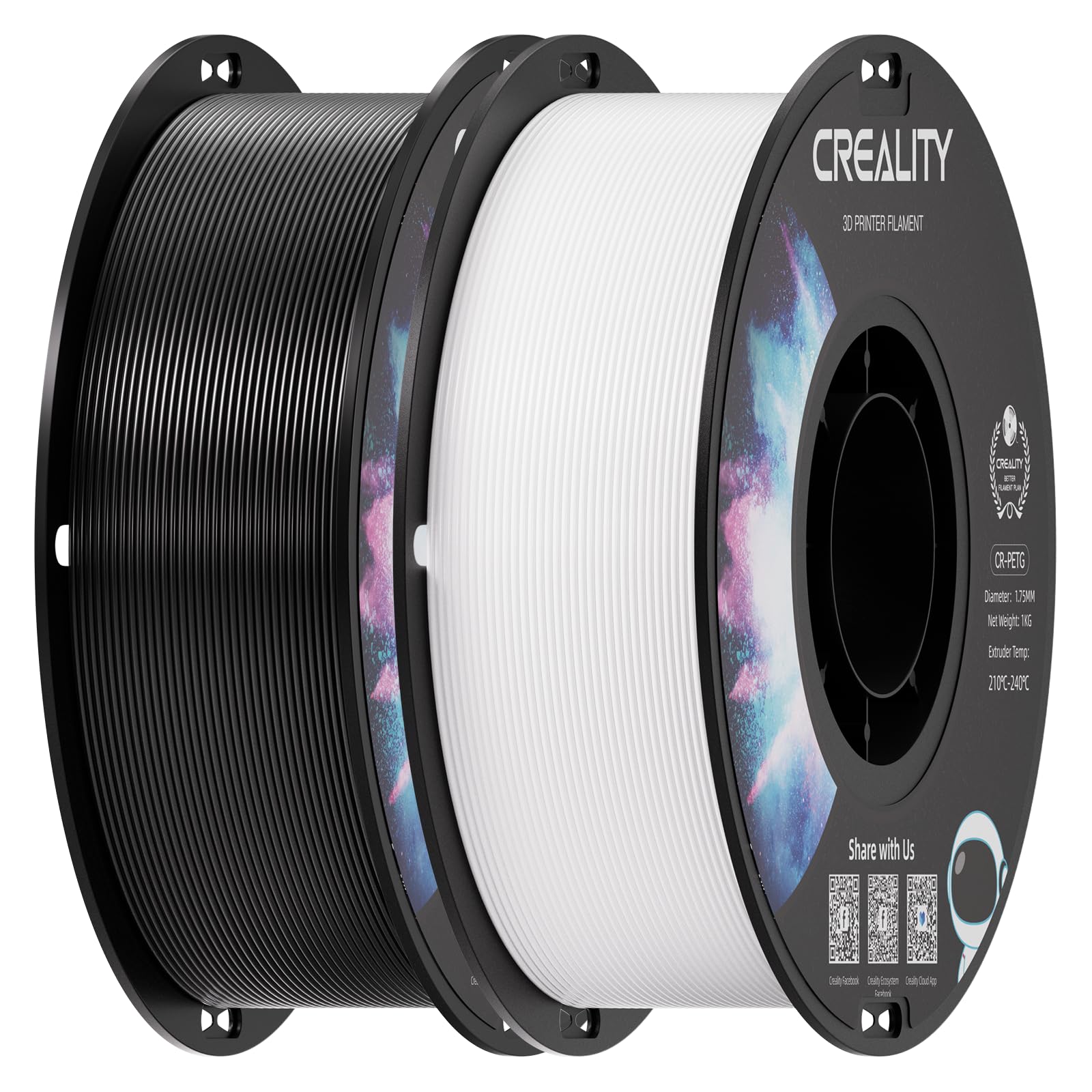
Creality PETG 2-Pack

90 /100
Keeper Score Outstanding

Key details

Colors
Black and white
Accuracy
±0.02 mm
Diameter
1.75 mm
Pack Size
2 × 1 kg
Check Price on Amazon

A two-pack of black and white is the most sensible way to buy PETG if you print functional parts and prototypes and do not want to reorder every time a color runs out. Creality lists ±0.02 mm accuracy and two 1 kg spools, which is enough filament for a run of brackets, jigs, and replacement parts. We like that the pair covers the two colors most likely to disappear into a finished project.

On a clean bed, both colors laid down a consistent first layer, and the parts came off strong without much warping. The black has a little gloss and the white is bright rather than creamy, so they read as different materials on the shelf. We found bed prep mattered more than any slicer trick: a fingerprint or a dusty sheet was enough to change adhesion.

The white roll is the one to watch. It can arrive tightly wound and tangle or snap if the spool does not turn freely, so we check the first few meters before a long print and keep the filament path straight. That is a loading habit as much as a filament issue, but it is worth knowing before you leave a print unattended.

Two 1 kg spools also let you keep one sealed while the other is in use, which is the practical advantage over a single roll. For black-and-white work, this is the pack that makes the least fuss.

Pros

  • Black and white in one pack
  • Tight ±0.02 mm tolerance
  • Strong value for general printing
  • Good print quality on a clean bed

Cons

  • Only two colors in the pack
Our verdict

For black-and-white work, Creality's two-pack is the one we reach for; the ±0.02 mm tolerance and solid prints make it an easy general-purpose buy.

Check Latest Price
3

Best for High-Volume Black

ELEGOO PETG 2 kg

92 /100
Keeper Score Outstanding

Key details

Color
Black
Accuracy
±0.02 mm
Diameter
1.75 mm
Pack Size
2 × 1 kg
Check Price on Amazon

Two 1 kg spools of black do not look exciting, but they solve a specific problem: long print runs without a color change or a mid-project reorder. ELEGOO holds the filament to ±0.02 mm and packs two full spools in the box, so the value is in continuity rather than variety.

The prints we made had a glossy surface and strong layer bonding, and the filament fed without clogging on ordinary PETG settings. We did notice more winding variance than with Polymaker, so we check spool tension before starting a long job. On a clean bed the first layer held well, though we still prefer a slower first layer for large flat parts.

That is why we treat this as the high-volume black workhorse rather than the all-purpose pick. It is budget-friendly for parts that will be painted, hidden, or used in the shop, and the second spool is the real convenience when a job runs long. The winding issue keeps it behind Polymaker for unattended prints, but for a batch of brackets it is the better value.

The black finish also hides layer lines better than a light color, which makes this a forgiving spool for shop fixtures and prototypes that will be handled more than displayed.

Pros

  • Two 1 kg spools for long runs
  • ±0.02 mm accuracy supports consistent feed
  • Glossy finish and strong layer bonding

Cons

  • Winding can vary between spools
Our verdict

ELEGOO's two-spool black pack is our high-volume choice when color changes would only slow the job down.

Check Latest Price
4

Best Budget for Draft Parts

OVERTURE High Speed PETG

88 /100
Keeper Score Excellent

Key details

Accuracy
±0.02 mm
Diameter
1.75 mm
Spool Weight
2.2 lb
Max Print Speed
Up to 300 mm/s
Check Price on Amazon

The first thing you notice about OVERTURE's black PETG is that it undercuts most of the spools here. The second is that it is rated to 300 mm/s and sold as AMS-friendly, with ±0.02 mm accuracy and a 1 kg roll. On paper it looks like the obvious budget pick; in use it is a little more conditional.

On a dry spool it behaves like one: smooth extrusion, a good finish, and no clogging in our runs. Leave it out in humid air and the same roll strings, pops, and refuses to hold a first layer. We dry it before any long print and keep a spare desiccant pack in the storage box.

Brittleness is the bigger reservation. Some parts feel noticeably more fragile than the same shape in Polymaker or ELEGOO, and bed adhesion can swing from stubborn to weak depending on the sheet and the first layer. We treat a new roll as a test coupon before committing a production part to it.

So this is a budget spool for draft parts and shop fixtures, not the roll we trust for a finished part you are selling without a test print. If you are willing to dry it and tune temperature, it can be a useful cheap black workhorse. We keep it for jobs where a failed print costs time, not a whole project.

Pros

  • Low-cost spool for draft parts
  • Rated to 300 mm/s for fast printers
  • AMS-friendly winding claim

Cons

  • Bed adhesion can be finicky
  • Printed parts can feel brittle
Our verdict

OVERTURE is the budget spool we keep for draft parts and shop fixtures, provided you dry it and expect more tuning.

Check Latest Price
5

Reusable-Spool Refills

SUNLU PETG Refill 4 kg

90 /100
Keeper Score Outstanding

Key details

Diameter
1.75 mm
Pack Count
4 refills
Total Weight
8.82 lb
Spool Compatibility
SUNLU and Bambu Lab
Check Price on Amazon

The refill arrives without a spool, and that is the whole decision. SUNLU packs four 1 kg refills of black PETG, 1.75 mm and ±0.02 mm, made for its own reusable spools and Bambu Lab spools. If you already own those spools, the economics are compelling; if you do not, this is not a starter pack.

Loaded properly, it prints with good detail and a clean finish, and the black is consistent from roll to roll. We still dry it for long prints, because a refill spends more time exposed to air during handling than a sealed spool does. The quality is close enough to a full spool that we treat it as the same material, not a lesser refill.

The catch is the refill itself. It can fit tightly on some reusable spools, and it is not plug-and-play on a spool it was not designed for. We check that the refill sits square and that the spool halves close evenly before we walk away.

For anyone already in the SUNLU or Bambu spool ecosystem, this is the economical way to keep black PETG on hand. For a first spool, skip it: the refill is not plug-and-play, and the savings disappear if you have to buy spools separately. The lack of spools also makes the package easier to store flat between jobs.

Pros

  • Four black refills in one pack
  • Good print quality and detail
  • Less spool waste than full rolls

Cons

  • Requires separate reusable spools
  • Winding can tangle
Our verdict

Buy this refill if you already own SUNLU or Bambu Lab spools; it is our economical way to keep black PETG stocked.

Check Latest Price
6

Bulk Color Production

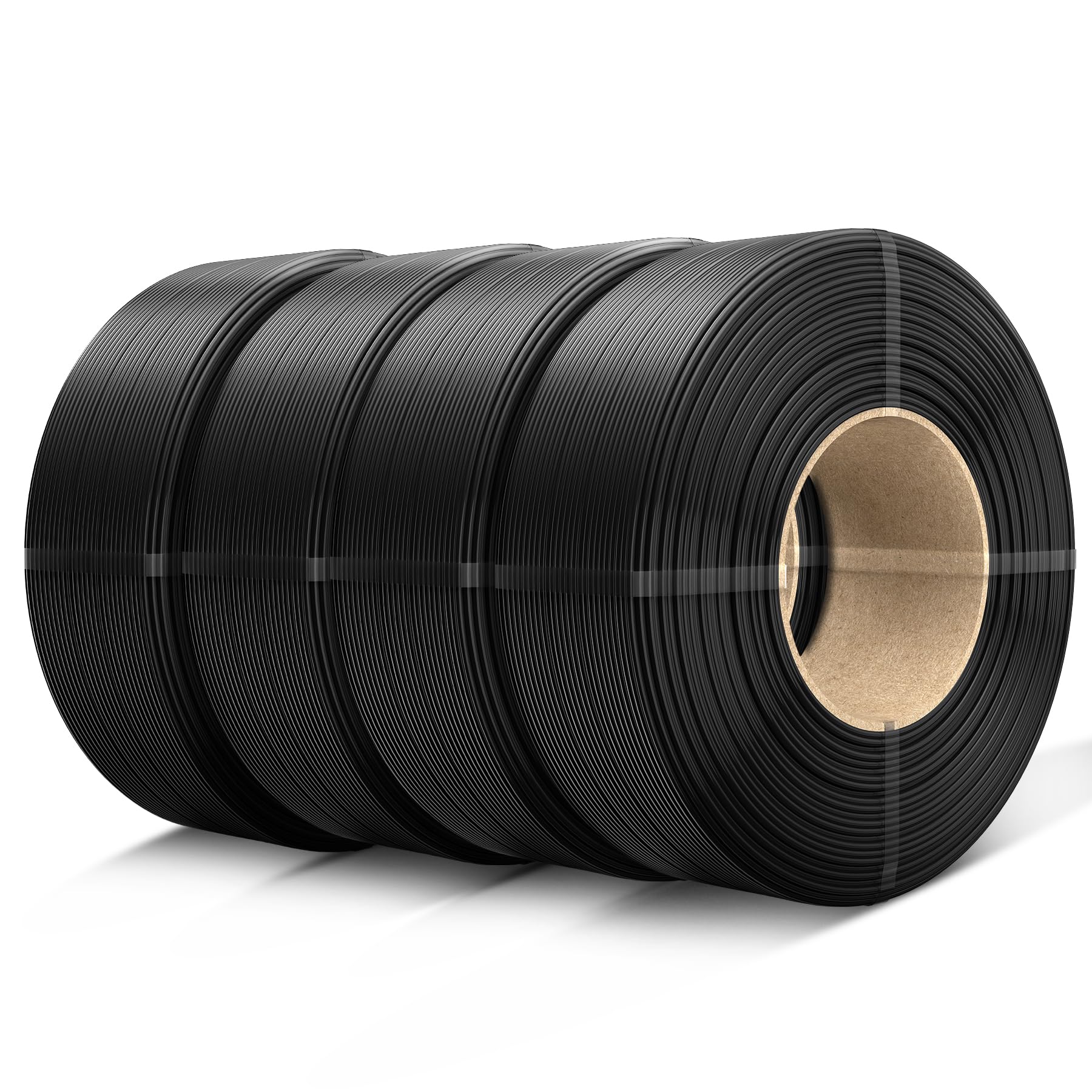
CHCKX PETG 16-Roll Bundle

86 /100
Keeper Score Excellent

Key details

Diameter
1.75 mm
Spool Count
16
Total Weight
35.3 lb
Nozzle Temperature
240–260°C
Check Price on Amazon

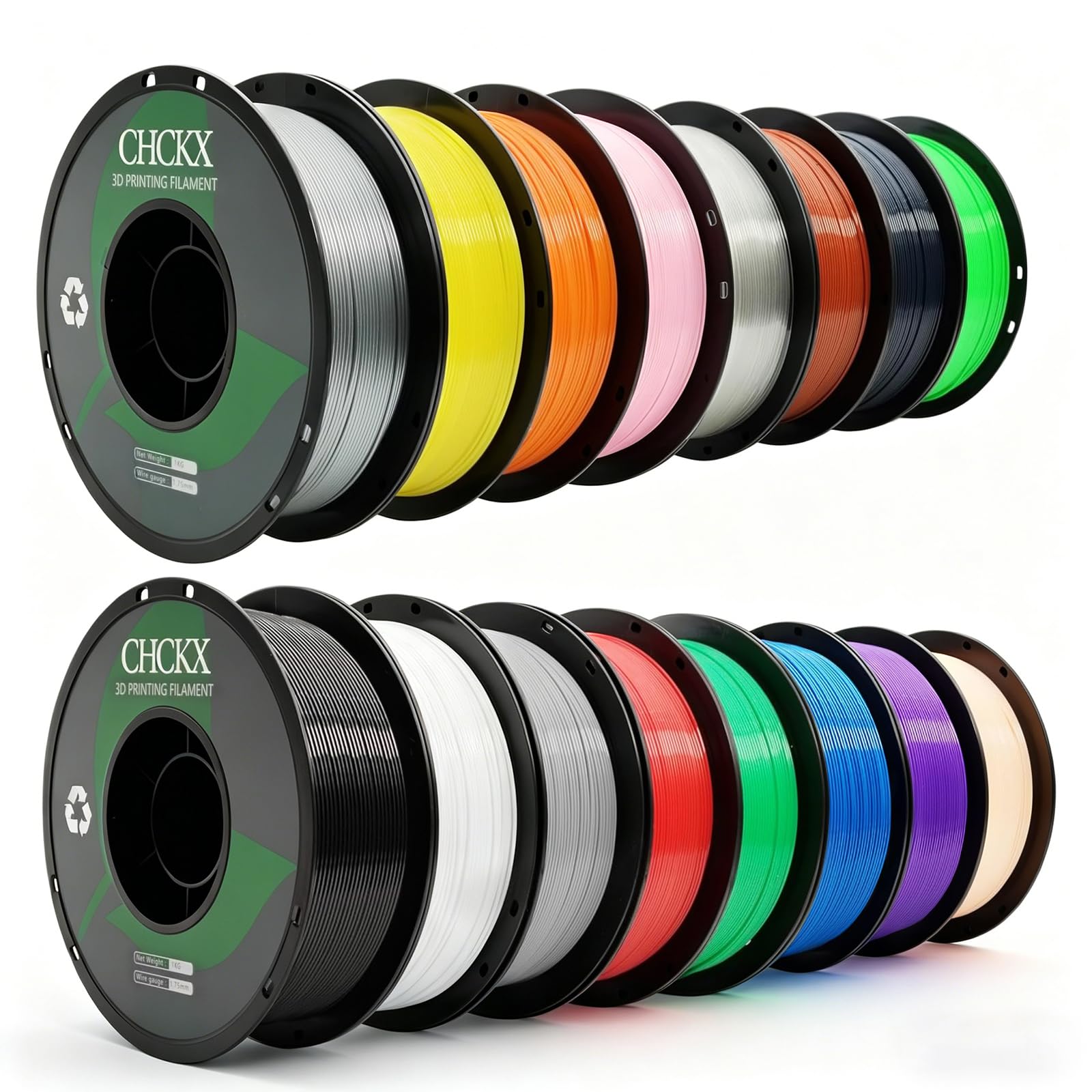
Sixteen full 1 kg spools is not a sampler; it is a small inventory. CHCKX gives you 16 colors, from black and white to skin, silver, transparent, and navy gray, all 1.75 mm and rated for 240–260°C at the nozzle with a 70–80°C bed. The range is more practical for product prototypes than another rainbow set.

We see the appeal for a shop that color-codes parts or sells printed goods. The filament prints smoothly straight from the bag, with a glossy finish and good detail, and the 1 kg spools mean fewer changes during a run. This is a production purchase, not an experiment; the buyer who benefits is already selling printed parts or building a color-coded inventory.

The weak spot is consistency across colors. Some colors print cleanly, while others can be brittle or fussy on the bed, so we test each new color on a small coupon before committing a long print. The upfront cost and the storage space are real, too. If you are still learning PETG, buy a single spool first; this bundle rewards someone who already knows the material.

Pros

  • Sixteen colors in full 1 kg spools
  • Smooth, glossy prints straight from the bag
  • Useful palette for prototypes

Cons

  • Large upfront purchase
  • Color-to-color consistency varies
Our verdict

We see CHCKX's bundle as a shop purchase for a buyer who already knows PETG and needs a broad color inventory, not a first spool.

Check Latest Price
7

Color Sampling

UJOYBIO PETG 20-Color Bundle

86 /100
Keeper Score Excellent

Key details

Diameter
1.75 mm
Spool Count
20
Spool Weight
0.2 kg each
Total Weight
8.82 lb
Check Price on Amazon

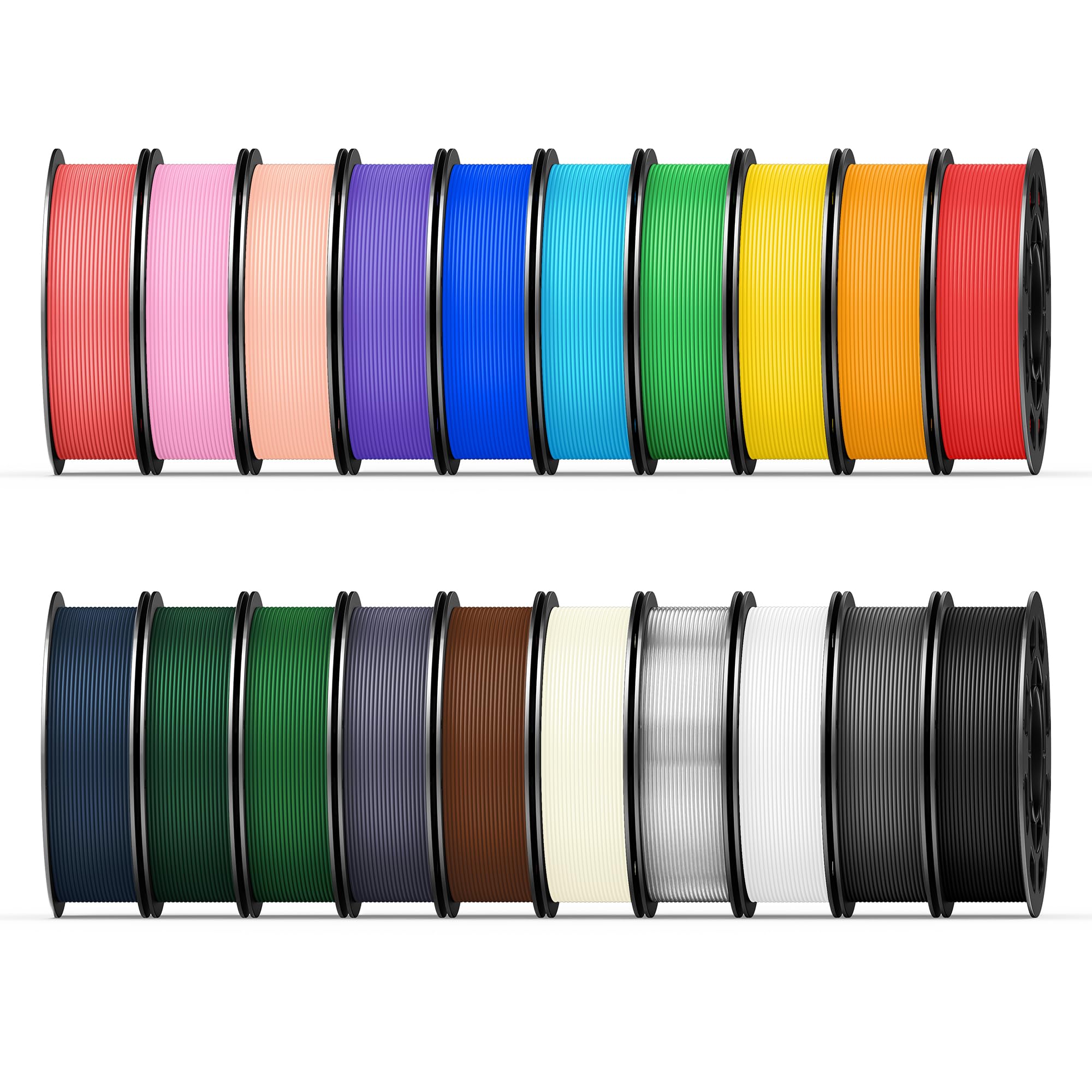
Twenty 200 g spools are a clever way to audition color without committing to a shelf of 1 kg rolls. UJOYBIO packs 20 colors, 4 kg total, all 1.75 mm and individually vacuum packed. The format is the point: you can try a peach red or cobalt blue on a small print before buying a full spool.

The catches are real. Colors can land slightly off the product photos, and print quality is not uniform across the set; some spools print smoothly while others need more temperature and retraction work. The small spools also mean more changes and more storage fiddliness. We treat each one as a sample, not a production roll.

For cosplay, test prints, or a school project that needs several colors, that trade-off makes sense. Because each spool is individually vacuum packed, you can open one color at a time and leave the rest sealed, which is the main reason this format works. It is not the set for someone who needs one reliable black spool.

The finish is good enough for display pieces, and the small spools are easy to store in a drawer between projects. The 200 g size also makes it easier to finish a color before it goes bad.

Pros

  • Twenty colors in small sample spools
  • Individually vacuum packed
  • Good finish for display pieces

Cons

  • Colors can differ from photos
  • Print quality varies across the set
Our verdict

UJOYBIO's set is our pick for sampling many PETG colors before committing to full spools.

Check Latest Price
8

Decorative Rainbow Prints

Stronghero3D Rainbow PETG

86 /100
Keeper Score Excellent

Key details

Color
Crimson Rainbow
Accuracy
±0.05 mm
Diameter
1.75 mm
Spool Weight
2.2 lb
Check Price on Amazon

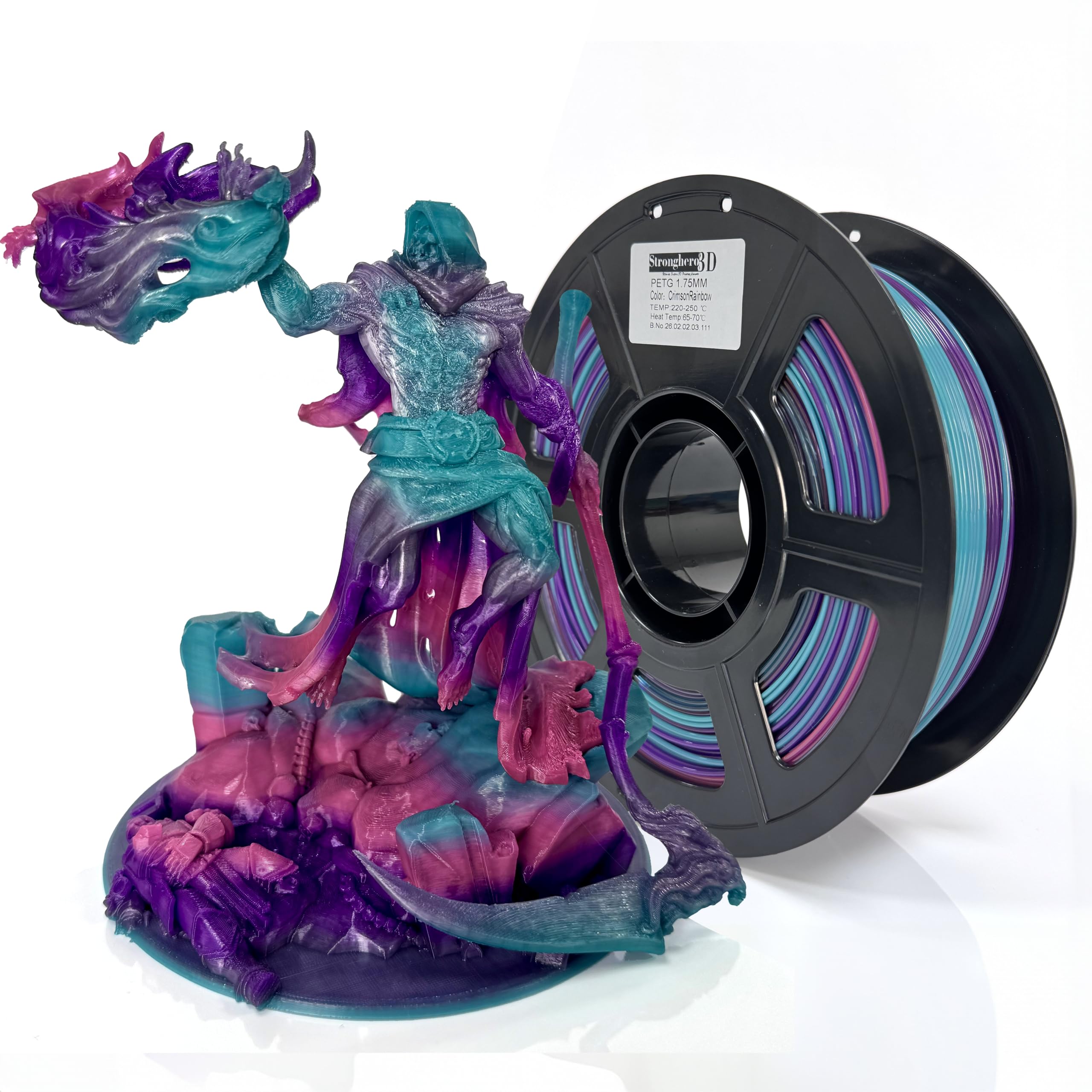
The crimson rainbow is the reason to look at this spool, and the glossy shift is the reason to keep looking. Stronghero3D sells it as a 1 kg, 1.75 mm PETG with ±0.05 mm accuracy, a 220–250°C nozzle range, and a 70–85°C bed. It is a decorative filament first and a structural one second.

On curved models, the color transition runs along the print height and gives dragons, vases, and cosplay props a finish that plain black cannot match. The PETG base adds more toughness than PLA, so the piece does not feel like a brittle display-only object. The looser tolerance is the trade-off: ±0.05 mm is the widest in this group, and we do not use it for parts that need to fit together precisely.

Buy it for visual impact, not for mechanical assemblies. The color shift rewards tall, sweeping shapes more than flat plaques, and the glossy surface shows off the transition best under direct light. For brackets and jigs, Polymaker or ELEGOO are the better fit.

The spool itself is standard 1 kg and fits a normal holder, so the unusual part is the color, not the handling.

Pros

  • Striking multicolor rainbow finish
  • Glossy surface on curved models
  • Tough PETG base

Cons

  • Wider ±0.05 mm tolerance
  • Not for precision mechanical fits
Our verdict

Stronghero3D's rainbow is the one we choose for decorative prints where color is the point; the loose tolerance makes it a poor fit for precision parts.

Check Latest Price

What Four Months and 16 Spools Taught Us

I started by pulling every 1.75 mm PETG spool I could find that shipped vacuum-sealed and published a diameter tolerance, then narrowed the field to 16 that covered what people actually buy: single 1-kilogram rolls, two-packs, refill spools for reusable reels, and multicolor bundles. All 16 ran on the same two printers in a spare room that gets warm and humid in summer, which is honest conditions for filament that sits on a shelf between projects.

Every spool printed the same set of parts: a calibration cube, a stringing tower, a vase-mode cylinder, and a 14-hour bracket that ran overnight while I slept. I watched first layers go down and noted whether corners lifted, measured diameter with calipers at five points along each spool, and weighed every reel before and after printing to see how much usable filament the advertised weight really delivered. Nothing stayed pristine — spools sat out on the desk for two weeks at a stretch, the way most of us store them, then went back on the printer to see whether popping and steam showed up.

Between prints I handled the parts rather than just photographing them: flexed them, dropped them from counter height, left them in a hot car for a week, and snapped a few on purpose to see whether they broke across the layers or along them, which tells you more about layer adhesion than any spec sheet. I held every print next to its spool to judge color match, compared two spools from the same bundle side by side, and looked at how visible the layer lines were in glossy versus translucent colors. Then I pushed the fastest profiles each spool claimed to handle to find where under-extrusion or clogging appeared. Anything that snagged, tangled, or strung heavily across the tower fell out early.

How to Choose Petg Filament

Start With Diameter, Tolerance, and Winding

PETG's 1.75 mm diameter is standard, but the tolerance and the wind are what you feel at the printer. A ±0.02 mm claim is a useful starting point: Creality, ELEGOO, OVERTURE, and Polymaker all publish it. Stronghero3D's ±0.05 mm is looser and better suited to decorative work. None of that makes a spool tangle-free, so look for neat, even layers and a spool that turns without snagging.

Our priority is the spool that feeds without babysitting. If you print long jobs, clean winding matters more than a tight number on a badly wound roll. Check the first meter by hand and keep a filament guide in the path if your spool holder sits far from the extruder.

Match Speed to Your Printer, Not the Label

High-speed PETG is formulated to flow faster, but the number on the spool is not a promise your printer can use it. Polymaker lists up to 500 mm/s and OVERTURE up to 300 mm/s; a stock printer with a standard hot end may still print best at everyday speeds. Match the filament to your hot end, nozzle, and profile, not the biggest number.

If you have a high-flow machine, fast PETG saves time on large parts. If you do not, the speed rating is mostly marketing and you should spend the difference on a spool that feeds cleanly.

Choose a Spool Format Your Setup Can Hold

Buy the format your setup can actually hold. A 1 kg spool is the default, a 2 kg pack cuts down reordering, and a 4 kg refill only makes sense if you already own SUNLU or Bambu Lab reusable spools. Small 200 g spools are for sampling color; they mean more changes and more storage.

If you use an AMS or similar system, confirm the spool diameter and hub fit before buying a bundle. For odd sizes, a printed adapter is often the fix, but it is better to know that before a 20-hour print depends on it.

Plan for Moisture, Adhesion, and Stringing

PETG is hygroscopic, so a spool that printed beautifully last month can string and pop after a humid week. Dry it before a long print and store it with desiccant; we treat drying as part of the process, not a sign that the filament is bad. Bed adhesion is the other swing: too little and the first layer lifts, too much and a PETG part can bond to a PEI sheet.

Clean the sheet, set the first layer carefully, and use a glue stick as a release layer when a print sticks too hard. Stringing usually comes down to moisture, temperature, and travel settings, so dry first and tune second.

Decide How Much Color You Need

Color bundles solve a different problem from a single spool. If you are still choosing a palette, the UJOYBIO 20-color set lets you test many shades before committing, while CHCKX's 16 full spools suit a shop that color-codes parts or sells finished pieces. Stronghero3D's rainbow is a finish choice, not a general-purpose color.

Value is not just cost per kilogram: count the spools you will actually open, the storage they need, and whether a failed print costs you a few minutes or a whole job.

Frequently Asked Questions

Final Verdict

For most FDM printers, the Polymaker 1 kg black spool is the PETG we recommend. It has the best balance of clean feeding, layer adhesion, and high-speed capability in this group, and it behaves well without a special profile.

If you want black and white for general printing, choose the Creality two-pack; if you burn through black parts, ELEGOO's two-spool pack is the more economical workhorse. For color, the UJOYBIO sampler is the low-risk way to choose before buying full spools.