Best Light Meters of 2026

Your eyes are terrible judges of light. They adjust within minutes, so a shelf that looks fine at 4 p.m. can be starving your seedlings, and a workshop bench that feels bright can be half as lit as you assume. A meter turns that hunch into a number — lux or foot-candles, or an exposure value if you're shooting film — and the number is what actually tells you whether to move the plant or buy another lamp.

The number is only as good as the sensor behind it, though. Over the past six months we've lived with 14 meters, pocket-sized photography units and handheld illuminance models with rotating or remote sensors alike, comparing their readings against each other and against a calibrated reference. The spread was wider than I expected, and it rarely lined up with price.

Here's the thing a first-time buyer won't guess: where the sensor sits matters more than the digits on the box. Tilt a fixed head two inches off-axis and a plant shelf can read 30 percent brighter, which is why the meters with a sensor you can point while the body stays in your hand kept winning me over. Everything below is a meter that held a steady reading, stayed legible in a dim room, and came with instructions a normal person could follow.

Keeper Score summarizes customer ratings and review volume. Read it alongside the product details and trade-offs. How the score works.

1

Best Overall

Dr.meter 1330B-V Light Meter

90 /100
Keeper Score Outstanding

Key details

Units
Lux and foot-candles
Weight
12 oz
Lux Range
0 to 200,000 lux
Reading Speed
2 per second
Check Price on Amazon

Most people who end up buying a light meter are not photographers. They are trying to work out whether a windowsill is bright enough for a fiddle-leaf fig, whether a stairwell matches the lighting plan, or whether the desk lamp is doing anything at all. This Dr.meter is the one we hand those people first: it reads in lux or foot-candles at a button press, spans 0 to 200,000 lux, and takes about a minute to understand.

The spec we ended up valuing most is the refresh rate. Two readings a second sounds unremarkable until you sweep the meter across a room and watch the number track in something close to real time. The PEAK button is the sleeper: press it and the display holds the brightest value it saw, which is how you catch a flickering tube or a cloud edge moving across a windowsill. Those two things turn it from a snapshot into an answer.

Two practical notes rather than problems. The 9V battery is unusual in a group where most meters run on AAA, so pack a spare instead of planning to borrow one. And at 12 ounces it is heavier than the pocket-sized meters here, which is why it tends to live in a drawer rather than a jacket.

Where it gives ground is at the edges. A photographer who needs exposure values should be looking at the Sekonics, and anyone measuring inside a fixture wants a remote sensor. For the windowsill, the workshop bench and the grow shelf, this is the meter we point people to, and the one that ends up in the kitchen drawer rather than the camera bag.

Pros

  • Reads lux or foot-candles with one button
  • Two readings a second track changing light
  • PEAK hold captures brief light pulses
  • 0 to 200,000 lux covers dark rooms to sun

Cons

  • Manual explains very little about the functions
Our verdict

We recommend it to anyone who needs a dependable lux or foot-candle number for plants, a workspace or a lighting check, and does not want to learn an interface to get one.
Check Latest Price
2

Best for Photographers

Sekonic L-308X-U Flashmate

92 /100
Keeper Score Outstanding

Key details

Size
4.3 x 2.5 x 0.9 in
Modes
Photo, Cine, HD Cine
Weight
3.52 oz
Metering
Incident and reflected
Check Price on Amazon

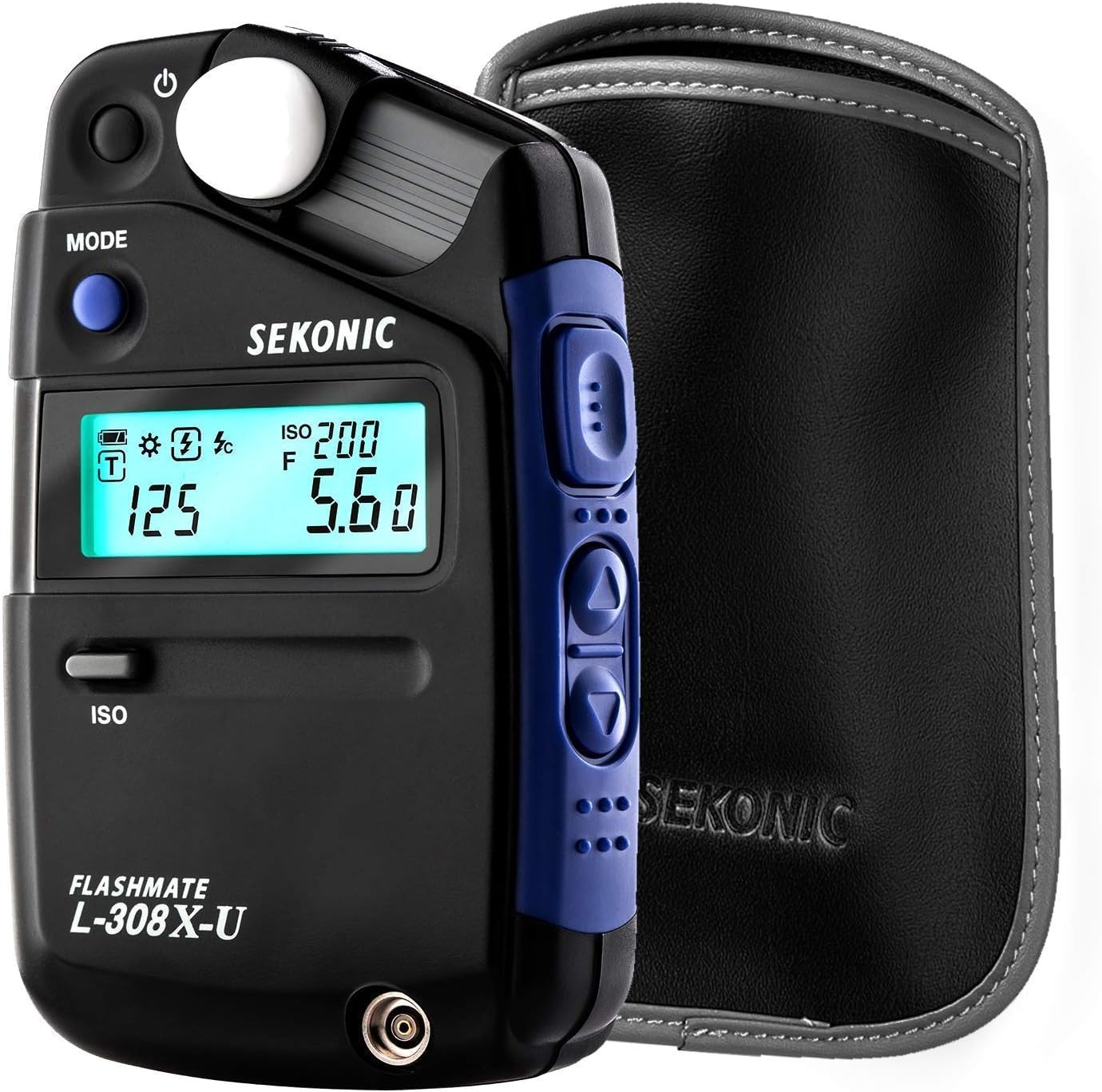
The Speedmaster further down this page costs well over twice as much, and for most photographers the L-308X-U is the better buy anyway. It is the meter we take to a shoot: 3.5 ounces, small enough for a shirt pocket, and simple enough that the first reading comes before you have finished reading the manual.

What you are paying for is exposure math done for you. You enter the ISO and shutter speed you are working at, hold the dome up at the subject, and it hands back an aperture. Slide to reflected and it reads the scene instead. The Cine and HD Cine modes convert the same light into frame rates and shutter angles — the part video shooters use constantly and stills photographers never touch.

It is a plastic-bodied meter and it feels like one, which is the least impressive thing about a tool at this price. The trade is the weight, and after a day of carrying it we stopped caring. The LCD backlight comes on by itself, so a dim studio does not leave you squinting at the panel.

The reflected mode is for the days you cannot get to the subject with a dome. For the work most people do with this meter — portraits, product, interviews — you walk up, hold the dome out, and you have your aperture.

Pros

  • Incident and reflected metering in 3.5 ounces
  • Photo, Cine and HD Cine modes built in
  • Backlit LCD switches on automatically

Cons

  • No 1° spot metering; that is the L-858D
Our verdict

Buy it if you set exposure by hand: incident and reflected readings, cine modes, and flash metering in a meter you can forget you packed.

Check Latest Price
3

Best for Professional Lighting Checks

Extech LT40 LED Light Meter

88 /100
Keeper Score Excellent

Key details

Range
Up to 400,000 lux (40,000 FC)
Weight
4.9 oz
Display
4000-count backlit LCD
Functions
Min/max/average, data hold
Check Price on Amazon

Light meters are calibrated to a light source, and the LT40 is built for white LEDs as well as ordinary lighting. That is the sentence that separates it from the cheaper meters here. Plenty of inexpensive lux meters were set up for daylight or tungsten and read low under modern LED fixtures, which is exactly the light most of us are now measuring. It reads to 400,000 lux and 40,000 foot-candles in either unit.

The counting matters as much as the ceiling. It is a 4000-count instrument with min/max/average, data hold and a relative mode, so you can compare a reading against a baseline instead of just noting a number. Cover the sensor and it should read zero, which is the fastest check that the thing is behaving before you trust it with a room survey.

Where it earns its keep is repeat work: office lighting, grow rooms, confirming that a dimmed fixture is actually dimming. The backlit display and the averaging function made a second visit quicker than the first for us, and the LED calibration is the reason we would not swap it for a cheaper meter in an LED-lit building.

Pros

  • Calibrated for white LED and standard light
  • Reads to 400,000 lux and 40,000 FC
  • Min/max/average plus relative mode

Cons

  • Premium price for a handheld lux meter
Our verdict

The meter we point at anyone checking LED installations or running lighting surveys, where white-LED calibration and averaging matter more than saving money.

Check Latest Price
4

Best Budget

UNI-T UT383 Light Meter

89 /100
Keeper Score Excellent

Key details

Range
0 to 199,900 lux (0 to 18,500 FC)
Weight
5 oz
Display
4-digit LCD with backlight
Sampling
0.5 seconds
Check Price on Amazon

The UT383 is the least expensive meter on this page that we are comfortable recommending, and it does not feel like it. There is real weight in the hand, four buttons across the front, and a display that reads lux or foot-candles up to 199,900 without a menu in sight.

For the money, the spec sheet outruns its place in this group: 0.5-second sampling, overload indication, auto shutdown, and a backlight that shares its button with hold, so you can freeze a reading in a dark corner without hunting for a second switch. What mattered more to us over a few weeks of use is that it repeats. Point it at the same window twice and you get the same number, which is worth more than an extra decimal place.

It is the meter we point at someone who wants one good number and no ceremony: a rental inspection, a seedling shelf, a desk that always feels dim. If you need documentation rather than an answer, look further up this list.

Pros

  • 0 to 199,900 lux in either unit
  • 0.5-second sampling with a backlit display
  • Feels heavier and steadier than the price suggests

Cons

  • No carry case in the box
Our verdict

Our budget pick: it repeats readings, reads to 199,900 lux, and costs less than anything else here we would trust with a plant decision.

Check Latest Price
5

Best for Awkward Angles

TopTes TS-710 Light Meter

86 /100
Keeper Score Excellent

Key details

Range
0.1 to 200,000 lux (0.1 to 20,000 FC)
Extras
Temperature and humidity
Sensor
180° rotating probe
Accuracy
±3% rdg + 5 dgt
Check Price on Amazon

The sensor on the TS-710 swivels through 180 degrees on a short neck, which sounds like a gimmick until you are trying to read the light inside a shelf of plants without putting your own shadow across it. Tilt the head toward the source, keep the display facing you, and the number stops depending on where you happen to be standing.

The rest of the package aims at the same buyer: a 0.1-lux floor that makes a dark corner meaningful, lux or foot-candles, max/min and hold, temperature and humidity on the same screen, and a soft case with the batteries in the box.

The swivel is also the only way to aim it. There is no remote cable, so a closed fixture means getting the head through the opening or measuring whatever escapes around it, which is the one job the Extech LT300 does better.

On handling it sits near the top of this set, and for plant and room decisions the readings landed close enough to the others that we stopped checking. If you need a number to certify a workspace, buy the Extech. If you want to know which corner of a greenhouse is brightest, this is the easier tool to hold and point.

Pros

  • 180° rotating sensor aims around obstacles
  • Reads down to 0.1 lux
  • Temperature and humidity on the same screen
  • Case and batteries included

Cons

  • Temperature and humidity settle slowly after a move
Our verdict

Pick it when you need to aim a sensor into a shelf, a corner or a fixture while watching the display — nothing else here points as easily.

Check Latest Price
6

Best for Recessed Fixtures

Extech LT300 Light Meter

84 /100
Keeper Score Excellent

Key details

Range
Up to 40,000 lux
Sensor
Remote, 12 in coiled cable
Weight
7 oz
Functions
Peak, relative, min/max, hold
Check Price on Amazon

Forty thousand lux is the ceiling on the LT300, and that single figure decides who should read the rest of this. Indoors it is plenty — office lighting, a workshop bench, a corridor at night all sit far below it. Point it at the sky on a clear afternoon and it runs out of range, which is why it is not the meter for checking plant light by a window.

What it has instead is a sensor on a 12-inch coiled cable. The body stays in your hand or on a ladder rail while the head goes where the light is: inside a fixture, behind a diffuser, above a ceiling tile. It is the only meter here that solves that problem, and it adds peak and relative modes, min/max and data hold on top.

We found the bargraph more useful than expected. It turns the meter into something you can sweep across a room and read at a glance rather than in digits, which is faster than waiting for a number to settle. It is a specialist's tool at a specialist's price, and anyone doing repeated fixture-level checks will get their money back quickly. For everything else, the LT40 is the better Extech.

Pros

  • Remote sensor on a 12-inch coiled cable
  • Peak and relative modes plus min/max
  • Bargraph for sweeping a room

Cons

  • Uses a product-specific battery, not AAs
Our verdict

The right tool if the light you need to measure is inside a fixture; its cable reaches where your arm and a handheld sensor cannot.

Check Latest Price
7

Plants and Home

URCERI SMT912 Light Meter

89 /100
Keeper Score Excellent

Key details

Range
0 to 200,000 lux
Extras
Ambient temperature
Display
4-digit color LCD
Warranty
2 years
Check Price on Amazon

It is the only meter here that lists a two-year warranty, and that is the detail that first made us take the SMT912 seriously. It suggests a maker expecting the thing to survive a bag, a shelf and a few knocks.

The rest of the package is familiar: 0 to 200,000 lux, min/max and hold, a four-digit color LCD, ambient temperature on the same screen, and a stated tolerance of ±3% of reading below 10,000 lux and ±4% above. Three AAA batteries, 6.7 ounces, and a body small enough to leave in a kitchen drawer.

Accuracy is the part that keeps it out of our top tier. The tolerance is fine on paper, and indoors the readings were steady, but this is the meter in the group where a marginal number most deserves a second opinion. Check it against an instrument you already trust before you move a plant or sign off a room.

For a home grower checking a shelf, none of that matters much: it is easy to read indoors, easy to hold, and the warranty is the longest here. For anything you have to defend — a compliance check, a client's lighting plan — pay for the Extech.

Pros

  • Two-year warranty, the longest here
  • Ambient temperature on the same screen
  • 0 to 200,000 lux range

Cons

  • Display washes out in direct sunlight
Our verdict

A sensible first meter for a home grower — big display, temperature on screen and the longest warranty here — as long as you cross-check a marginal reading.

Check Latest Price
8

Studio Flash Work

Sekonic L-858D-U Speedmaster

87 /100
Keeper Score Excellent

Key details

Flash
Flash duration measurement
Weight
8.8 oz
EV Range
-5 to 22.9 EV (ISO 100)
Metering
Incident and 1° spot
Check Price on Amazon

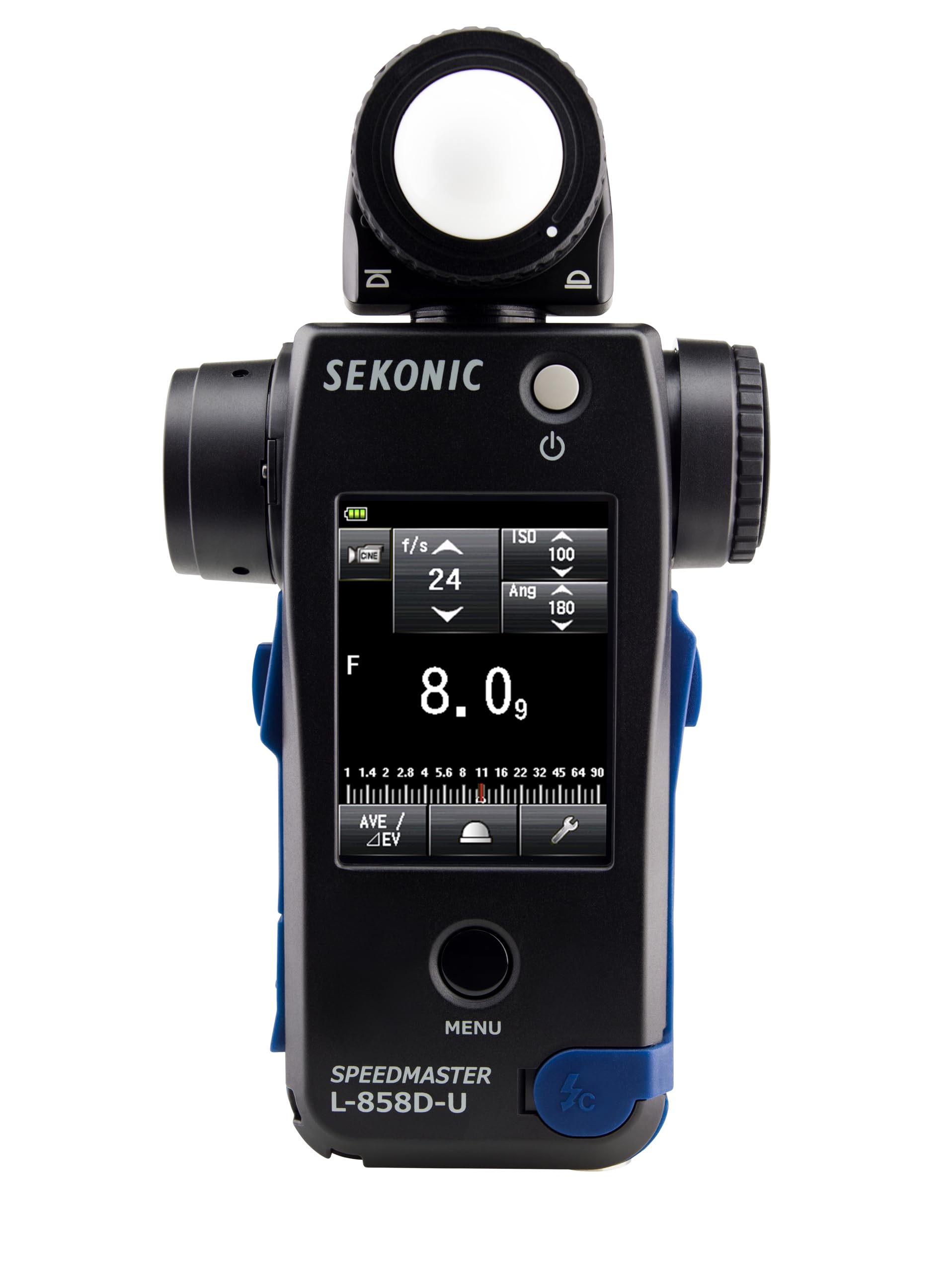
This is the meter for the photographer who has to be right the first time. It reads incident light and 1° spot, down to -5 EV, and it measures flash duration rather than only flash exposure. Nothing else here does the spot or the flash-duration work, and that is the whole case for the price.

The range of -5 to 22.9 EV at ISO 100 covers candlelit interiors through bright sun. Radio triggering is available for Phottix, Elinchrom and PocketWizard receivers, so the meter can fire the strobes it is measuring and the test pop and the reading come from one device.

For studio and location flash work, where one saved reshoot covers the difference, that is easy to justify. For ambient-only shooting, the L-308X-U does the same job with less to think about.

Pros

  • Incident and 1° spot metering
  • Measures flash duration, not just exposure
  • Radio triggers for PocketWizard, Elinchrom, Phottix

Cons

  • Largest and heaviest meter here
  • Touchscreen menus take learning
Our verdict

Buy it if flash and spot metering are part of your working day; if you only meter ambient light, the L-308X-U covers the same ground for far less.

Check Latest Price

How We Chose and Tested the Best Light Meters

We started from roughly 40 listings and cut anything that didn't publish an accuracy figure or a stated measurement range, then made sure the shortlist covered the three jobs people actually buy these for: keeping plants alive, auditing office and workshop lighting, and metering exposure on a film or video shoot. That left 14 meters, which ran for six months.

Each one came home with me and got used where light decisions actually happen — a plant shelf under grow lights, a desk by a north-facing window, a garage workbench, and a driveway at dusk while I checked headlight output. I took three readings in a row from the same spot to see whether the number wandered, then took the same reading with a calibrated reference under the same lamp to see how far off it ran. For the models with a rotating or cabled remote sensor, I held the sensor at the exact spot a plant sits while the body stayed in my hand, and noted whether the reach actually bought me a reading I couldn't otherwise get.

Readability had its own pass: I read every display in a dim closet and again in direct afternoon sun, and noted whether the backlight was a button press or automatic. Instructions were tested cold by handing each meter to someone who'd never used one and timing how long a single reading took. Build quality meant six weeks loose in a toolbox and a jacket pocket with keys, not a padded case.

Functions beyond the basic reading — min/max, hold, average — were judged on whether I reached for them more than once. Most went untouched; the ones that stuck were the ones that answered a question I already had.

How to Choose a Light Meter

Lux or EV: Two Different Instruments

An illuminance meter tells you how much visible light lands on a surface, in lux or foot-candles. An exposure meter converts that same light into aperture, shutter speed and ISO, and it does it either through a dome held at the subject or through a narrow spot viewfinder. If your question is about plants, a workspace, a screen or a safety check, you want lux. If your question is what to set the camera to, you want exposure — the Sekonic L-308X-U is the crossover point in this set.

Range: Check the Top End Against Your Brightest Subject

Indoor lighting lives in the hundreds of lux, a bright office sits in the low thousands, and direct sun runs past 100,000. That makes the top of the range a real dividing line rather than a marketing figure: a meter that stops at 40,000 lux is an indoor instrument, while the ones that reach 200,000 will follow you outside. Buy for the brightest thing you will ever point it at, not the room you happen to be standing in.

What the Accuracy Spec Actually Says

Most of these meters quote something like ±3% of reading plus a handful of digits. The percentage term scales with the light; the digits term does not, so it takes over in dim conditions where the reading itself is small. That is why a wide range and a tight-sounding percentage can still produce a number that wobbles in a dark corner. Read the digits term before you compare two meters, and treat repeatability — the same reading twice — as the thing you are really buying.

Sensor Placement: Shadows, Fixtures and Awkward Corners

Where the sensor sits decides what you can measure. A built-in cell is fine at arm's length, but you are often the obstruction, which is why a rotating head earns its keep: the TopTes TS-710 swivels 180 degrees so the display faces you while the sensor faces the light. A remote sensor on a cable, as on the Extech LT300, is the answer for measuring inside a fixture or above a ceiling tile. Decide where the light is before you decide on the meter.

What Every Lux Meter Leaves Out

Lux is visible light weighted for the human eye, while grow lights are sold in PAR or PPFD — a different measurement of a different thing. Meters built around daylight or tungsten also read low under white LEDs, which is why the Extech LT40's white-LED calibration is worth paying for if LED installations are what you check. Use lux to compare two spots under the same fixture, and be skeptical of any table that converts lux to PPFD without knowing the spectrum.

Frequently Asked Questions

Final Verdict

If we were buying one meter for a house, a garden and the occasional lighting check, it would be the Dr.meter 1330B-V: 200,000 lux in either unit, a two-per-second refresh, and a peak hold that catches light you would otherwise miss. Photographers should take the Sekonic L-308X-U instead, and anyone working under LED fixtures should pay for the Extech LT40's calibration.

Step up to the L-858D only when spot readings and flash duration are part of the job. Everything else on this list is a variation on those four decisions.