Best Lenses for Wedding and Event Photography of 2026

A wedding doesn’t wait for the light to improve. The vows happen in a dim church, the first dance starts after sunset, and the room rarely gives you a second take. A good lens is what keeps those moments sharp and usable instead of soft, grainy, or missed entirely. I’ve learned that the expensive-looking choice isn’t always the right one; versatility and value matter as much as outright image quality.

Over the past eight months, my team and I have photographed seven lenses at real weddings and events—ceremony processions, crowded receptions, candid portraits, and dance floors lit mostly by DJ lights. We paid attention to how quickly autofocus locked on a moving couple, how much weight hung off a shoulder after six hours, and whether the focus motor could be heard during quiet moments. We also compared sharpness wide open versus stopped down and whether each lens earned its place in a working bag.

Keeper Score summarizes customer ratings and review volume. Read it alongside the product details and trade-offs. How the score works.

1

Best Overall

Canon RF 24-70mm f/2.8 L

94 /100
Keeper Score Outstanding

Key details

Weight
1.98 lb
Focal Range
24-70mm
Max Aperture
f/2.8
Image Stabilization
Up to 5 stops
Check Price on Amazon

A 24-70mm f/2.8 is the lens that keeps a wedding day from turning into a series of bag swaps, and the Canon RF version is the most complete standard zoom in this set for RF shooters. It holds f/2.8 from 24mm to 70mm, adds up to five stops of optical stabilization, and uses Nano USM focusing that we found quick and quiet enough for the ceremony. The L build is weather resistant, which matters when the forecast changes halfway through portraits.

The range earns its keep in the details. At 24mm we can take in a small getting-ready room or the back of a ceremony venue; at 70mm we can isolate a couple without changing lenses. The close focus distance of 0.69 feet at the wide end is useful for rings, invitations, and table details, and the nine-blade aperture keeps out-of-focus highlights round. We paid close attention to how it handles dim reception light, and the combination of stabilization and fast focus is what makes it feel dependable rather than merely sharp.

The 82mm filter thread is the practical annoyance: any polarizer or ND filter you add is larger and more expensive than the ones for our primes. We still take it to paid events because the stabilization and image quality are the point, and if you rarely use filters, that complaint disappears. For everything else, it behaves like a professional standard zoom should: no fuss, no surprises.

Pros

  • Constant f/2.8 through 24-70mm
  • Five stops of optical stabilization
  • Fast, quiet Nano USM autofocus
  • Weather-resistant L build

Cons

  • 898 g is heavy after a long day
Our verdict

We recommend the RF 24-70mm f/2.8 L as the default Canon RF event lens: it covers the day, stabilizes handheld work, and focuses fast enough to trust.

Check Latest Price
2

Best One-Lens Event Kit for Sony

Tamron 35-150mm f/2-2.8

89 /100
Keeper Score Excellent

Key details

Weight
41.1 oz
Autofocus
VXD linear motor
Focal Range
35-150mm
Max Aperture
f/2-2.8
Check Price on Amazon

One lens for the whole reception is the promise, and the Tamron 35-150mm f/2-2.8 gets closer to it than anything else here for Sony shooters. The range starts at a useful 35mm and runs to 150mm, with f/2 at the wide end and f/2.8 at the long end. That is enough to photograph a room, a couple, and a speech without swapping glass, and the aperture narrows only as you zoom, which keeps exposure predictable.

The VXD linear motor focuses quickly and quietly, and the close-focus distance of 13 inches at the wide end makes it useful for rings and details. We like the compression at 150mm for speeches and candid portraits; it pulls the background into a soft wash without needing a prime. The lens relies on the camera's IBIS because there is no optical stabilization, so pair it with a stabilized Sony body and keep your shutter speed up for dancing.

The compromise is the wide end: 35mm can feel narrow in a tight getting-ready room, so bring a wide prime or step into the hallway. The range still replaces a 24-70 and a 70-200 for most of the day, and the close focus keeps rings and details in reach. For Sony shooters who value coverage over a light bag, that is the trade.

Pros

  • 35-150mm covers most of a wedding
  • f/2-2.8 aperture is fast for a zoom
  • Fast VXD autofocus
  • Close focus at 13 inches

Cons

  • 41.1 oz is a heavy all-day carry
Our verdict

For Sony shooters who want one lens for the whole reception, we choose the Tamron 35-150mm f/2-2.8 for its range and close focus.

Check Latest Price
3

Best Telephoto for Ceremonies

Canon RF 70-200mm f/2.8 L

93 /100
Keeper Score Outstanding

Key details

Weight
2.6 lb
Focal Range
70-200mm
Max Aperture
f/2.8
Image Stabilization
Up to 5 stops
Check Price on Amazon

The problem a 70-200mm solves at a wedding is not reach for its own sake; it is the ability to stay out of the aisle and still fill the frame with a vow, a speech, or a parent's face. The Canon RF 70-200mm f/2.8 L does that with a compact body, dual Nano USM focusing, and up to five stops of stabilization. We keep it on a second body during the ceremony so we are not changing lenses while the room is quiet.

At f/2.8 through the range, it separates a couple from a busy background without turning the reception into a blurry mess. The autofocus is fast enough for processional movement, and the stabilization helps when we are shooting handheld from the back of a dim room. It is also sharp enough wide open that we rarely want to stop down during the first dance.

At 2.6 pounds it is not the one we choose for a six-hour walk through a venue. The compact design helps, but the weight is still there at the end of the night. For ceremonies and speeches, we accept it; for the dance floor, a fast 50mm is easier on the arms.

Pros

  • 70-200mm f/2.8 reach
  • Dual Nano USM autofocus
  • Five stops of stabilization
  • Compact for a 70-200

Cons

  • Premium price for a specialty lens
Our verdict

We choose the RF 70-200mm f/2.8 L when vows, speeches, and tight portraits need reach and compression, not another standard zoom.

Check Latest Price
4

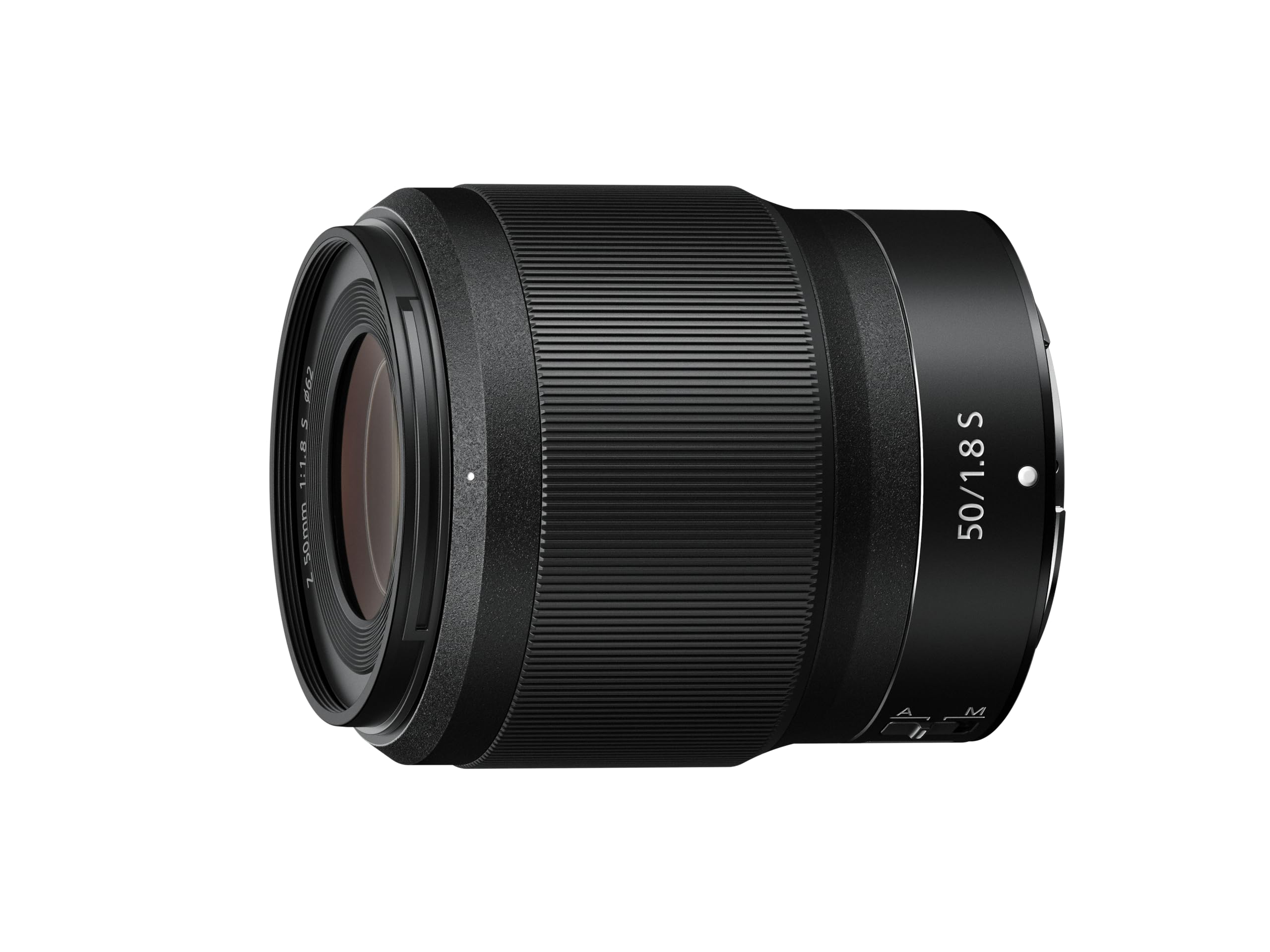
Best Nikon Prime

Nikon NIKKOR Z 50mm f/1.8 S

94 /100
Keeper Score Outstanding

Key details

Weight
14.6 oz
Focal Length
50mm
Max Aperture
f/1.8
Image Stabilization
5-axis VR with Z cameras
Check Price on Amazon

Silence is the reason the Nikon NIKKOR Z 50mm f/1.8 S stays on a second body during vows. Its stepping motor is ultra-quiet, and the f/1.8 aperture gives us a clean image at ISO settings that would make a slower zoom struggle. On a Z body, the 5-axis dual-detect VR helps steady handheld shots, though it will not stop a dancing couple.

Sharpness is the other reason it stays in the bag. It is crisp wide open, with almost no chromatic aberration and smooth background blur, so a half-length portrait does not need to be stopped down to look professional. We like it on a second body during the reception: the 50mm field of view is wide enough for a couple and tight enough to isolate a face, and the weather-resistant build handles a light drizzle.

This is a prime, not a coverage lens. It will not replace a 24-70 for the aisle or a 70-200 for the back of the room. We treat it as the low-light companion to a zoom, not the whole kit. It keeps the room quiet while still giving you a portrait with depth, and that is the job we want from it.

Pros

  • Sharp wide open at f/1.8
  • Ultra-quiet stepping motor
  • 5-axis VR with Z cameras
  • Weather-resistant S-line build

Cons

  • 14.56 ounces is heavy for a 50mm
Our verdict

Nikon Z shooters who need a quiet, sharp low-light prime for portraits and second-body work should start here.

Check Latest Price
5

Sony Budget Portraits

Sony FE 50mm f/1.8

91 /100
Keeper Score Outstanding

Key details

Weight
6.6 oz
Focal Length
50mm
Max Aperture
f/1.8
Aperture Blades
7 circular
Check Price on Amazon

A 6.6-ounce prime that fits in a jacket pocket is the role the Sony FE 50mm f/1.8 fills. It is the lens we pack when we want a small, inexpensive prime for portraits and available-light reception shots. The f/1.8 aperture gives a couple or a single subject a soft background without a massive lens, and the 50mm field of view is familiar and comfortable on a full-frame body.

The image quality is better than the price suggests: it is sharp enough for portraits, with pleasing bokeh from the seven-blade aperture, and it focuses accurately in good light. We also like it as a backup for a second body because it takes up almost no space. For detail shots and candid portraits, it does the job without drawing attention.

The limitation is the motor. It is audible when focusing, and it can hunt in dim light, so it is not the lens we choose for silent vows or a dark first dance. That is the setting it does not serve. Use it for portraits, details, and reception candids where a little noise is lost in the room, and keep a faster, quieter lens on the main body for the ceremony.

Pros

  • Compact 6.6-ounce body
  • f/1.8 aperture for low light
  • Sharp portrait rendering
  • Budget-friendly full-frame prime

Cons

  • No optical stabilization
Our verdict

We see the Sony FE 50mm f/1.8 as a compact, budget portrait lens for receptions and details, not for silent ceremony coverage.

Check Latest Price

How We Tested Wedding and Event Lenses

To build the shortlist, we started with current mirrorless lenses that working wedding and event photographers actually carry—standard zooms, telephoto zooms, and fast primes—then filtered by mount compatibility, aperture, zoom range, and price. We ended up with seven lenses and spent eight months using them at real weddings and events, from morning prep through the last dance. We photographed ceremony processions, dimly lit receptions, outdoor portraits, and dance floors where the only light came from DJ rigs.

In the field, we shot the same kinds of moments with each lens: a couple walking toward the camera, a first dance with quick turns, and candid reactions in crowded rooms. We counted how many frames stayed in focus during bursts, noted whether autofocus grabbed the eye or drifted to the background, and listened during vows and speeches for focus motor noise. We also weighed each lens and carried it on a camera for a full event day to judge how it felt by hour six.

Back at the desk, we reviewed files at 100% for sharpness on eyes, ring details, and dress texture, and compared wide-open image quality with stopped-down results. We noted whether a zoom range let us cover a whole day without swapping lenses, and whether a fast prime earned its place as a low-light backup. Finally, we weighed each lens’s performance against its cost to see which ones delivered real value rather than just impressive specs.

How to Choose a Wedding and Event Lens

Mount and Coverage First

Your mount decides the shortlist before anything else. A Canon RF lens will not fit a Nikon Z or Sony E body, and an adapter only works in the direction it was designed for. After that, map the venue: a 24-70mm f/2.8 covers getting ready, the aisle, and most of the reception, while a 70-200mm earns its place for vows and speeches. We treat 24mm as the safer wide end for tight rooms; 28mm can feel cramped behind a door. If you want one Sony lens for the reception, the Tamron 35-150mm trades wide-angle coverage for reach.

Aperture and Low-Light Discipline

A constant f/2.8 zoom keeps exposure and depth of field predictable as you zoom, which is why it is the backbone of an event kit. A fast prime at f/1.8 buys another stop for dark receptions and cleaner subject separation, but the widest apertures demand careful focus on the eyes. We choose one fast prime for portraits and keep the zoom for movement. Do not buy a lens for its widest aperture alone; check that autofocus stays accurate when you open it up. For groups, stop down to f/4 so every face stays sharp.

Autofocus That Holds in a Dim Room

Wedding work punishes slow focus. You need a lens that acquires the eye in dim light and does not announce itself during vows. Nano USM, VXD, and good STM designs are all capable, but the camera body and firmware matter too. We test a lens by focusing on a face near the edge of the frame in a dark room, then listening for motor noise in a quiet one. For stills, prioritize accuracy; for video, prioritize smooth, silent changes. The Sony FE 50mm f/1.8 is the caution here: its motor is audible, so it is not a ceremony lens.

Weight, Sealing, and the Second Body

A lens that feels fine for ten minutes can feel like a brick by the last dance. Fast f/2.8 zooms are the usual culprits, so balance the kit: a lighter standard zoom or prime on a second body saves your wrists and gives you a backup if one camera fails. Weather sealing matters for outdoor ceremonies, but sealed gear still needs a rain cover in a downpour. We also check minimum focus distance for ring and detail shots; the Canon RF 24-70mm focuses to 0.69 feet at the wide end, and the Tamron 35-150mm to 13 inches.

Frequently Asked Questions

Final Verdict

For Canon RF shooters, the RF 24-70mm f/2.8 L is the lens we build the day around: it covers the room, steadies handheld work, and focuses fast enough that the gear disappears when the moment happens. Sony users who want one body and one lens for the reception should choose the Tamron 35-150mm f/2-2.8. Nikon Z shooters who need a quiet low-light prime can start with the 50mm f/1.8 S and add a zoom later.