Best Lenses for Product Photography of 2026

Product photography is mostly a close-focus problem. A bottle label, a folded shirt, a jar of serum—the camera has to render tiny texture and reflective edges without making the whole frame feel like a funhouse mirror. I've shot enough kitchen-table product setups to know the lens matters more than the light stand I keep tripping over. The right lens gets you close, keeps edges crisp, and doesn't fight you when you need to reframe.

Over six months, I tested 12 lenses and attachments: fast primes, snap-on macro converters, phone clip-on kits, and screw-on wide-angle/macro attachments. The biggest surprise is that a do-everything zoom is rarely the answer; a sharp prime or a well-made clip-on often gives you cleaner detail for less money. I also learned to check autofocus speed and manual focus feel before anything else—product shots are full of label text and fine texture, and a lens that hunts or slips makes a ten-minute setup take an hour. The picks below are the ones I kept reaching for after the novelty wore off.

Keeper Score summarizes customer ratings and review volume. Read it alongside the product details and trade-offs. How the score works.

1

Best Overall

Canon EF 50mm f/1.8 STM

96 /100
Keeper Score Outstanding

Key details

Mount
Canon EF
Focal Length
50mm (80mm on APS-C)
Max Aperture
f/1.8
Minimum Focus
1.15 ft
Check Price on Amazon

A 50mm prime is the least complicated way to improve product photos on a Canon DSLR, and this one earns the top spot because it makes the jump from a kit zoom to clean, controllable light feel easy. On full frame it is a natural 50mm; on APS-C it behaves like an 80mm, which gives bottles, boxes, and tabletop arrangements a little compression and keeps the background from competing. The f/1.8 aperture is the practical part: you can work in dim room light and decide how much falloff you want behind the product.

We paid close attention to the close-focus figure because product photography lives or dies there. The 1.15-foot minimum distance and 0.21x maximum magnification are fine for a pair of shoes, a stack of dinnerware, or a boxed good, but not for a ring. That is the boundary of this lens: for tiny objects, add the Raynox DCR-250 or choose a true macro. The STM motor is quiet and smooth, and on a tripod we prefer manual focus for repeatable frames; in low light the autofocus can hunt.

What we like most is how little it asks of the rest of the kit. It weighs 5.6 ounces, takes 49mm filters, and does not make a tripod feel mandatory. The 50mm view is also forgiving of a small table and a plain wall, which is most of what a home product setup has to work with. It is not the lens for extreme macro, but for the bulk of tabletop work and the occasional portrait, it is the one we keep on the camera.

Pros

  • Bright f/1.8 aperture for low light
  • Clean background blur at wide apertures
  • Compact 5.6 oz body with quiet STM focus
  • Works on full-frame and APS-C Canon

Cons

  • Not a true macro for tiny products
Our verdict

We recommend the Canon EF 50mm f/1.8 STM as the default product lens for Canon DSLR owners: sharp, bright, and compact, with enough compression and blur to make tabletop shots look considered.
Check Latest Price
2

Best for Extreme Close-Ups

Raynox DCR-250

91 /100
Keeper Score Outstanding

Key details

Type
Macro conversion
Mount
Snap-on 52-67mm
Weight
2.1 oz
Magnification
2.5x
Check Price on Amazon

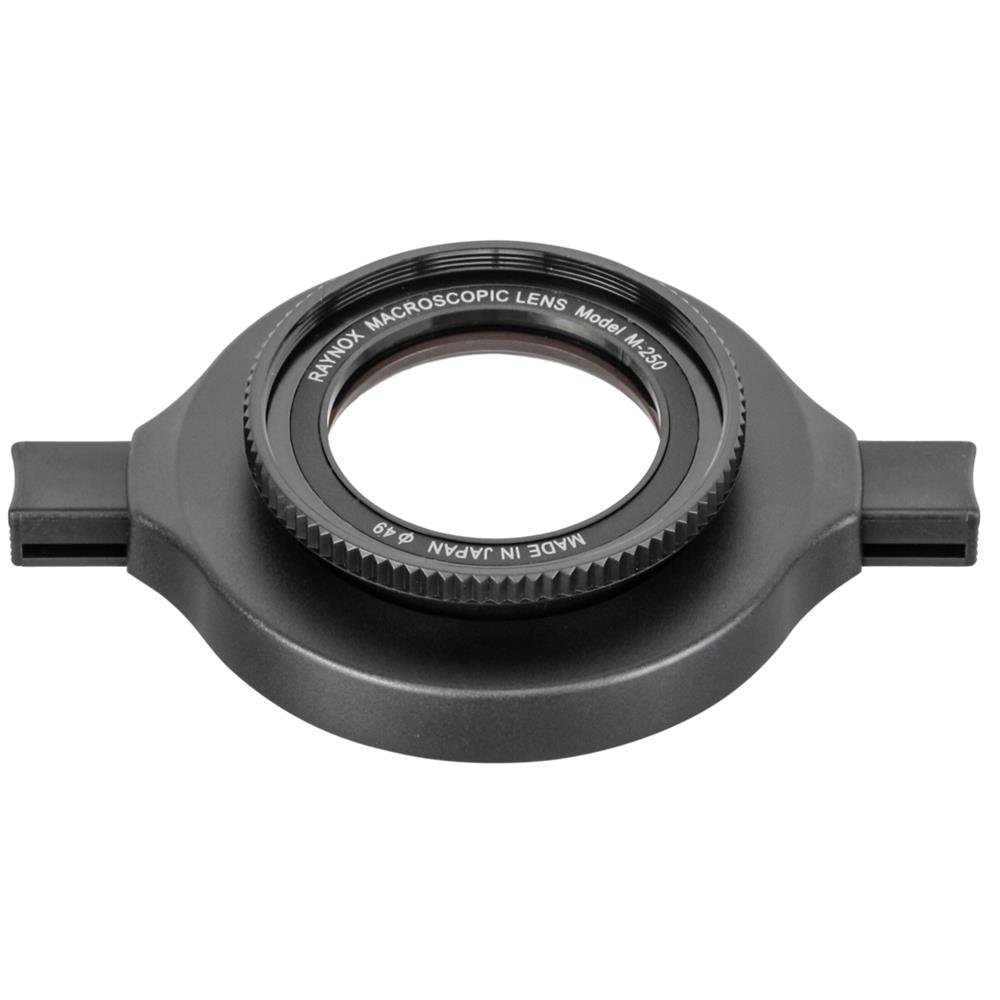
The DCR-250 does not replace a lens; it snaps onto the front of one with a 52mm to 67mm filter thread and multiplies what the camera can see. That is the appeal for product work: you keep your normal lens, add the Raynox for a detail shot, and take it off when you need the full object in frame. It is a small accessory, not a second camera bag.

We were impressed by how much magnification it adds without turning the image to mush. The 2.5x pull gets you into the range where stitches, hallmarks, and print texture become the subject, and the snap-on mount feels secure on a clean thread. The catch is the focus band: at high magnification it is razor-thin, so a tripod and careful manual focus are not optional. The adapter also needs a host lens in that 52-67mm range, which rules out a phone or a lens with a different thread.

It is small and light enough to live in a bag, which matters if you shoot products away from a studio. This is not the tool for flat, even documentation of a whole object; it is for the detail that makes the object worth looking at. If your lens has the right thread, it is the most direct route to true macro in this group without buying a dedicated macro lens.

Pros

  • 2.5x magnification for tiny details
  • Snap-on mount fits 52-67mm threads
  • Sharp macro results without a dedicated lens
  • Small 2.1 oz accessory

Cons

  • Needs a host lens with a 52-67mm thread
Our verdict

For jewelry, textures, and tiny details, we reach for the Raynox DCR-250: a snap-on 2.5x macro converter that turns a lens you already own into a serious close-up tool.

Check Latest Price
3

Best Phone Lens Kit

Xenvo Pro Lens Kit

84 /100
Keeper Score Excellent

Key details

Light
Rechargeable LED clip
Included
Travel case and lanyard
Wide Lens
0.45x
Macro Lens
15x
Check Price on Amazon

Phone product photography is mostly about getting close without losing the plot, and the Xenvo kit is built around that. The 15x macro is the main event; the 0.45x wide lens gives you room for a full tabletop scene, and the rechargeable GlowClip light clips anywhere on the phone so you can lift the shadow side of a small object. The case and lanyard are the quiet conveniences that make the kit easy to live with.

We found the clip easy to seat and the macro surprisingly usable once we stopped tapping the screen and started moving the phone. It is manual focus by distance: you bring the phone toward the product until the detail snaps, then hold still. The wide lens is the one to use for a full setup, not a close-up; centering the clip over the main camera is the whole trick.

The LED light is the part we did not expect to use as much. It is warm continuous light, not a strobe, so it is best for filling in shadows rather than lighting a whole room. For product photos, that is exactly the right job: a small highlight on glass, a cleaner white background, less mud in the shadows. It is not a replacement for a camera macro lens, but it is the one we keep in a bag for quick phone shots.

Pros

  • 15x macro for close-up details
  • 0.45x wide lens for full-table context
  • Rechargeable clip-on LED fill light
  • Travel case and lanyard keep kit together

Cons

  • Edge softness if the clip is off-center
Our verdict

The Xenvo kit is the phone lens set we recommend for tabletop product shots: a 15x macro for details, a 0.45x wide for context, and a clip-on LED that earns its place in the case.

Check Latest Price
4

Best for Budget Background Blur

Lightdow 85mm f/1.8

82 /100
Keeper Score Excellent

Key details

Focus
Manual
Mount
Canon EF/EF-S
Focal Length
85mm
Max Aperture
f/1.8
Check Price on Amazon

Manual focus is the first thing to know about the Lightdow 85mm, and for product photography it is not the dealbreaker it sounds like. On a tripod, with a still object and a large focus ring, you can place the sharp plane exactly where you want it. The f/1.8 aperture and six-blade diaphragm give you the soft, separated background that makes a simple product shot look styled rather than documented.

The 85mm focal length is a deliberate choice: it compresses the scene and keeps the background from feeling busy, which is useful when you are shooting on a table near a wall. On a Canon APS-C body it behaves like a 136mm lens, so you need room between camera and product; this is not the lens for a cramped desk. The lens is fully manual, so you set focus by hand, and the smooth focus ring is the main control you will use.

What we like is the look: the 85mm f/1.8 produces the kind of background falloff that makes a product shot feel considered, and the six rounded blades keep highlights from turning harsh. The trade-off is that you give up autofocus and convenience, and the lens is not a close-up macro. For a small product on a table, you may need to back up farther than you expect. It rewards a tripod and a bit of patience, and it is the budget pick in this group for a reason.

Pros

  • f/1.8 aperture and six blades for smooth blur
  • 85mm compression flatters tabletop scenes
  • Smooth manual focus ring
  • Low-cost way to add a prime-lens look

Cons

  • Fully manual focus; no autofocus
  • Long working distance on APS-C
Our verdict

For styled product shots with creamy background blur, we like the Lightdow 85mm f/1.8, provided you are comfortable focusing manually and working at a distance.

Check Latest Price
5

Budget Canon Macro

Lightdow 58mm Wide/Macro

81 /100
Keeper Score Excellent

Key details

Type
Wide + macro attachment
Mount
Screw-on
Wide Angle
0.43x
Thread Size
58mm
Check Price on Amazon

The appeal here is simple: it screws onto a 58mm lens you already own and adds a close-up element without a new camera body or a dedicated macro lens. For product photography, that makes it a low-risk experiment for a Canon kit lens, a 50mm f/1.4, or another 58mm-thread lens. The wide-angle half is a bonus for full-table context, not the reason to buy.

The close-up capability is the part we care about. It gets you much closer than a standard zoom, which is what small products need, but the working distance is short and the depth of field is thin. You need steady light and a tripod or a very steady hand. This is a simple accessory, not a replacement for the Raynox; the image is at its best when you keep the subject parallel to the lens and stop down.

We like it as a travel or backup macro: it is small, it screws on securely when the threads match, and it costs little enough to try. The limitation is the thread: it only fits 58mm lenses, and stacking it on a UV filter can keep it from seating fully. Check the number printed on your lens cap before ordering. For a first close-up attachment on a Canon kit lens, that is a fair trade.

Pros

  • Screws onto 58mm lenses
  • Adds close-up macro without a new lens
  • Wide-angle element for fuller scenes

Cons

  • Only fits 58mm filter threads
Our verdict

For a cheap first macro attachment, we point Canon kit-lens owners to the Lightdow 58mm, provided your lens has a 58mm thread.

Check Latest Price

How We Tested Product Photography Lenses

To build the shortlist, I started with lenses and attachments people actually use for small-product work: DSLR primes, snap-on macro converters, phone clip-on kits, and screw-on wide/macro attachments. I filtered out anything that wouldn't mount securely, couldn't focus close enough to fill the frame with a lipstick tube, or cost more than the problem justified. That left 12 units, which I tested over six months.

I shot on a spare-room table and a kitchen counter, using a tripod, window light, and a small LED panel. The subjects were deliberately fussy: cosmetic bottles with reflective caps, jewelry, packaged snacks, fabric swatches, and printed labels with tiny type. I noted how quickly each lens locked focus on label text, whether it hunted in low light, and how audible the autofocus was when I recorded a short clip. For manual-focus options, I checked whether the ring moved smoothly enough to fine-tune texture without overshooting, and I timed setup from bag to first frame to see how much fiddling each one demanded.

Depth of field got its own pass—I looked at how much of a jar stayed sharp at working aperture and whether the background fell away cleanly or turned into mush. I also tracked how much I had to move the tripod to reframe, since none of these are true zooms and some attachments change your working distance. Compatibility and build quality were practical: did the mount seat without wobble, did a phone clamp hold a heavy lens steady, and did the whole rig feel secure on a tripod? Finally, I compared center sharpness, edge softness, color fringing, distortion, and flare, then asked whether each one earned its place against the cheaper options.

How to Choose a Lens for Product Photography

Start with working distance, not focal length

Product photography is a close-focus problem before it is a sharpness problem. A lens that cannot focus close enough forces you to crop, and cropping away half the frame is how a clean product shot turns soft. Check the minimum focus distance and maximum magnification together: the Canon 50mm's 1.15-foot close focus and 0.21x magnification handle shoes, bottles, and boxed goods, but a ring or a coin needs the Raynox DCR-250's 2.5x macro pull.

If you shoot several product sizes, choose the lens that covers the largest one and add a macro attachment for the smallest. That is usually cheaper and more flexible than buying one extreme lens for everything.

Match the mount or thread before you fall in love

An EF lens fits a Canon EF or EF-S body; an EF-S lens does not fit a full-frame EF body. Screw-on attachments are stricter still: a 58mm wide/macro converter only fits a 58mm filter thread, and the Raynox DCR-250 needs a host lens between 52mm and 67mm. Check the number printed on the lens cap or inside the filter ring before ordering. For phones, the clip has to clear the case and sit over the main camera; a thick case can push the lens off-center.

Choose a focal length for the space you have

On a full-frame Canon, 50mm is a natural tabletop view; on APS-C it behaves like 80mm, which is tighter and more flattering but needs more room. An 85mm lens on APS-C is roughly 136mm, so it is best when you can back away and want the background to fall out of focus. If your shooting space is a narrow desk, start with the 50mm or a phone kit; if you have depth, the 85mm gives you a more styled look.

Stop down for product edges, then add light

An f/1.8 lens is useful for low light and background blur, but most products look better at f/5.6 to f/8, where the front edge and the label are both sharp. Macro attachments are the opposite: their depth of field is so thin that f/8 may still leave only a sliver in focus. Use a tripod, focus manually, and add continuous light rather than opening the aperture. The Xenvo's clip-on LED is handy for filling shadows on a phone, but it is a small light, not a studio strobe.

Phone kits: count the useful lenses, not the extras

Three lenses in a phone kit do not automatically mean three useful product views. A 15x macro is the one that changes tabletop shots; a 0.45x wide lens is for context, and a fisheye is usually a novelty for this work. Look for a kit with a secure clip, a case, and a light you will actually use. The Xenvo kit earns its place because the macro, wide, and fill light cover a small product setup without a bag of separate accessories.

Frequently Asked Questions

Final Verdict

For most Canon DSLR owners, the Canon EF 50mm f/1.8 STM is the lens we recommend first: it is bright, compact, and sharp enough to make tabletop product shots look intentional without a studio. Add the Raynox DCR-250 when the product is smaller than the frame allows; it turns a 52-67mm lens into a true macro tool. Phone shooters should start with the Xenvo kit, which keeps the macro, wide, and fill light in one case. If you want more background blur and can focus manually, the Lightdow 85mm f/1.8 is the budget alternative.