Best Lens Cleaning Pens of 2026

A thumbprint on the front element has a way of showing up exactly when the light turns good. A lens pen is the small fix for it: a retractable brush on one end to lift grit, a carbon-tipped pad on the other to pull grease and fingerprints off glass without a drop of liquid. It drops into a pocket or a camera bag and works as well on a phone lens or a pair of reading glasses as it does on a zoom.

I've carried one for years, but I didn't realize how much they varied until my team spent four months with 14 of them, wiping down camera glass, phone screens, and a pair of sunglasses that live in the car. Some cleared a smudge in two passes; others just pushed it around or left a faint haze behind. The good ones share a brush that retracts cleanly, a tip that stays soft instead of glazing over, and a body that doesn't flex when you press down. Price told us almost nothing about which ones worked. Durability told us a lot.

The picks below are the ones that cleaned without leaving residue and still felt solid after weeks rattling around in a bag.

Keeper Score summarizes customer ratings and review volume. Read it alongside the product details and trade-offs. How the score works.

1

Best Overall

LensPen NLP-1 Original

92 /100
Keeper Score Outstanding

Key details

Brush
Retractable natural fiber
Length
11 cm
Tip Diameter
12 mm
Cleaning Element
Non-liquid carbon compound
Check Price on Amazon

A lens pen has two jobs, and the LensPen NLP-1 does both with less fuss than anything else in this group. The natural-fiber brush retracts into the body with a twist of the cap, so it is not sitting open in a bag collecting lint between shoots. The other end is a 12 mm round pad charged with a carbon compound that lifts oil off the coating instead of pushing it around.

What sold us on it as the default is the sealing. The same twist that retracts the brush covers the carbon pad, and there is nothing liquid inside to spill, drip, or dry out, which is the slow failure that ends a cheap pen's life in a drawer. We used it the way you will: brush first to lift dust, then the pad in small circles until the print disappears, no cloth and no bottle.

It is not the cheapest pen here; the Nikon below does the everyday job for less. What the extra money buys is a body that feels like a pen rather than a giveaway, and a cap that seals both ends properly, which is what keeps the brush usable into a second season. The carbon pad itself is still the part that wears out first, and that is the argument for the replaceable tip on the llano further down.

Where it ends up is clipped inside a camera bag next to a spare battery, handling the small maintenance that keeps a front element clear through a dusty afternoon. That is the whole case for it, and it is a good one.

Pros

  • Carbon pad lifts fingerprints without fluid
  • Twist cap seals the pad and retracts the brush
  • Nothing to spill, drip, or dry out
  • Pen-sized and light in a bag

Cons

  • 12 mm head is oversized for compact camera lenses
Our verdict

Our default pick: the carbon pad lifts fingerprints without fluid and the twist cap keeps the brush clean, so it earns a place in every camera bag.
Check Latest Price
2

Best Value

Nikon 7072 Lens Pen

93 /100
Keeper Score Outstanding

Key details

Weight
0.48 oz
Warranty
Limited warranty
Materials
Plastic, Foam, Rubber
Brush Length
30 millimeters
Check Price on Amazon

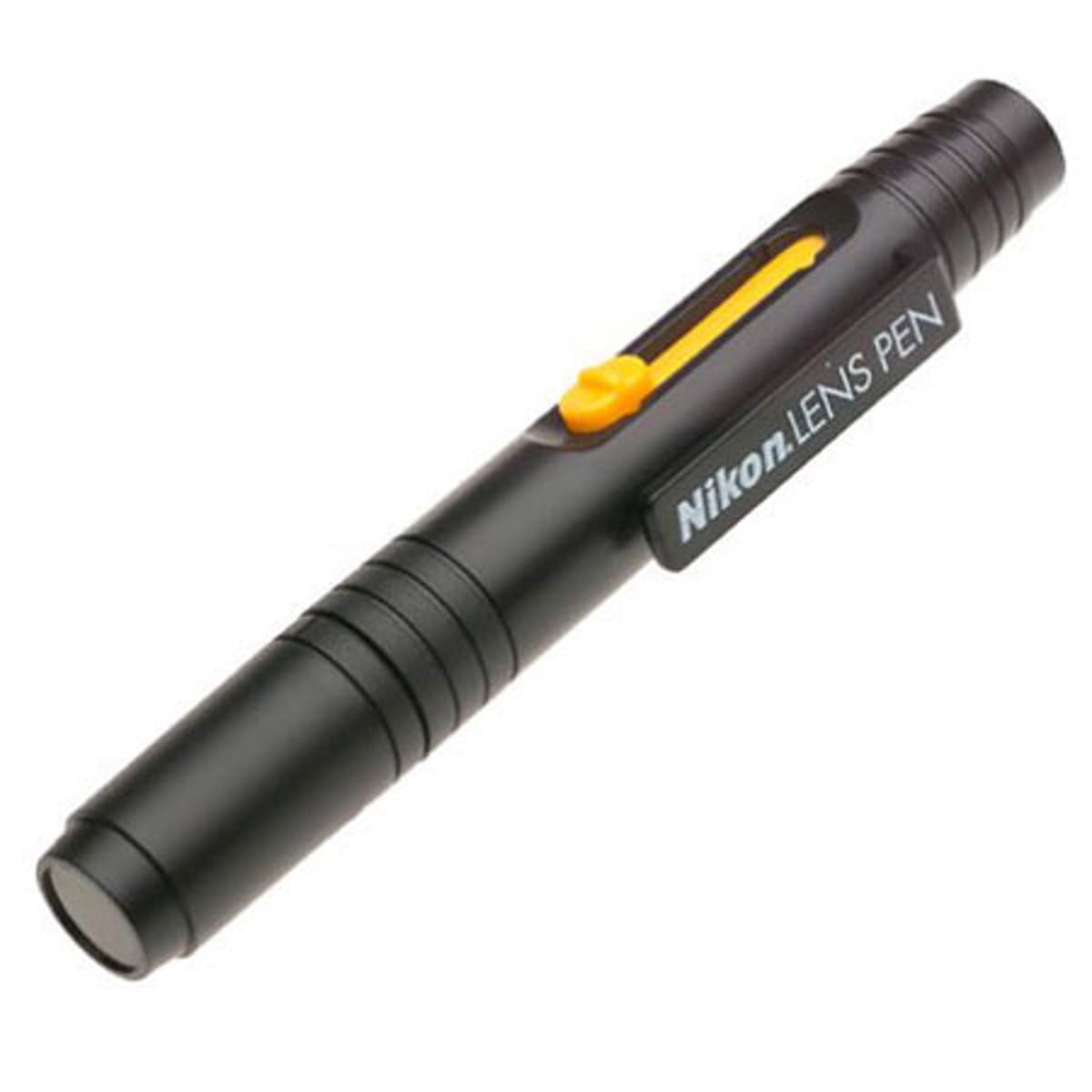
The Nikon 7072 is the pen a lot of photographers already own, and the reasons are plain: a 30 mm brush that retracts into the body, a carbon pad under a screw cap, and 13.6 grams in the hand. Nikon lists cameras, binoculars, telescopes, and spotting scopes as fair game, so it covers the drawer of optics most of us accumulate.

For the money it is the value pick here, and nothing else in this group asks less while still clearing dust and lifting a fresh print. We treat it as the pen you do not have to be careful with: the one that goes in the bag you actually take outdoors, where a front element gets dusty twice a day. The retracting brush matters more than the price does, because bristles that live inside the body stay clean, and clean bristles are the difference between sweeping grit off and grinding it in.

It arrives as a small set with a cloth, which covers the messes a dry pad will not touch, and the cap holds well enough to ride loose in a bag. Buy two. One in the camera bag and one in the drawer means a dusty lens never waits for a trip home.

Pros

  • Least expensive capable pen in this group
  • Retracting 30 mm brush stays clean
  • Comes with a cloth for wetter messes

Cons

  • Brush bristles can come loose over time
Our verdict

The cheapest pen we're glad to carry, and the one to buy in twos so a clean one is always in the bag.

Check Latest Price
3

Best for Riflescopes and Binoculars

Leupold Lens Pen

93 /100
Keeper Score Outstanding

Key details

Body
Aluminum
Finish
Matte black
Weight
0.6 oz
Warranty
Full lifetime guarantee
Check Price on Amazon

Leupold builds this one for people whose glass is mounted on something. The body is aluminum rather than plastic, it weighs 17 grams, and it carries the company's full lifetime guarantee, which no other pen in this group does.

The brush and the carbon pad are the same dry tools you get elsewhere; what changes is the housing. Aluminum does not flex when you push the brush into a scope's ocular, the matte finish does not show every handling mark, and the clip keeps it findable in a range bag. The brush retracts as well, so the bristles are not out collecting dust between outings.

For riflescopes, spotting scopes, and binoculars that live outdoors, this is the one we hand over first. The guarantee is the part that matters most to us: a pen that rides beside expensive glass should come from a maker who stands behind it, and the cleaning end does the same dry-carbon work as the rest of these. Nothing about it is delicate.

Pros

  • Aluminum body holds up in a range bag
  • Full lifetime guarantee
  • Retractable brush and pocket clip

Cons

  • Premium price for a dry-carbon pen
Our verdict

If your glass lives on a rifle or a spotting scope, this is the one we hand over: aluminum, a lifetime guarantee, and a dry-carbon pad.

Check Latest Price
4

Best for Filter Rims and Corners

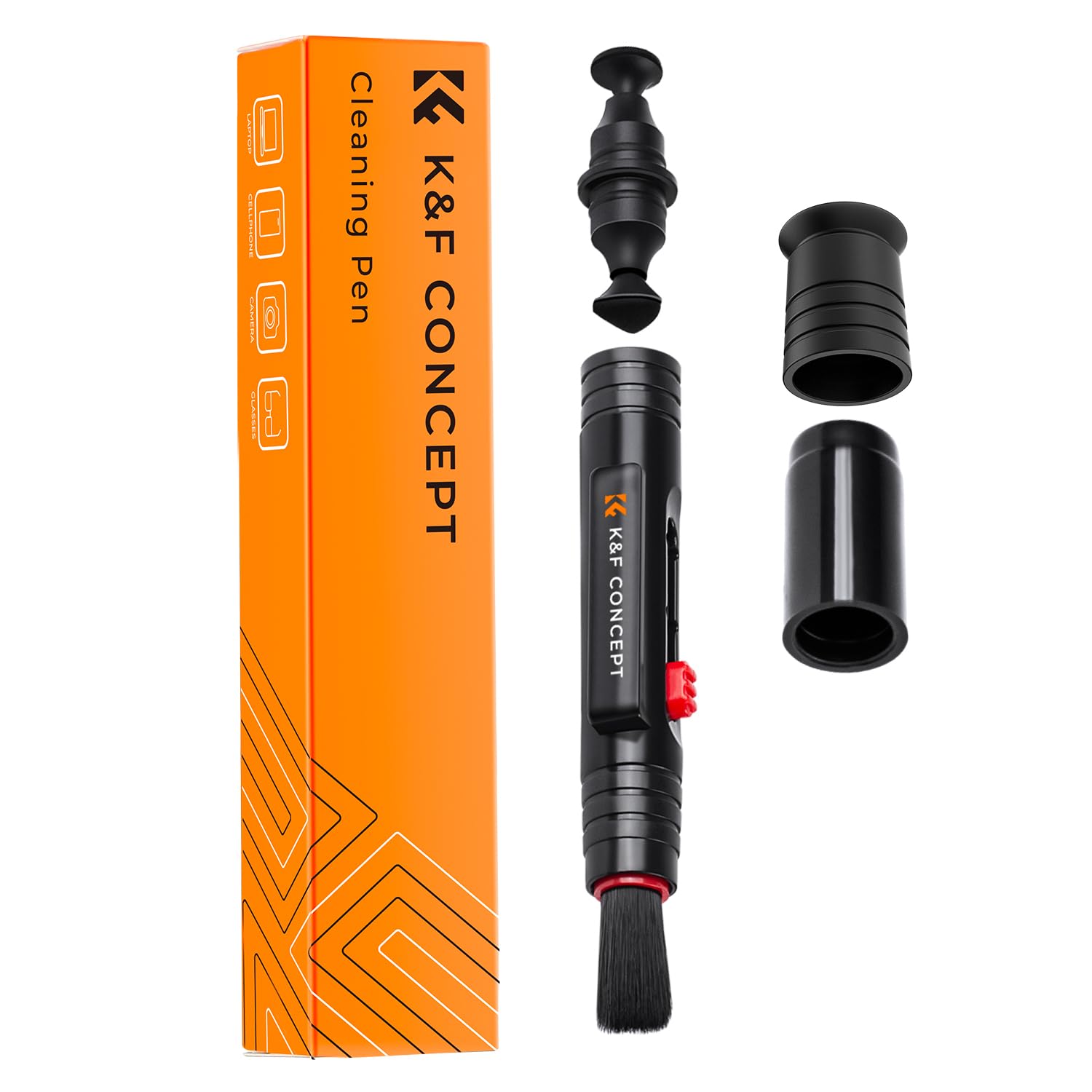
K&F Concept MP01

87 /100
Keeper Score Excellent

Key details

Weight
0.71 oz
Warranty
2 year
Brush Length
5 inches
Cleaning Surfaces
Brush, large carbon head, small carbon head
Check Price on Amazon

Three cleaning surfaces in one body: a soft brush, a large carbon head, and a small one, with the brush extended by a telescopic button rather than a twist. The MP01 weighs 20 grams, comes in black and silver, and is the busiest pen in this set.

The small head is why it is here. Filter rims, the recessed housing around a front element, and the tight gap where glass meets barrel are all places a full-size pad cannot reach, and the small carbon tip gets into them without you dragging a cloth into a corner. It is also the end to use on a viewfinder or a red dot, where the window is small and set back.

Day to day the large head does the ordinary work, and it does it well enough that this one stays in the bag alongside our top pick. The body is plastic and feels built to a price, though nothing about using it suffers for that; after a few months in a bag, the caps still seat and the brush still extends cleanly.

Think of it as a pen plus a detail tool. If your cleaning happens on flat filter glass and big front elements, the extra head is dead weight. If half your swearing happens at the edge of a filter ring, it is the entire reason to buy.

Pros

  • Small carbon head reaches rims and recesses
  • Telescopic button extends the brush one-handed
  • Light enough to keep alongside another pen

Cons

  • Carbon heads can smear heavy oil rather than lift it
Our verdict

We keep this one for filter rims and recessed housings: three cleaning surfaces in one body, though heavy oil needs a gentler touch.

Check Latest Price
5

Best for Compact Cameras

LensPen MiniPro

88 /100
Keeper Score Excellent

Key details

Tip
Concave carbon tip
Warranty
1 year
Brush Length
1 inch
Designed For
Small camera bags and compact optics
Check Price on Amazon

Shrink the full-size LensPen, curve the carbon tip so it sits against the slight dome of a small lens, and you have the MiniPro. The brush runs an inch and retracts, the tip is concave, and the whole pen is small enough to disappear into a jacket pocket or the case with a compact camera.

On a compact, an action camera, or a phone lens, the concave tip is the detail that makes it work: full contact across the curve instead of rocking a flat pad on the high point. We reach for this one when bag space matters more than coverage. It is the pen that stays with the small camera rather than living in a drawer at home, and staying with the camera is the only way a cleaning tool earns its keep.

Pros

  • Concave tip matches the curve of small lenses
  • Small enough for a pocket or compact case
  • Retracting brush protected between uses

Cons

  • Small tip needs more passes on full-size front elements
Our verdict

For compact cameras and action cams we reach for the MiniPro, because a full-size carbon head is more pad than the lens needs.

Check Latest Price
6

Long-Term Use

llano 2-in-1 Lens Pen

87 /100
Keeper Score Excellent

Key details

Tip
Replaceable carbon powder tip
In The Box
Cleaning pen and nano-fiber cloth
Cloth Fiber Diameter
0.1–0.3 microns
Check Price on Amazon

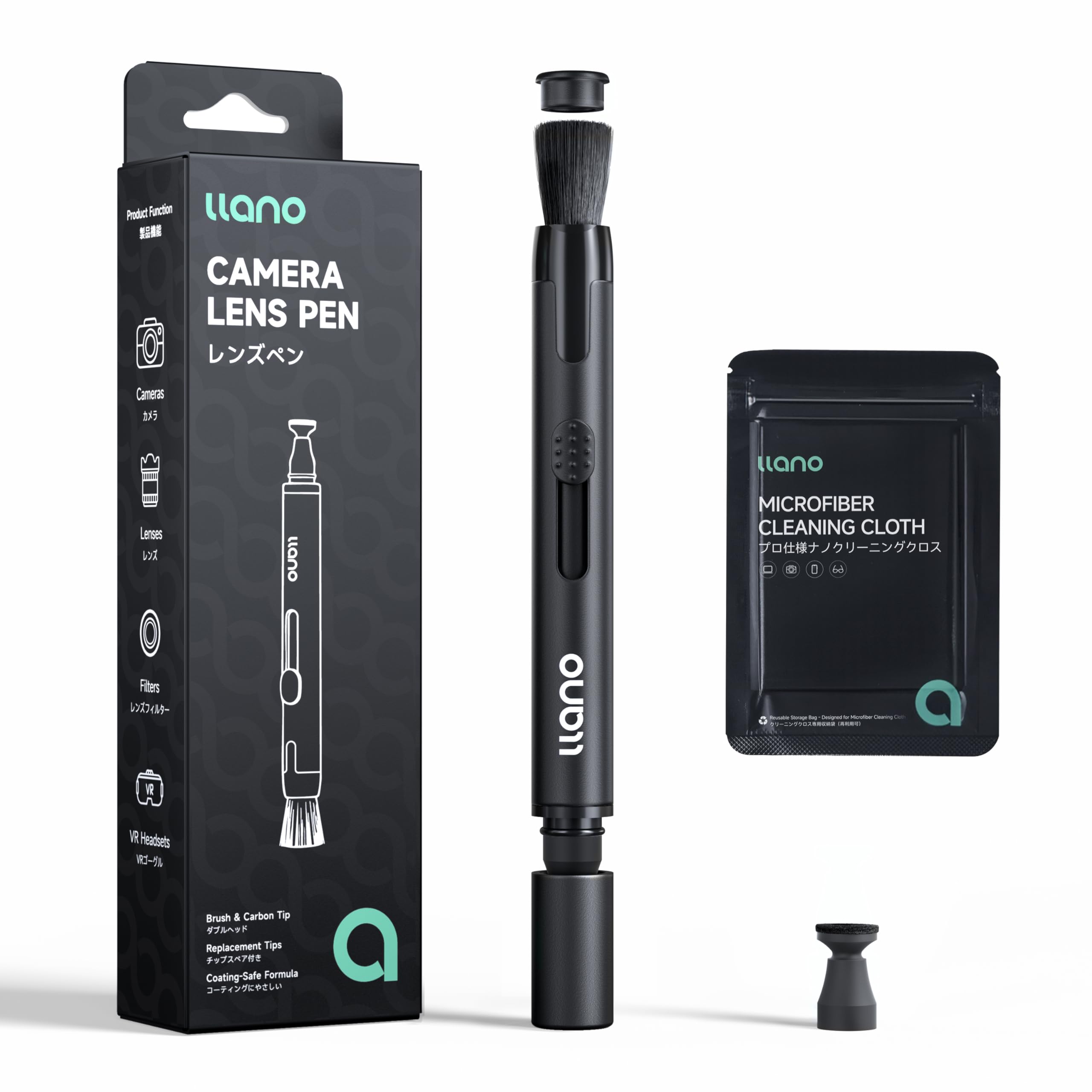
The replaceable carbon tip is what makes the llano worth a look. When the compound stops lifting prints, you swap the tip instead of the whole pen, which is the one thing almost nothing else in this category offers. It comes as a two-piece kit, the pen and a nano-fiber cloth, and the pen itself is compact, capped at both ends, and light enough to vanish in a jacket pocket.

That cloth is not padding in the box. Its fibers run 0.1 to 0.3 microns across and are densely packed, which is what you want for the last pass once the carbon head has taken the oil off. We used the cloth for the final wipe and the pen for everything before it, and the two together handled fingerprints that a pad on its own left half-done.

The claimed ten-times lifespan on the tip is a number we cannot check, but the idea behind it is sound: a pen you can refresh is a pen you keep, and the brush, cap, and body follow the same design as the better pens here. For a bag that sees steady cleaning rather than a couple of passes a year, that is the version worth owning.

Pros

  • Replaceable carbon tip refreshes the pen
  • Dense nano-fiber cloth included
  • Capped, pocketable two-piece kit

Cons

  • Ships with one tip and no spares
Our verdict

We like the replaceable tip most: you keep the pen and swap the part when it stops lifting prints.

Check Latest Price

How We Tested Lens Cleaning Pens

We started by pulling every lens pen we could find that paired a retractable or telescopic brush with a carbon or other non-liquid cleaning element — the two features that define this category — then cut anything with a fixed brush, a cap that came loose, or a tip we couldn't inspect or replace. That left 14 pens, which we bought at retail and rotated through a four-month test.

Each pen lived where it normally would: a camera bag, a jacket pocket, a car console, a desk drawer. We pressed a fresh thumbprint onto a filter, counted passes until the glass was clear, then checked it under raking light for haze or streaks. On phones and laptop screens we wiped the same greasy corner over and over to see whether the tip lifted oil or smeared it around. Brushes got the harder job, cleaning dust off a lens after a windy walk, plus deliberate grit to see whether bristles picked it up or dragged it across the glass.

For durability we clicked each brush in and out dozens of times and checked tips weekly for hardening, glazing, or carbon dust leaking into the cap. Portability meant a week in a jeans pocket, noting the bulk and whether the cap stayed put. Smudge resistance we judged by leaving each cleaned lens alone for a day and seeing how fast fresh prints came back. Value came down to cost per clean: a pen that needed six passes to clear one fingerprint was expensive no matter what it cost, and replaceable tips stretched that math in the other direction. By the end, most of us had quietly stopped reaching for the pens that left a film.

How to Choose a Lens Cleaning Pen

Match the Tip to the Glass

A carbon pad only works where it makes contact. A full-size round head, like the 12 mm tip on the LensPen NLP-1, is the right tool for an SLR or mirrorless front element, where you work in overlapping circles and never hunt for an edge. Point that same pad at a compact camera or an action cam and it is wider than the lens, which is exactly why the concave MiniPro exists.

If your kit is filter-heavy, or your optics sit in recessed housings and viewfinder windows, a pen with a second, smaller head earns its space. The K&F Concept MP01 is the one here with that, and it saves you dragging a cloth into a corner where a cloth does not fit.

Brush First, Every Time

The brush is not a warm-up; it is the safety step. Dust, dried sand, and the grit that blows onto a front element are harder than the coating, and a carbon pad will happily drag them across the glass. Brush until you cannot see anything, then use the pad, and if the brush feels gritty afterward, wipe it on a clean cloth before it goes back in the bag.

That is the argument for a retracting brush over a fixed one. The LensPen models and the Nikon here keep the bristles inside the body, where they are not picking up lint between shoots, and a capped brush is the cheapest insurance you can buy for a coated lens.

Sealing, Drying, and How Long the Pen Lasts

The compound at the working end is what makes a lens pen a lens pen, and it is also what fails first: a dirty pad or a cap left off turns a useful tool into a smeary one. Liquid-free designs are the ones to prefer, because there is nothing to spill in a bag or dry out in a drawer, and a cap that seals the pad is worth more than any extra cleaning surface.

When a pad stops lifting prints, most pens here are finished, so it is worth knowing which ones are not. The llano takes a replacement carbon tip, and the Leupold backs its aluminum body with a full lifetime guarantee. If you clean often, either arrangement beats buying the same disposable pen twice a year.

How Much Pen You Need to Carry

Our rule is two pens in two bags rather than one good pen at home, because the tool only helps if it is with you when a fingerprint lands. That makes light plastic bodies like the Nikon and the LensPen more appealing than they look on paper, and it makes a pocket clip more useful than a specification sheet suggests.

Aluminum, as on the Leupold, adds a little heft and a lot of resilience for a range bag or a hunting pack. If you clean one camera at one desk, buy on the tip and the cap instead of the finish — that is where the money does the work.

Frequently Asked Questions

Final Verdict

Buy the LensPen NLP-1 and stop thinking about it. A sealed twist cap, a brush that retracts, and a carbon pad that lifts a fingerprint without fluid are the three things that actually matter, and it gets all three right.

If the budget is tight, the Nikon 7072 does the everyday job for less and asks only that you watch the brush. If your glass is mounted on a rifle or a spotting scope, the Leupold's aluminum body and lifetime guarantee justify the step up. The rest of the list is specialists: pick one when your lenses match its tip.