Best Green Screens of 2026

A green screen looks like a solved problem until you actually use one. The cloth arrives creased, you clip it up, and the first recording shows a green glow around your shoulders and a backdrop that reads more bedsheet than studio wall. A good one fixes exactly that: flat, even color, enough heft to hang straight, and no sheen bouncing light back at your hair.

I've rigged a few of these in my own spare bedroom, and my team has now spent four months with 14 screens, from small cloths you tape to a wall to wide collapsible panels on their own stands. What surprised me was how much finish matters. A matte, slightly deeper green keys cleanly under almost any light, while a bright, faintly shiny one fights your software all afternoon.

Size and assembly count as much as fabric, too. A screen wide enough to fill your camera's frame with room to spare forgives sloppy lighting, and a stand you can raise alone in five minutes decides whether you use it weekly or never again. The picks below survived both tests.

Keeper Score summarizes customer ratings and review volume. Read it alongside the product details and trade-offs. How the score works.

1

Best Overall

RAUBAY 78.7 x 82.7 Collapsible Green Screen

93 /100
Keeper Score Outstanding

Key details

Stand
Integrated pull-up frame
Fabric
Composite polyester
Mounting
Retractable hard case
Backdrop Size
78.7 x 82.7 in
Check Price on Amazon

A green screen that pulls up like a window blind is the closest thing here to a permanent studio that does not take over a room. The RAUBAY opens to 78.7 by 82.7 inches, wide enough for two people at a desk, and the composite polyester face is meant to stay wrinkle-resistant. We appreciate that the frame and fabric travel as one unit: when the shoot ends, you retract it into the hard case and stand it in a closet.

Speed is where it earns its keep. The legs swing out, the handle lifts the screen to height, and there is no crossbar to lose or cloth to clamp. We found that the pull-up action makes a ten-minute setup feel like a two-minute one, which matters when a call starts before you have cleared the desk. The matte green also reads evenly on camera as long as you keep your subject a few feet forward and light the screen separately.

The trade-off is the footprint. The hard case is long, so measure the closet or shelf before you assume it will disappear. At around 22 pounds, it moves between rooms but is not a backpack screen. It is also more frame than a single seated webcam needs, which is why we keep it in the studio category rather than the desk category.

What we keep coming back to is the reset. The room goes back to being a room in seconds, and that is the difference between a screen you use weekly and one you leave folded in the corner.

Pros

  • Wide enough for two people
  • Retracts into its own hard case
  • Wrinkle-resistant matte polyester
  • No separate stand or clamps

Cons

  • Tall frame needs a level floor
  • Premium price for occasional use
Our verdict

For a dedicated studio, this is the green screen we recommend: large, smooth, and quick to retract.
Check Latest Price
2

Best Budget Kit

Hemmotop 8 x 7.5 ft Green Screen Kit

86 /100
Keeper Score Excellent

Key details

Includes
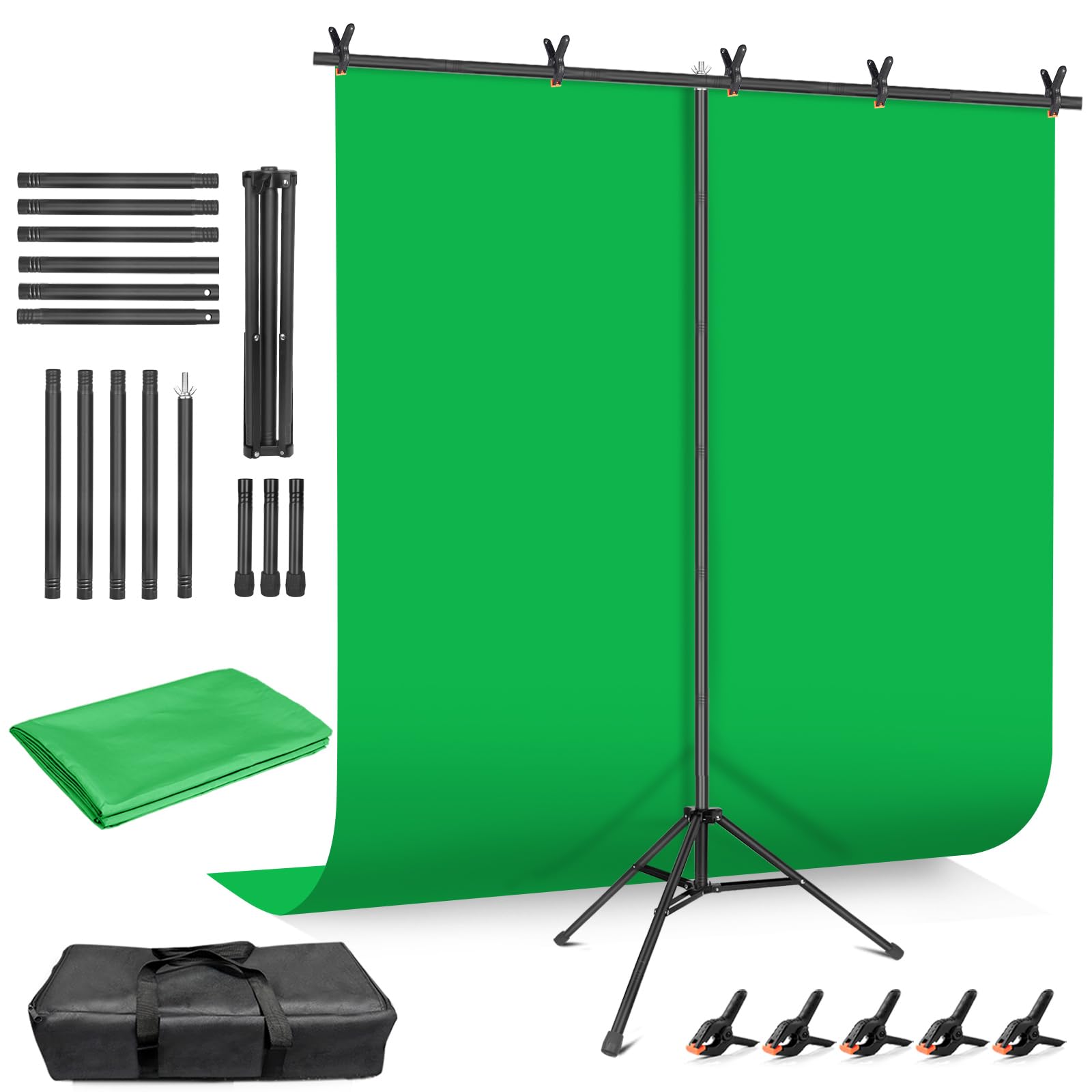
Stand, cloth, 5 clamps, bag
Stand Height
3.1 to 8 ft
Backdrop Size
8 x 7.5 ft
Width Options
Up to 7.5 ft
Check Price on Amazon

The appeal of this kit is that one box covers the whole job: an 8-by-7.5-foot green cloth, a T-shaped stand that adjusts to five heights and three widths, five spring clamps, and a carry bag. For a home office or a first streaming setup, that completeness matters more than any single specification.

The size is generous for a seated two-shot. We like that the stand can go wide enough for two chairs without making you buy a second crossbar, and the spring clamps grip the cloth firmly enough to pull the sides taut. The height range also lets you drop it behind a monitor or raise it for a standing presenter.

The cloth is the weak link. It arrives folded, and the creases are stubborn; we treat a steamer as part of setup, not an optional extra. Pull it taut with the clamps and give it a few minutes under steam, and the surface keys cleanly. The kit is light enough to move between rooms, but it is not a permanent studio fixture.

What we did not expect to appreciate was the bag. The whole kit collapses into one long package, which makes it easy to stash between shoots and keeps the clamps from migrating to a junk drawer.

Pros

  • Complete stand, cloth, clamps, and bag
  • Adjustable height and width
  • Wide cloth for two seated people
  • Packs into one carry bag

Cons

  • Cloth arrives creased and needs steaming
  • Light stand can slide on hard floors
Our verdict

A complete, adjustable kit for a first home-office or streaming setup, as long as you steam the cloth.

Check Latest Price
3

Best Compact Kit

Emart 5 ft Green Screen Kit

86 /100
Keeper Score Excellent

Key details

Includes
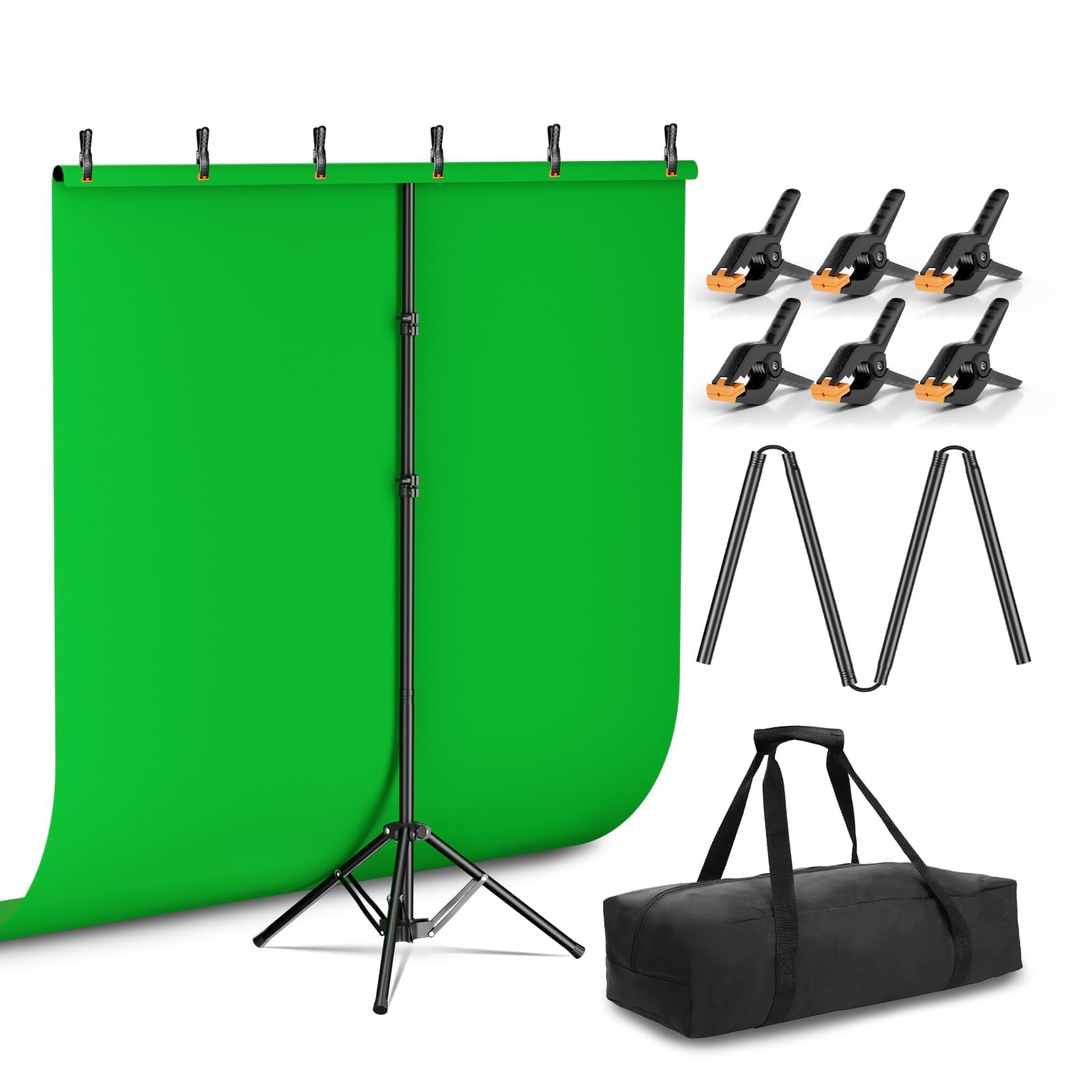
Stand, cloth, 6 clamps, bag
Stand Height
4 to 6.5 ft
Crossbar Length
5 ft
Tabletop Height
2.7 to 5.1 ft
Check Price on Amazon

This is the kit we reach for when the camera is a webcam and the desk is the studio. The Emart's 5-foot crossbar sets a compact width, enough for a seated presenter and a little breathing room, and the reverse-folding base packs down smaller than a conventional tripod stand. We recommend it for podcasters, Zoom calls, and tabletop shoots, not for full-body work.

The height adjustment is more useful than the headline size suggests. With the telescopic pole in, the stand runs from 4 to 6.5 feet; remove the pole and it drops to 2.7 to 5.1 feet for tabletop use. That lower range is what makes it practical behind a laptop, and the four-section crossbar is connected by internal ropes, so there are no loose pieces to hunt for.

The compromises show up in the cloth. The fabric is wrinkle-resistant in theory, but it arrives folded and needs steam before a close-up; pull it tight with the clamps and it keys cleanly. The stand is light enough for one person to move, which is the point, but it is not a permanent studio frame.

For a small room, the compact footprint is the feature that matters most. It covers the frame without turning a spare bedroom into a studio.

Pros

  • Compact footprint for desk setups
  • Reverse-folding base packs small
  • Height adjusts down for tabletop use

Cons

  • Too narrow for full-body standing shots
  • Light stand can shift on smooth floors
Our verdict

The compact kit we recommend for a desk or webcam: quick to set up and sized for a seated shot.

Check Latest Price
4

Best Large Backdrop

LCUIRC 10 x 20 ft Green Screen Backdrop

92 /100
Keeper Score Outstanding

Key details

Includes
4 spring clamps
Material
Polyester
Mounting
Two rod pockets
Backdrop Size
10 x 20 ft
Check Price on Amazon

A 10-by-20-foot piece of fabric is not a backdrop you tuck behind a monitor; it is a room-scale tool. The LCUIRC gives you a huge seamless green surface, two rod pockets, and four spring clamps, and it assumes you already have a stand or a wall to hang it from.

The two-pocket design is the smart part. One pocket runs along the 10-foot edge, the other along the 20-foot edge, so the same cloth can hang as a wide wall or a tall drape. We prefer the wide orientation for group shots because it keeps the top edge within reach and gives people room to move. The polyester is light enough to handle without a second person, though a 20-foot span still needs a proper crossbar.

Creases are the price of any folded backdrop this size. It arrives with fold lines, and steam is the only realistic fix; pulling it tight on a frame helps, but it does not erase a hard crease. The fabric is also not what we call opaque in strong backlight, so keep a dark wall behind it if windows are part of the room.

For a group shoot, a livestream with movement, or a product setup that needs floor coverage, the extra yardage is the point. For a single webcam, it is more cloth than you need.

Pros

  • Room-scale 10 x 20 coverage
  • Two rod pockets for wide or tall hangs
  • Four spring clamps included

Cons

  • Arrives creased and needs steaming
  • Bright backlight can show through
Our verdict

The large-format fabric we recommend when the shot needs room: 10 by 20 feet, two pockets, and no stand to store.

Check Latest Price
5

Best Dual-Size Backdrop

CPLIRIS 10 x 20 ft Green Screen Backdrop

92 /100
Keeper Score Outstanding

Key details

Care
Machine washable
Material
Thick polyester
Mounting
Dual-size rod pockets
Backdrop Size
10 x 20 ft
Check Price on Amazon

The most useful thing about this 10-by-20-foot backdrop is that it is really two backdrops. CPLIRIS sews a rod pocket on the 10-foot edge and another on the 20-foot edge, so you can hang it wide and short or narrow and tall depending on the space.

We like the wide orientation for a two-person interview: it gives you a 20-foot wall with a manageable 10-foot drop, and the thick polyester has a matte face that does not fight the key light. The fabric feels more substantial than a bedsheet, but it still folds into a manageable bundle.

The catch is prep. It arrives folded, and the creases take real steam to lift; we do not judge the surface until it has hung for a while or been steamed. In bright backlight, the fabric can show some light through, so a dark wall or blackout layer behind it is still worth having. The green is a touch lighter than a painted chroma wall, so check your keyer settings rather than assuming the default will match.

What we appreciate is the flexibility: one cloth covers a single-chair stream and a wider interview without a second purchase. That makes it easier to justify the storage space.

Pros

  • Two pockets for 10- or 20-foot hangs
  • Thick matte polyester
  • Large 10 x 20 coverage
  • Machine washable

Cons

  • Deep creases need steaming
  • Bright backlight can show through
Our verdict

A clever large fabric for creators who need one cloth to hang wide or tall, with steaming time built in.

Check Latest Price
6

Best Budget Fabric

Emart 6 x 9 ft Green Screen Fabric

91 /100
Keeper Score Outstanding

Key details

Includes
4 backdrop clips
Material
Polyester
Mounting
6 ft rod pocket
Backdrop Size
6 x 9 ft
Check Price on Amazon

The Emart 6-by-9-foot cloth is the least expensive way here to get a proper green fabric with a rod pocket and four clips. We recommend it for a first webcam setup or a spare backdrop, as long as you already own a stand or a rod to hang it from.

The size is the sweet spot for one seated person. The 6-foot edge has a sewn rod pocket, and the four clips let you tension the sides so the cloth does not billow. We noticed the finished edges matter more than they sound: a raw-cut fabric sheds threads and frays after a few setups, while this one is locked down.

Wrinkles are the catch. It arrives folded, and the creases are stubborn enough that steaming is part of setup, not a quick shake-out. The fabric is also thin enough that a bright window behind it can show through, so put it against a dark wall or add a blackout layer. The green runs a little darker than some keying software expects, and a custom white balance cleans that up.

For a beginner or a backup cloth, the simplicity is the appeal. It does not try to be a studio; it just gives you a keyable surface.

Pros

  • Low-cost 6 x 9 cloth
  • Rod pocket and four clips included
  • Sewn edges resist fraying

Cons

  • Thin enough to need a dark backing
  • Stubborn fold creases
Our verdict

A low-cost cloth we recommend for a first webcam setup or a backup, provided you already have a stand.

Check Latest Price
7

Thick Large Backdrop

JINSUI 10 x 20 ft Green Screen Backdrop

90 /100
Keeper Score Outstanding

Key details

Edges
Stitched
Material
Opaque polyester
Mounting
Rod pocket
Backdrop Size
10 x 20 ft
Check Price on Amazon

The JINSUI is the large fabric here that feels most like a finished curtain. The 10-by-20-foot polyester has stitched edges, a rod pocket, and a matte surface that can be used from either side.

At this size, it covers a group or a full-body shot with room to spare. We like the stitched perimeter because big cloths often arrive with raw cuts that shed; this one has a clean edge that hangs straight. The fabric is described as opaque, and it feels denser than the budget cloths, though a bright window is still worth blocking.

Handling is the trade-off. A 10-by-20 cloth is a lot of material to steam, fold, and hang, and the wrinkles can return in storage. Steam it before a shoot, then hang it taut and leave it alone; the surface rewards the prep.

We kept this one in the large-studio pile rather than the everyday pile. When the shot needs a seamless edge and a deep green, it rewards the extra prep.

Pros

  • Large 10 x 20 coverage
  • Thick opaque polyester
  • Stitched edges resist fraying
  • Double-sided hanging

Cons

  • Needs a wide stand or wall support
Our verdict

The large fabric we choose when edge finish and opacity matter more than quick setup.

Check Latest Price
8

Starter Webcam Cloth

Hemmotop 5 x 7 ft Green Screen Backdrop

91 /100
Keeper Score Outstanding

Key details

Care
Machine washable
Material
Polyester
Mounting
Rod pocket
Backdrop Size
5 x 7 ft
Check Price on Amazon

A 5-by-7-foot cloth is the smallest sensible green screen for a single person, and this Hemmotop is the one we treat as a starter or a spare. It has a rod pocket on the 5-foot edge, a matte front, and a price that makes it easy to try chroma key without committing to a kit.

The size works for a seated webcam shot. Hang it from a curtain rod or a proper stand, keep the camera close, and it covers the frame without swallowing a wall. The polyester is lightweight and folds small enough for a drawer, which is the reason it comes out for quick calls.

What we noticed is how little ceremony it requires. There are no clamps in the box and no frame to assemble; you need a rod or a stand, and then you are done. That simplicity is the point.

We keep it for the guest room and the backup bin. It is not the screen we build a studio around, but it is the one we do not mind lending out.

Pros

  • Low-cost way to try chroma key
  • Rod pocket for quick hanging
  • Folds small for storage

Cons

  • Wrinkles need steaming
  • Can turn translucent in strong backlight
Our verdict

A starter cloth we keep for quick webcam calls and backups, not for full-body studio work.

Check Latest Price

How We Tested Green Screens in Real Rooms

We started by pulling every kit and standalone cloth we could find in the sizes people actually shoot, from roughly 5 by 6 feet up to 10 by 20, and read the listings for what ships in the box: stand, clamps, sewn rod pockets, carry bag. Anything that turned out to be fabric only, with the hardware sold separately, went to the bottom of the pile. Fourteen screens made the cut and ran for four months in a spare-bedroom office with one bright window, a basement corner under two softboxes, and a teenager's gaming desk lit by a ring light. Three of the cloths also rode in the car to a weekend shoot.

Assembly came first: one person, instructions only, stopwatch running, then a check twenty minutes later to see whether the folds from the packaging had relaxed or were still casting shadows. We measured each cloth flat instead of trusting the number in the title, and noted where the hems and seams were finished well and where thread was already loose. Each screen faced a box fan on low to see if it bellied off the stand, then hung in front of a window to judge light bleed, the test that separated the dense fabrics from the ones you could read a page through. For color and spill we sat on camera at three feet and again at six, watching hair, shoulders, and the frame edges for green fringe.

The clamps earned their keep or they didn't: we pinned fabric to a T-bar, through a rod pocket, and over the top of a bookcase, and logged which ones slipped once a wide cloth started pulling. Every screen got folded back into its bag and carried up a flight of stairs, and we weighed usable square footage against what we paid, since a cheap 10-footer with a skimpy hem is worse value than a smaller screen that hangs taut. Two of the polyester cloths went through a cold wash after a spill and were hung beside their unwashed twins to see if the green shifted. The stand hardware is where most of these eventually show wear.

How to Choose a Green Screen

Size Is About Coverage, Not Diagonal

Green-screen listings love a diagonal or a single width, but what matters is whether the cloth covers your camera frame when you move. For a seated webcam shot, a 5-by-7 or 5-by-6.5-foot cloth is enough. For two people at a desk, step up to an 8-by-7.5-foot kit. For full-body movement or a group, a 10-by-20-foot fabric gives you room to spare, but it also needs a wide stand and a wall or ceiling high enough to hang it. Measure the width first, then the height.

A Kit or a Cloth?

Your first decision is whether you want a complete kit or just fabric. A kit bundles a stand, crossbar, clamps, and bag, which is why the Hemmotop 8-by-7.5-foot kit is an easy first buy: everything arrives together and packs into one bag. A fabric-only backdrop such as the LCUIRC 10-by-20 costs less for the coverage, but you need a stand or a rod that can carry the width. If you already own a backdrop stand, buy cloth; if not, price the support before you choose.

Wrinkles and Backlight Decide the Key

Every folded cloth arrives creased, and a crease can key as a shadow even when the color is right. We treat a steamer as part of the kit, not an accessory, and we prefer matte polyester over anything shiny. Backlight is the other hidden test: a thin cloth in front of a window can glow, and no amount of keying fixes a green screen that is brighter behind the subject than in front. Hang the cloth against a dark wall and light it separately from the subject.

Stability and Storage Matter More Than You Think

Tripod stands are portable but easy to knock; reverse-folding bases pack smaller and sit lower; retractable panels such as the RAUBAY store the cloth and frame as one unit but take up a long shelf. On hard floors, a light stand can slide, so set it in a corner or against a wall. Before buying, measure the packed length and decide where it will live. A screen that is awkward to store stops coming out, and that is the real test of value.

Frequently Asked Questions

Final Verdict

The RAUBAY is the green screen we recommend first for a dedicated home studio: it covers two people, stays smooth, and retracts into its own case, so it is easy to live with.

If you want a complete kit without the premium, the Hemmotop 8-by-7.5 is the practical choice; if you already own a stand and need room-scale coverage, the LCUIRC 10-by-20 is the one to hang.