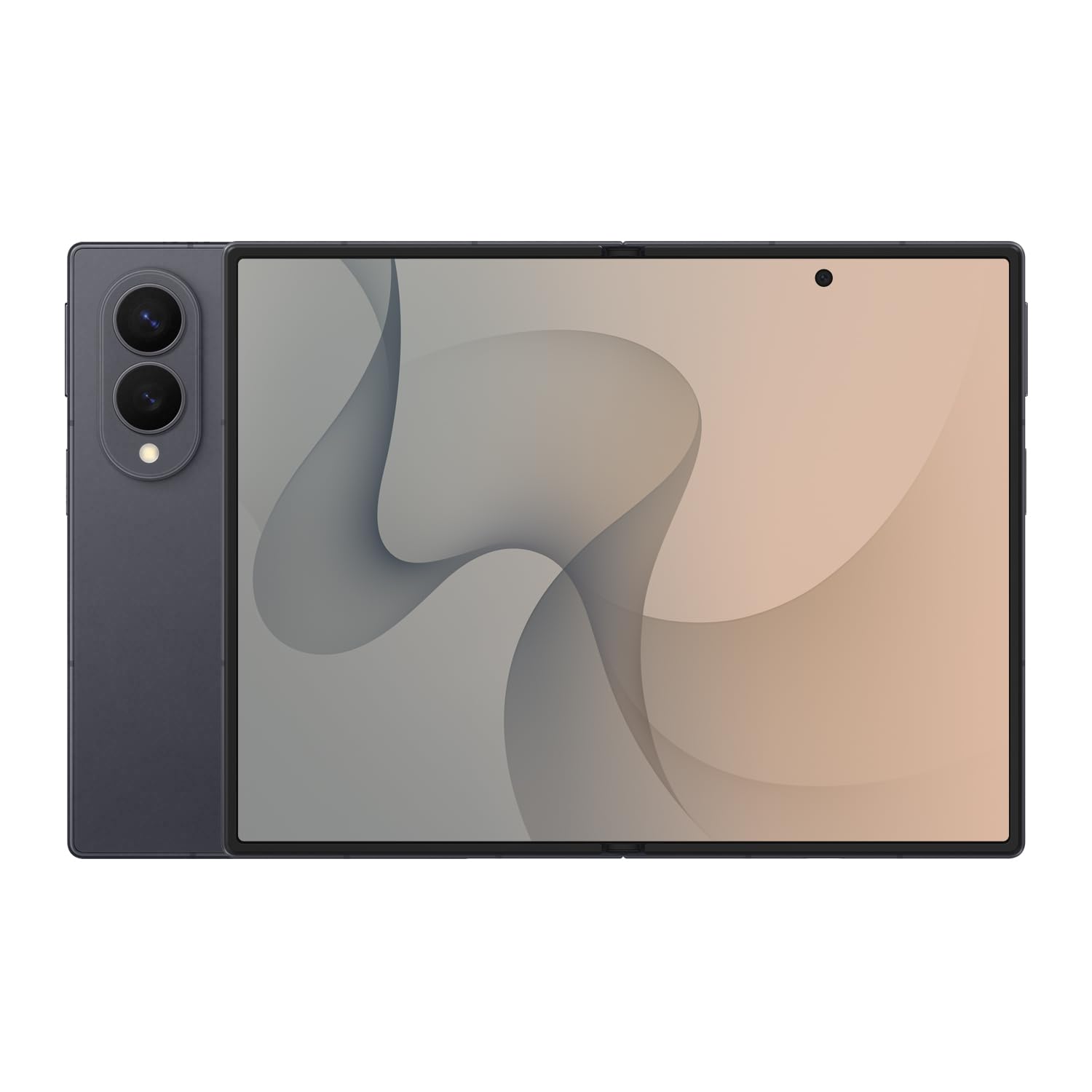
Best Foldable Phones of 2026

A foldable phone asks you to trust a hinge with the thing you look at a hundred times a day. The real question isn't whether the concept is clever—it's whether the inner screen still feels good after the novelty wears off, whether the battery gets you from morning alarm to late train, and whether the whole thing survives a bag full of keys. The right one gives you more screen when you need it and less phone when you don't.

Over the past nine months, we've carried six foldables as daily phones and judged them on the things that nag at you: battery life, screen quality, hinge feel, and how quickly apps make sense on the inner display. I opened and closed each one constantly, and the best models made the fold feel ordinary, not like a party trick. Appearance matters once fingerprints and pocket scuffs show up, and value comes down to whether the screen and battery justify the extra care a foldable demands. The picks below are the ones we kept reaching for after the honeymoon phase ended.

Keeper Score summarizes customer ratings and review volume. Read it alongside the product details and trade-offs. How the score works.

1

Best Overall

Samsung Galaxy Z Fold8

91 /100
Keeper Score Outstanding

Key details

Weight
7.09 oz
Battery
4800 mAh
Main Screen
7.6 inches
Rear Cameras
Dual 50 MP
Check Price on Amazon

The number that matters on the Fold8 is 201 grams. That's the lightest book-style foldable in this guide, and it changes how the phone lives with you: shut, it reads as an ordinary handset rather than a slab with a hinge, and we stopped noticing it in a jacket pocket within a couple of days. Open it and you get a 7.6-inch 120 Hz AMOLED — a screen big enough to read a long feature or watch half an hour of video without squinting.

That combination is why it's our top pick. The Snapdragon 8 Elite and 12 GB of RAM keep split-screen apps and games moving, the 4800 mAh battery is the largest of the three here and handles a full day of screens-on use, and Super Fast Charging 2.0 covers a top-up before dinner. It's also the brightest display Samsung puts on a Galaxy phone, which stops mattering indoors and matters a lot on a sunny platform. The hinge closes completely flat, with no gap to catch on a pocket lining — a small thing until you've carried a foldable that doesn't.

Where the Fold8 gives ground is the camera. Two 50 MP rear sensors, no telephoto, digital zoom out to 10x: a specification that sits awkwardly beside the price. Shoot mostly wide and in daylight and you'll never feel it. If you're the person photographing a recital from row 20, you will. The speakers are the other soft spot — clear enough for a podcast, thin for a film.

None of that stops it being the pick, because what you're buying is one device doing two jobs at a weight that no longer announces itself. The Fold8 is the foldable that finally behaves like a normal phone, and the big screen is worth paying for if you'll actually use it daily rather than showing it off once.

Pros

  • Lightest book-style fold here at 201 g
  • Folds flat with no gap at the hinge
  • 7.6-inch 120 Hz AMOLED and the largest battery here
  • Snapdragon 8 Elite with 12 GB RAM and 512 GB storage

Cons

  • No telephoto lens; digital zoom only
  • Speakers trail the price
Our verdict

If you want one device that's a phone on the train and a tablet at the table, this is the foldable we point people to first — light, quick, and finally ordinary to carry.

Check Latest Price
2

Best Value Book-Style

Samsung Galaxy Z Fold 6 (Renewed)

82 /100
Keeper Score Excellent

Key details

Battery
4400 mAh
Main Screen
7.6 inches
Cover Screen
6.3 inches
Rear Cameras
Three, 50 MP main
Check Price on Amazon

Book-style foldables are the most expensive habit in phones, and this renewed Fold 6 is the cheapest way into one here — roughly a third of what the current Fold asks. For that you get the same 7.6-inch 120 Hz inner display size, a 6.3-inch cover screen that also runs at 120 Hz, a Snapdragon 8 Gen 3 with 12 GB of RAM, 512 GB of storage, and three rear cameras. On paper, very little is being given up.

So the compromises are age and warranty rather than capability, which is a fair trade for the right buyer. The renewed side is where you do the work: these ship with 90 days of cover instead of a year, and the glass is what varies from unit to unit, with front-screen scratches the thing to look for the moment the box opens. Set it up, run a full charge, and read the battery health figure in settings while the return window is still open.

Two details make it more than a stopgap. It's the only phone here that takes Samsung's S Pen Fold Edition, and the only one with a telephoto lens — a 10 MP 3x that the newer Fold8 doesn't have. If your photography runs to portraits and distance rather than wide interiors, that's the older phone quietly doing the newer phone's job.

Pros

  • 7.6-inch 120 Hz inner screen for a fraction of new
  • Only telephoto lens among these picks
  • Takes the S Pen Fold Edition
  • 512 GB storage and 12 GB RAM

Cons

  • Covered for only 90 days
Our verdict

Buy this if you want a big foldable screen without the flagship bill — just open the box expecting to inspect glass, and treat the 90-day warranty as your deadline.

Check Latest Price
3

Best Flip for the Money

Motorola Razr+ 2025

81 /100
Keeper Score Excellent

Key details

Battery
4000 mAh
Main Screen
6.9 inches
Refresh Rate
165 Hz
Water Resistance
IP48
Check Price on Amazon

Folded, the Razr+ disappears into a front jeans pocket — the whole reason to choose a flip over a book-style foldable. The 1272 x 1080 external display does the rest: calls, texts, tap-to-pay, music controls, and the moto ai shortcuts all work without opening the phone, so a lot of small interactions never involve the inner screen at all.

Open it and the 6.9-inch pOLED runs at 165 Hz, the fastest refresh in this guide, with a Snapdragon 8 Gen 3 and 12 GB of RAM behind it. Water protection is rated IP48 and the hinge is titanium-reinforced, which is reassuring in a category where the hinge is the part that fails. You also get wireless charging plus reverse wireless charging for earbuds — conveniences that are easy to stop noticing and hard to give up.

The compromises are real but narrow. The 4000 mAh battery is the smallest here, so a heavy day ends with a charger in reach; 256 GB is the least storage of the three; and the soft material on the back can peel over time, which makes a case worth budgeting for from day one. What tips it is the price: this is the least expensive phone in the guide, and the one that makes the foldable idea feel practical rather than precious.

Pros

  • Cover screen handles calls, texts, and payments
  • 165 Hz main display, fastest refresh here
  • IP48 rating and titanium-reinforced hinge
  • Wireless and reverse wireless charging

Cons

  • Soft back material can peel over time
  • 4000 mAh is the smallest battery here
Our verdict

This is the foldable for people who want a normal-sized phone that folds rather than a tablet: it handles calls from the cover screen and costs the least of our picks.

Check Latest Price

How We Tested Foldable Phones

We started by pulling the unlocked foldables shoppers actually compare, checking carrier support, storage tiers, hinge design, screen size, and return terms. That shortlist got cut to six phones—book-style and flip models—which we bought at retail and used as our daily drivers for nine months.

Each phone came out of the box and onto my desk, into my pocket, and into a bag with keys and a water bottle. I opened and closed the hinge dozens of times a day for email, maps, split-screen messages, and video, and on weekends I used them for photos, streaming, and navigation in bright sun. We paid attention to how often the crease caught our eye, whether the cover screen was good enough for quick replies, and whether the phone felt solid or creaky after a week of normal handling.

Battery testing was simple: charge overnight, unplug at 7 a.m., and note the percentage after the commute, at lunch, and before bed. A phone that hit 20 percent before dinner got marked down no matter how good the screen looked. For screen quality, we tilted each inner display off-axis, watched for color shift, and checked the crease under overhead light; for functionality, we noted whether apps stretched awkwardly or opened in a sensible split view. Durability got the bag test—keys, coins, a week of jostling—plus constant hinge use and a check for wobble or grit. We wiped fingerprints, looked for scuffs, and judged appearance and build quality the way a friend would, then weighed whether storage, camera consistency, battery life, and screen quality added up to real value.

How to Choose a Foldable Phone

Choose the shape before anything else

Book-style phones like the Galaxy Z Fold8 open into a 7.6-inch canvas that earns its keep for reading, split-screen apps, and video; shut, they behave like a normal, if tall, phone. A flip like the Razr+ does the opposite, packing a 6.9-inch screen into a device that folds down to a square.

The trap is the word compact. A book-style foldable is compact the way a paperback is compact, not the way a flip is. If your phone lives in a front jeans pocket, that is the argument for a flip. If it lives in a bag or a jacket, the bigger inner screen is worth the bulk every time.

Judge both screens, not just the big one

Every pick here runs an AMOLED panel at 120 Hz or faster, so resolution and refresh rarely decide anything. What you notice daily is brightness and the crease. Look at the inner display at an angle in a bright room before you commit, because a crease catches light differently depending on how you hold the phone.

The outer screen matters more than the spec sheet suggests. The Razr+'s 1272 x 1080 external display is large enough for calls, texts, and payments, which means many days you barely open the phone. On a book-style, the cover screen is for quick replies and directions — the inner screen is still where the work happens.

Renewed or new: decide with your eyes open

Renewed is how most people get into a book-style screen affordably, and our Fold 6 pick proves the arithmetic. What changes is the first week of ownership: renewed foldables come with a 90-day warranty rather than a year, and the glass varies from unit to unit.

So unbox deliberately. Inspect the hinge and both panels in daylight, run a full charge, check the battery health reading in settings, and get the phone onto your carrier before the return window closes. If a year of manufacturer cover and a battery with unknown history would nag at you, buy new instead — part of that premium is peace of mind.

Balance battery, weight, and the camera you'll actually use

Shape sets the battery ceiling. The Razr+ carries 4000 mAh, the Fold 6 4400 mAh, and the Fold8 4800 mAh, which is why a flip is a charge-every-night phone and the newest Fold reaches bedtime with room to spare. Weight runs the other way: the Fold8 is 201 g, the Fold 6 noticeably denser in the hand.

On cameras, count lenses rather than megapixels. The Fold 6 is the only pick here with a telephoto, a 10 MP 3x, and that optical reach does more for portraits and school-hall concerts than another megapixel on the main sensor. If you zoom regularly, pick the phone with the optical lens; if you shoot wide and close, any of these three is fine.

Frequently Asked Questions

Final Verdict

The Galaxy Z Fold8 is our recommendation for most people. At 201 g it's the lightest book-style foldable in this guide, the 7.6-inch 120 Hz screen earns its place every day, and the 4800 mAh battery gets you to bedtime without a top-up.

If price is the blocker, the renewed Fold 6 buys the same screen size plus a telephoto lens for a fraction of the money, provided you inspect it on arrival. And if pocketability rather than screen area is why you're shopping, the Razr+ is the honest answer.