Best Dash Cams of 2026

The frustrating thing about dash cams is that you only find out whether yours is any good after something has already gone wrong. A plate number at dusk, a cyclist cutting across a crosswalk — the camera either caught it or it didn't. Everything else is decoration.

Over the past six months, we've run 12 of them through daily commutes, unlit back roads, a long highway haul, and overnight parking. Resolution is the number everyone compares and the one that matters least on its own — a clean 2K clip reads a plate that a smeared 4K frame won't. And a camera is only as good as the ten seconds it takes to get a clip off it and into your phone, which is why we timed that too.

Below are the ones we'd put in our own cars, from screen-free units that disappear behind the mirror to multi-channel setups that cover the cabin and both flanks.

Keeper Score summarizes customer ratings and review volume. Read it alongside the product details and trade-offs. How the score works.

1

Best Overall

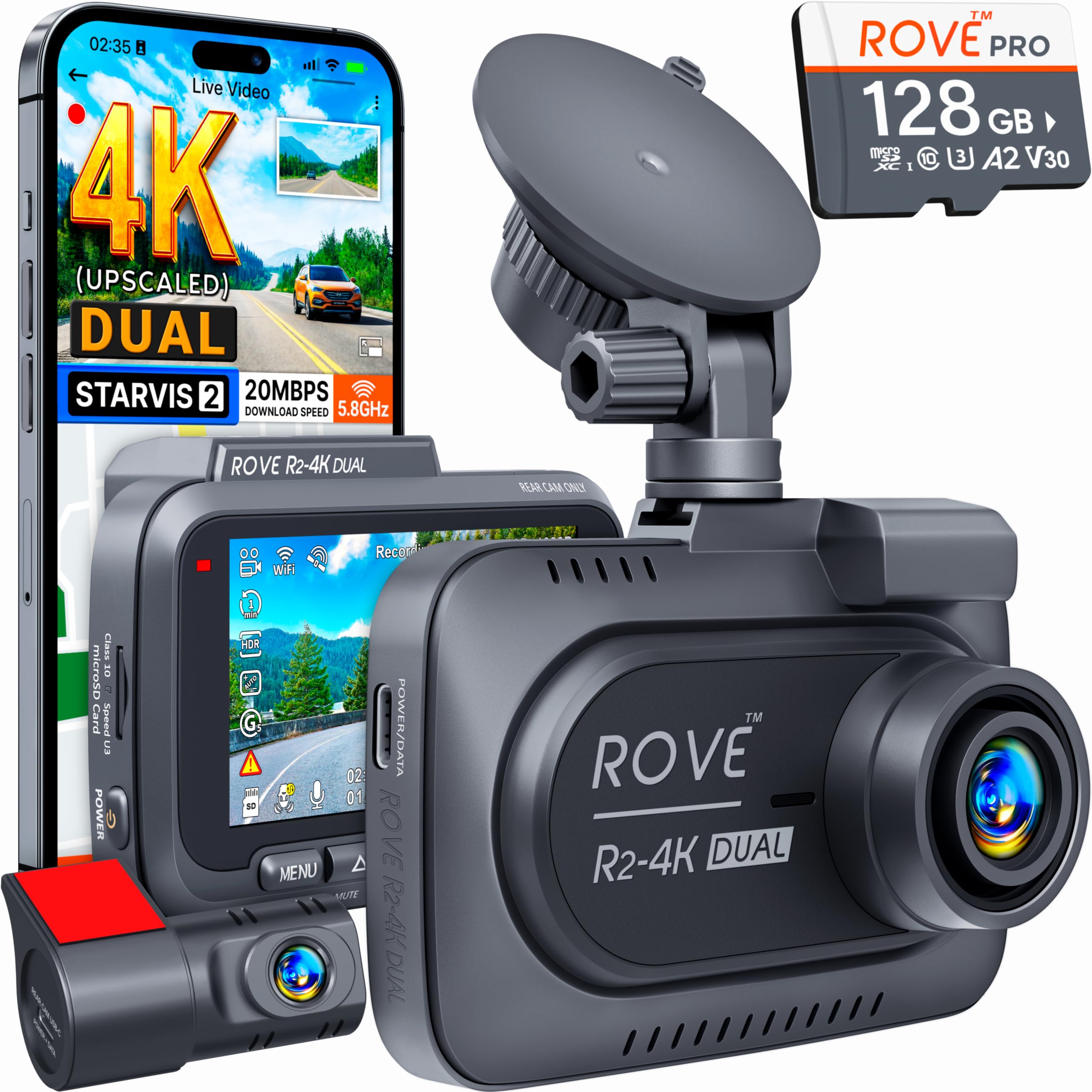
ROVE R2-4K Dual

89 /100
Keeper Score Excellent

Key details

Display
3-inch IPS
Native Front
1440p
Included Card
128GB
Front/rear Video
4K upscaled front + 1080p rear
Check Price on Amazon

The R2-4K Dual's 4K badge needs one caveat: the front sensor is natively 1440p, and the camera upsamples to a 4K file. The rear camera records at 1080p. That sounds like a compromise, and it is, but the hardware underneath is what we care about here: a Sony STARVIS 2 IMX675 sensor, an f/1.5 aperture, and HDR for bright-and-dark contrast.

We make it our overall pick because the kit is unusually complete: front and rear cameras, a 128GB card, GPS, a 3-inch screen, and both suction and adhesive mounts. The 150-degree front and 140-degree rear lenses cover the lanes beside you without turning the picture into a fisheye. In a category where so many cameras make you buy the card separately, the included 128GB card is a genuine convenience. The screen is also more useful than it looks for aiming the camera before you hide the cables.

The app is the weak link. The 5.8GHz radio can move files quickly when the connection holds, but reconnecting is the part that tries patience. We treat the card as the reliable backup: pull it when you need the original file rather than fighting the app at the roadside.

The included suction mount and 3M adhesive pad let you try the position before committing, which is more useful than it sounds: aim the camera, check a clip on the screen, then hide the cable. The supercapacitor is also the right choice for a hot windshield. It is the small ownership details, not the 4K label, that make this the one we reach for first.

Pros

  • Native 1440p front sensor with strong low-light hardware
  • Front and rear coverage in one box
  • 128GB card and GPS included
  • Fast 5.8GHz downloads when connected

Cons

  • App connections can be unstable
  • Some units have stopped recording
Our verdict

The ROVE R2-4K Dual is our best overall because it covers both ends of the car with strong low-light hardware, a bundled 128GB card, and a simple screen-based setup.

Check Latest Price
2

Best for Video Quality

VIOFO A229 Plus

86 /100
Keeper Score Excellent

Key details

GPS
Quad-mode
Sensors
Dual STARVIS 2
Power Design
Supercapacitor
Front/rear Video
1440p + 1440p
Check Price on Amazon

The A229 Plus does something we wish more dual cams did: it gives the rear camera the same 1440p STARVIS 2 sensor as the front. That parity is the reason it earns our video-quality pick. A rear camera that records only 1080p can still prove a car was behind you; this one is meant to preserve the detail that decides whose fault it was.

Both cameras use Sony STARVIS 2 IMX675 sensors and HDR, and VIOFO rates the system at 2K+2K with 60fps. The 140-degree lenses are narrower than the 170-degree units here, and we prefer that for detail: you give up a little curb-to-curb sweep and get less edge distortion. The 2.4-inch screen is small, but it is enough to confirm the aim before you rely on the app.

The 12 voice commands are more than a gimmick when the camera sits out of reach, and the GPS is quad-mode. The 5GHz radio is quick for downloads, though the app is the less polished part and reconnecting can take a few tries. We also like the supercapacitor for hot-climate parking; it is a better long-term bet than a battery.

Pros

  • Matched 1440p STARVIS 2 sensors front and rear
  • HDR on both channels
  • Supercapacitor suits hot windshields

Cons

  • No memory card in the box
  • Some units have stopped working after a few months
Our verdict

We recommend the A229 Plus when both front and rear footage need to be sharp enough to read a plate, not just prove a car was there.

Check Latest Price
3

Best 360 Coverage

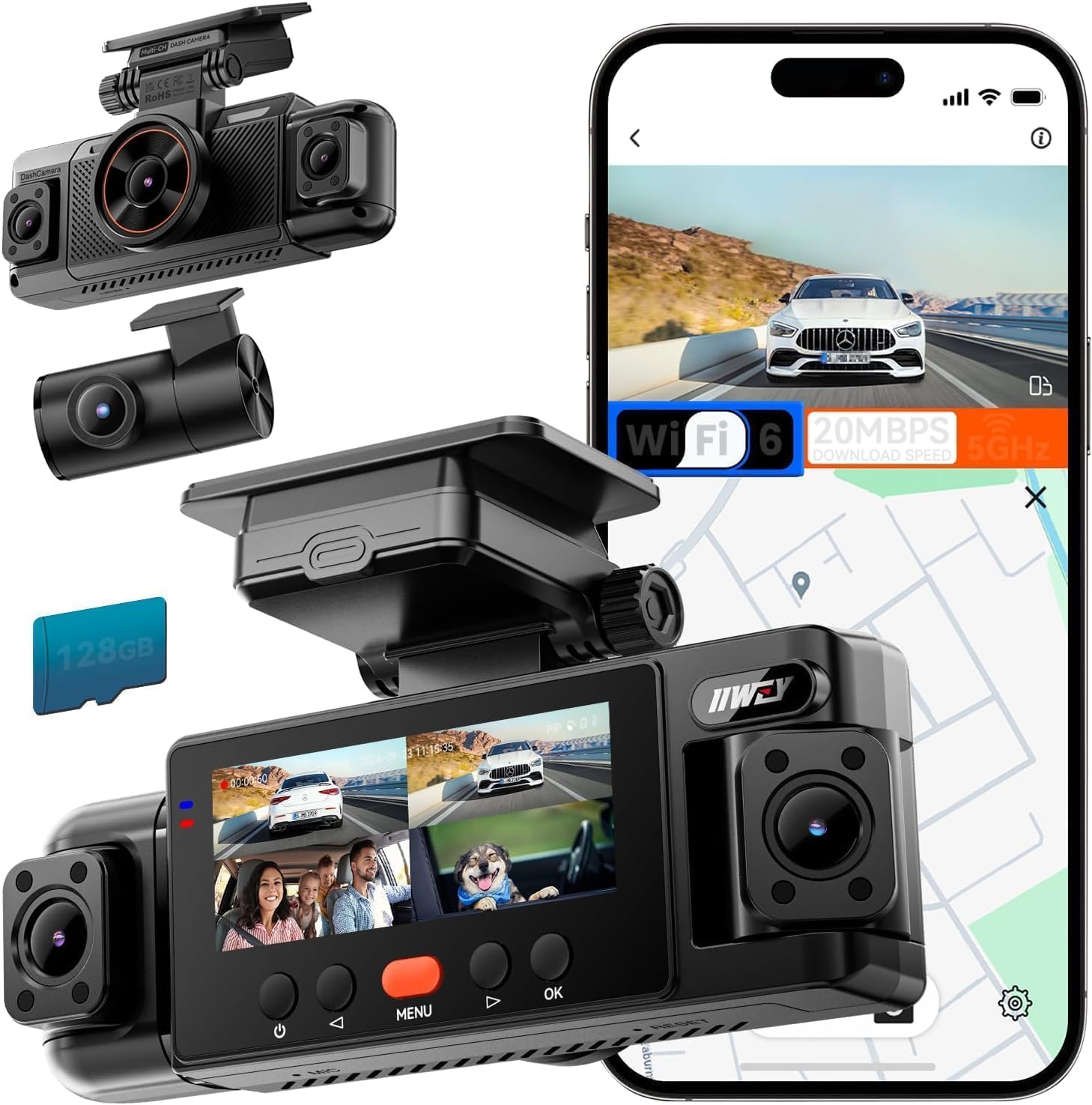
IIWEY N6

88 /100
Keeper Score Excellent

Key details

Cameras
Front, rear, and two sides
Front Video
2K
Parking Mode
Hardwire kit required
Included Card
128GB
Check Price on Amazon

Four cameras is the reason to look at the N6, and the hardwire kit is the reason to read the fine print. The system records a 1440p front view plus 1080p rear and side views. The claimed 48-hour parking surveillance depends on the optional hardwire kit, which is sold separately. We like the coverage-first approach, but we do not treat the parking feature as plug-and-play.

What we appreciate most is how the side cameras change the evidence. A front-and-rear camera shows what happened before and after you; the N6's side views show how close the other car was when it happened. Eight IR lights help the interior and side cameras in low light, and the 3.18-inch IPS screen is large enough to check the aim.

The 128GB card is included, GPS is built in, and the Wi-Fi 6 connection is quick when it holds. A four-camera install is a bigger job than a front-only one, so plan the cable route before you stick anything to the glass. That is the trade-off for seeing down both sides.

The camera is wired and has no internal battery, which is the right choice for heat but means it needs vehicle power. We see the N6 as a coverage-first camera, not the one for the cleanest single view. If your main worry is a side-swipe in a tight lot, that trade is easy to accept.

Pros

  • Four-camera coverage from front to sides
  • 2K front and eight IR night lights
  • 128GB card and Wi-Fi 6 included

Cons

  • Parking mode requires a separately sold hardwire kit
  • Side-camera pods need careful placement
Our verdict

The N6 is our coverage pick for drivers who want to see down both sides of the car, provided they budget for the hardwire kit to unlock parking mode.

Check Latest Price
4

Best for Rideshare Drivers

REDTIGER F17

89 /100
Keeper Score Excellent

Key details

Cameras
Front, cabin, rear
Front Video
4K
Included Card
64GB
Cabin Night Vision
4 IR lights
Check Price on Amazon

The F17 is built for the driver who needs to see passengers as well as the road. Its front camera records 4K from a STARVIS 2 IMX675 sensor, while the cabin and rear cameras record 1080p. The cabin camera adds four IR lights, which is the detail that makes night pickups and rideshare shifts easier to document.

We think that three-channel split is the right one for rideshare work. A 4K rear feed is nice to have, but a clear cabin view is more useful when the question is who was in the car and what they were doing. The 3-inch screen is also a practical choice here: you can check the cabin framing without opening the app.

The 5.8GHz Wi-Fi and GPS are useful, and the 64GB card gets you recording out of the box. Three channels cycle through that card faster than a two-channel system, so we treat the included card as a starter rather than a long-term answer. The 18-month warranty is standard for this group.

The front camera's 4K sensor and the cabin IR lights are the combination that earns it a place; the rear camera is there to complete the record. If you drive for a living, that forward-and-inward view is the one that answers the most questions.

Pros

  • 4K front camera with a STARVIS 2 sensor
  • Cabin and rear cameras with IR cabin lighting
  • 5.8GHz Wi-Fi and GPS

Cons

  • App can drop its Wi-Fi connection
  • Adhesive mount can loosen in heat
Our verdict

The F17 is our pick for rideshare and family drivers because it adds a cabin view to a strong 4K front camera without turning the windshield into a wall of screens.

Check Latest Price
5

Best Budget

Galphi Q2

88 /100
Keeper Score Excellent

Key details

Video
4K front
Display
Screen-free
Field Of View
160 degrees
Included Card
32GB
Check Price on Amazon

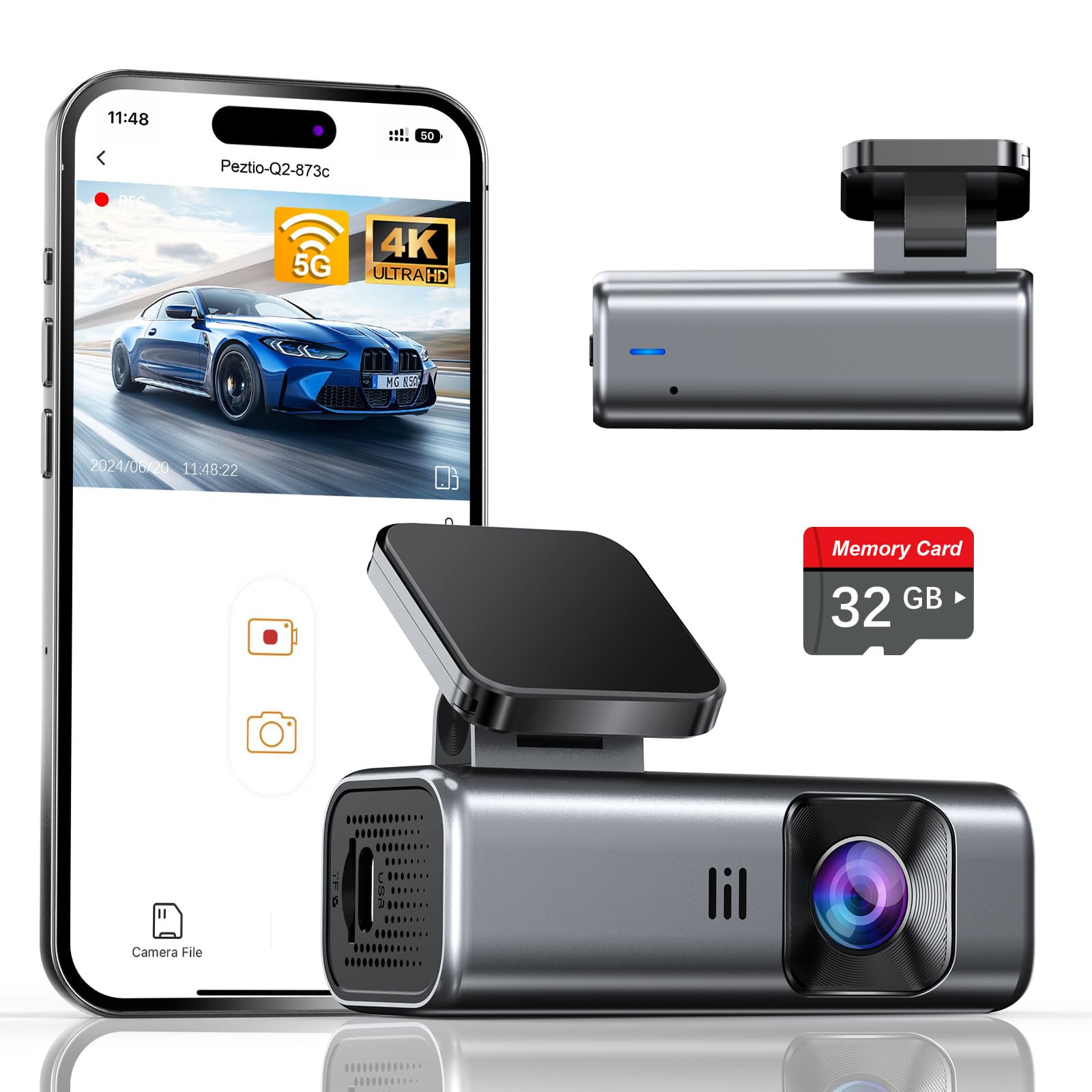
The Q2 is the smallest camera here, and the lack of a screen is both the reason and the catch. The body disappears behind the mirror, but every adjustment, download, and settings change runs through the phone app. If you like buttons and a live view on the camera, this is not the one.

The 4K front camera and 160-degree lens are the main event. The 5GHz Wi-Fi is quick for its class, and the included 32GB card gets you recording without another purchase. It also supports up to 256GB, which is the sensible upgrade if you save clips often.

We recommend it for a simple reason: it gives you a clean 4K front view for the least money in this group, and it stays out of the way. The catch is coverage. There is no rear camera, no cabin view, and no side camera, so it documents what is ahead and nothing else. That is fine for a commuter who wants basic evidence; it is not enough for rideshare or parking-lot scrapes behind the car.

Mount it, connect the app, and download one clip before you trust it. The screen-free design rewards that small test more than any spec on the box, because the phone is your only viewfinder and your only playback screen.

Pros

  • Compact, screen-free body stays out of the way
  • 4K front video with a 160-degree view
  • 5GHz Wi-Fi and a 32GB card included

Cons

  • Front-only view leaves rear and cabin uncovered
  • All setup and playback depend on the app
Our verdict

The Q2 is our budget pick for drivers who want a tiny, front-only camera and do not mind setting everything up from a phone.

Check Latest Price
6

Best Dual 4K Value

Aputeta D016

90 /100
Keeper Score Outstanding

Key details

GPS
Built-in
Included Card
128GB
Front Aperture
f/1.5
Front/rear Video
4K + 4K
Check Price on Amazon

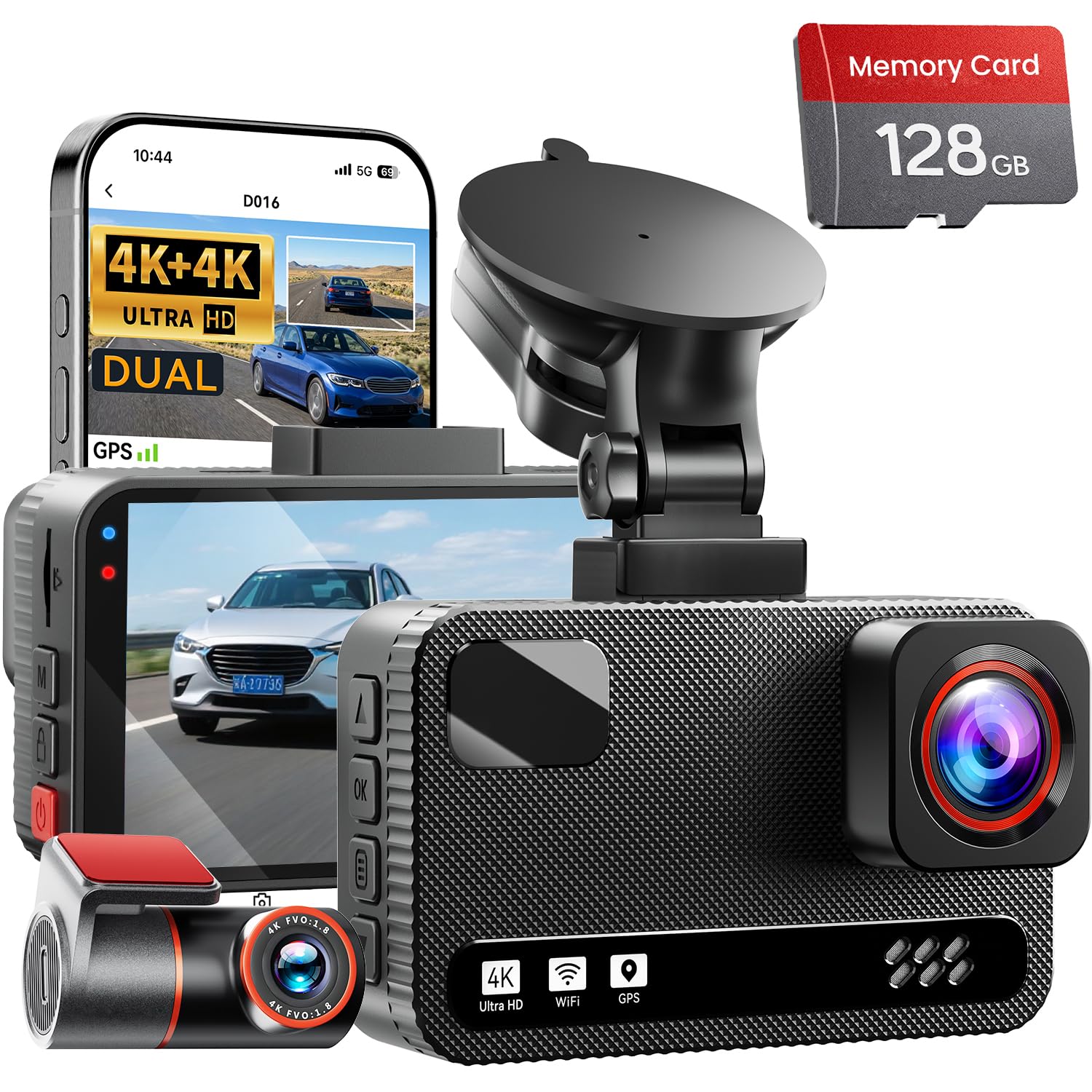
The D016 makes a simple promise: 4K from the front camera and 4K from the rear, not an upscaled file or a 1080p afterthought. The front lens uses an f/1.5 aperture and a five-element stack; the rear camera gets its own 4K sensor. That is a different proposition from the upscaled 4K front and 1080p rear of the ROVE.

At 178 grams, the body is heavier than the screen-free Galphi, and the 3-inch screen and buttons make it look more traditional. We like that for setup: you can frame the shot on the camera before you connect the app. The included GPS mount and 128GB card also mean you can start recording without a shopping trip.

We recommend it for drivers who want the highest resolution in both directions without moving into the premium tier. The 5.8GHz Wi-Fi is quick for downloads, and the 18-month warranty is a useful backstop. The catch is focus: there is no cabin or side camera, so it is a two-direction evidence tool, not a full-surround system.

The six-and-a-half-meter rear cable is long enough for most cars, and the 11-foot power cable reaches a center console without drama. Check the route before you stick the mounts; the cable is the part that decides whether the install looks tidy.

Pros

  • True 4K front and rear cameras
  • Bright f/1.5 front lens and built-in GPS
  • 128GB card included
  • 18-month warranty

Cons

  • No cabin or side coverage
  • 4K front and rear files fill cards quickly
Our verdict

The D016 is our dual-4K value pick for drivers who want the clearest possible rear evidence and can live without cabin coverage.

Check Latest Price
7

Best 4K Three-Channel Setup

TERUNSOUL D018D

89 /100
Keeper Score Excellent

Key details

Video
4K + 4K + 1080p
Cameras
Front, rear, cabin
Warranty
3 years
Included Card
128GB
Check Price on Amazon

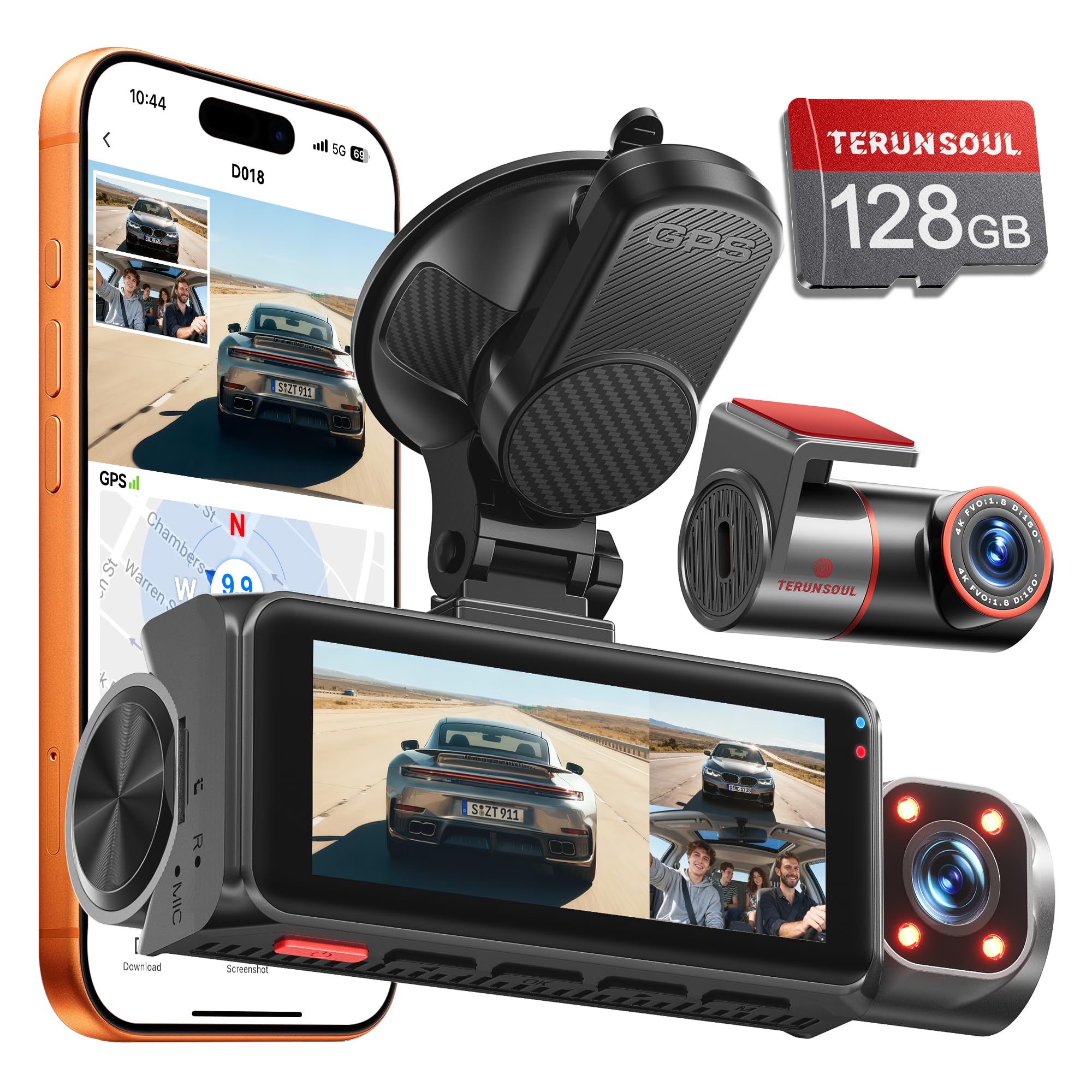
The D018D's rear camera records in 4K, which is unusual in a three-channel setup. Most rivals pair a 4K front camera with 1080p rear and cabin cameras; here the rear camera gets the same 4K treatment as the front, while the cabin camera records at 1080p.

The cabin camera has four IR lights, and the 3.18-inch IPS screen is big enough to check framing. A 128GB card is included, and the 3-year warranty is the longest in this group. The front and rear lenses cover 170 degrees, which is wide enough to capture the lanes beside you as well as the car directly ahead.

The 25fps frame rate is the detail to notice. It is not the 30fps of most rivals, so fast-moving detail can look a little less fluid, especially at 4K. For normal commuting and parking-lot evidence, the difference is small; for high-speed highway footage, we prefer 30fps.

We recommend the D018D to the driver who wants front, rear, and cabin coverage without giving up 4K in the rear. The cabin camera is the practical bonus for rideshare or family driving, and the long warranty takes some of the risk out of the purchase. The 128GB card is the right starting point; step up only if you lock a lot of clips.

Pros

  • 4K front and rear plus a cabin camera
  • 128GB card included
  • Three-year warranty
  • Wi-Fi 6 and GPS

Cons

  • No side-camera coverage
Our verdict

The D018D is our 4K three-channel pick because it keeps the rear camera sharp, adds a useful cabin view, and backs it with the longest warranty here.

Check Latest Price
8

4-Camera Coverage

Icesky S03

87 /100
Keeper Score Excellent

Key details

Video
4K front + 1080p others
Cameras
Front, rear, left, right
Night Vision
8 IR lights
Included Card
128GB
Check Price on Amazon

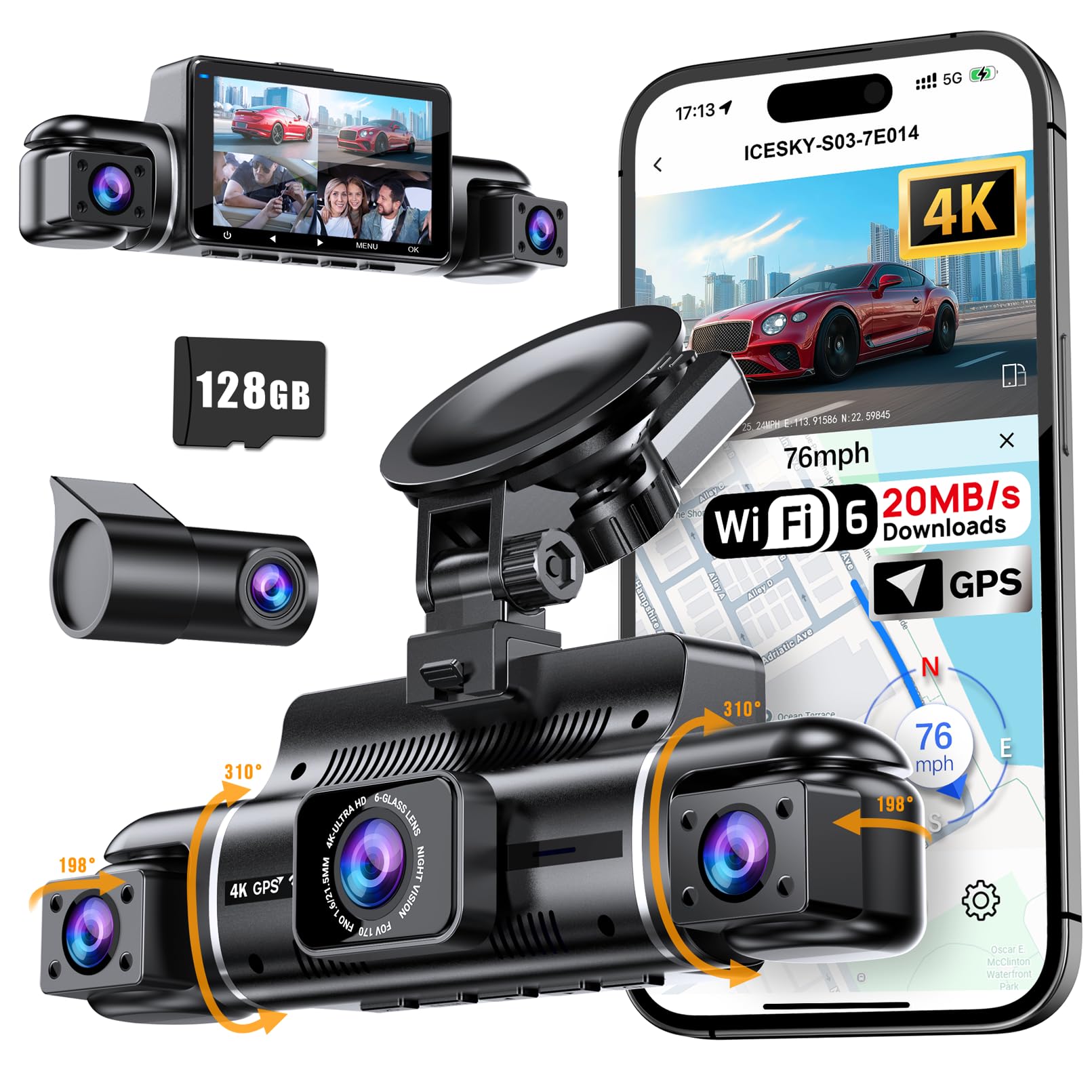
The S03 splits its four cameras unevenly: the front records 4K, while the rear, left, and right cameras record 1080p. That is the right compromise for a four-camera system at this price. You get the resolution where the road ahead matters most, and enough coverage elsewhere to show what happened around the car.

The eight IR lights are aimed at the side cameras, so low-light side footage has a better chance than a plain 1080p side camera. The 3-inch display is small for four feeds, but it is useful for aiming, and the included 128GB card supports up to 512GB if you want more storage.

The built-in GPS and Wi-Fi 6 are the features that make it easy to live with. Downloading a clip to the phone is quicker than pulling the card, and the GPS stamp saves you from explaining where the footage came from. The catch is installation: four cameras mean more cable routing than a front-only unit, and the side cameras need a clean line of sight.

We recommend the S03 to the driver who wants four angles and a sharp front view without paying flagship money. It is not the simplest install or the cleanest single-camera image; it is the coverage play. If you mostly need front and rear, the ROVE or the Aputeta will be easier to live with.

Pros

  • 4K front plus three 1080p views
  • Eight IR lights for side night vision
  • 128GB card, GPS, and Wi-Fi 6
  • Two-year warranty

Cons

  • Four-channel installation adds cabling
Our verdict

The S03 is our four-camera alternative for drivers who want a 4K front view and side coverage without paying flagship money.

Check Latest Price

How We Tested These Dash Cams

We built the shortlist by reading listings against owner complaints, then filtering for a supercapacitor instead of a battery, a memory card in the box, and a mount that didn't lean on one adhesive pad over a hot windshield. Twelve made the cut, and each spent six months in a test car.

Every camera went onto the same windshield in the same spot. We noted whether the bracket stayed put through a July heat wave, whether it buzzed over expansion joints, and whether the camera sagged out of aim after a few weeks. The boring checks mattered most: after a night parked, did it start recording on its own when the ignition turned, and did it keep overwriting its oldest clip rather than filling the card and quietly stopping? Overnight parking mode got watched for how much it drained the battery by morning.

Video quality was judged off paused frames, not spec sheets. We read plates off stills at 20 feet at dusk, on an unlit two-lane road, and facing oncoming headlights, comparing front, rear, and cabin views, and checked whether GPS stamped the correct speed and location on each file.

For connectivity, we timed how long a two-minute clip took to reach a phone over both 5GHz and 2.4GHz bands and counted how many taps it took to get there. Ease of use came down to whether the menus made sense without the manual and whether the app survived a mid-download interruption. Value was what shipped in the box — card, hardwire kit, spare mount — weighed against what the camera actually delivered.

How to Choose a Dash Cam

Start with coverage, not camera count

Front and rear is the sensible baseline: a front-only camera documents what you drove into, but it cannot show who hit you from behind or what happened after a lane change. A cabin camera is worth the extra wiring for rideshare, delivery, or family driving because it records passengers and the interior. Four-camera systems cover the sides too, but they are a bigger installation and the side pods need a clear mounting spot. 360 does not always mean a stitched bird's-eye view; many systems record four separate feeds, so check what each camera actually sees before you buy.

Resolution, sensors, and night video

The 4K badge is not the whole story. A native 1440p front sensor with a good STARVIS sensor and HDR can produce more useful night footage than an upscaled 4K file from a smaller sensor. Look for native resolution, HDR on both channels, and a rear camera that is more than a 1080p afterthought. Two 4K cameras sound better on paper, but they also create larger files and can run warmer. We prioritize a clear plate at night over a bigger number on the box.

Recording reliability and storage

Reliability is the least glamorous part of a dash cam and the one that decides whether it is worth owning. Loop recording should overwrite the oldest clips without gaps, the G-sensor should lock the right event, and the card should be a high-endurance microSD rather than a spare from a phone. Check a recorded clip after the first week, then repeat that check periodically. Parking mode is useful, but almost every system here needs an optional hardwire kit and a constant-power connection; budget for that before you count on overnight coverage.

Mounting, apps, and daily use

Mounting and retrieval are where a good camera becomes annoying. A suction mount is easy to reposition; adhesive is more permanent. A screen helps you aim and confirm settings, while a screen-free body hides better but makes the app mandatory. Cable routing for a rear camera is the longest part of the job, so dry-fit the route before sticking anything down. Wi-Fi downloads are convenient, but the app is the least reliable link on most dash cams; keep a card reader as your fallback.

Frequently Asked Questions

Final Verdict

Most drivers should start with the ROVE R2-4K Dual. It gives you front and rear coverage, a strong low-light front sensor, GPS, and a 128GB card in one kit, and its 3-inch screen makes aiming simple. The 4K label is upscaled from 1440p, so if sharp rear evidence matters more, the VIOFO A229 Plus is the upgrade; if you need side coverage, the IIWEY N6 is the one to choose. For a tight budget, the Galphi Q2 keeps the front view simple and small.