Best Computer Desks of 2026

The wrong computer desk announces itself slowly: the monitor jiggles when you type, a drawer bottom starts to bow, and the assembly instructions leave you with three mystery bolts. The right one disappears — your screen stays still, your knees fit under the apron, and the thing you paid for still feels solid six months in. That's what I was chasing when my team and I built, loaded, and lived with 14 computer desks over the past six months, from compact writing tables to electric standing desks with memory presets and corner setups.

The desktop is the easy part; the frame, hardware, and drawer bottoms are where budget desks cut corners. What matters is how it behaves on a Tuesday afternoon: whether it wobbles when I lean on it, how long solo assembly takes, whether the drawers are stiff board or fabric bins in disguise, and if the finish holds up after coffee mugs and monitor arm. Value isn't the lowest number — it's legroom, cable control, and a height range that fits how you sit and stand. The picks below held up.

Keeper Score summarizes customer ratings and review volume. Read it alongside the product details and trade-offs. How the score works.

1

Best Overall

FEZIBO Standing Desk 48 x 24

91 /100
Keeper Score Outstanding

Key details

Desktop Size
47.2 x 23.6 inches
Height Range
28.3 to 46.5 inches
Memory Presets
3
Weight Capacity
176 lb
Check Price on Amazon

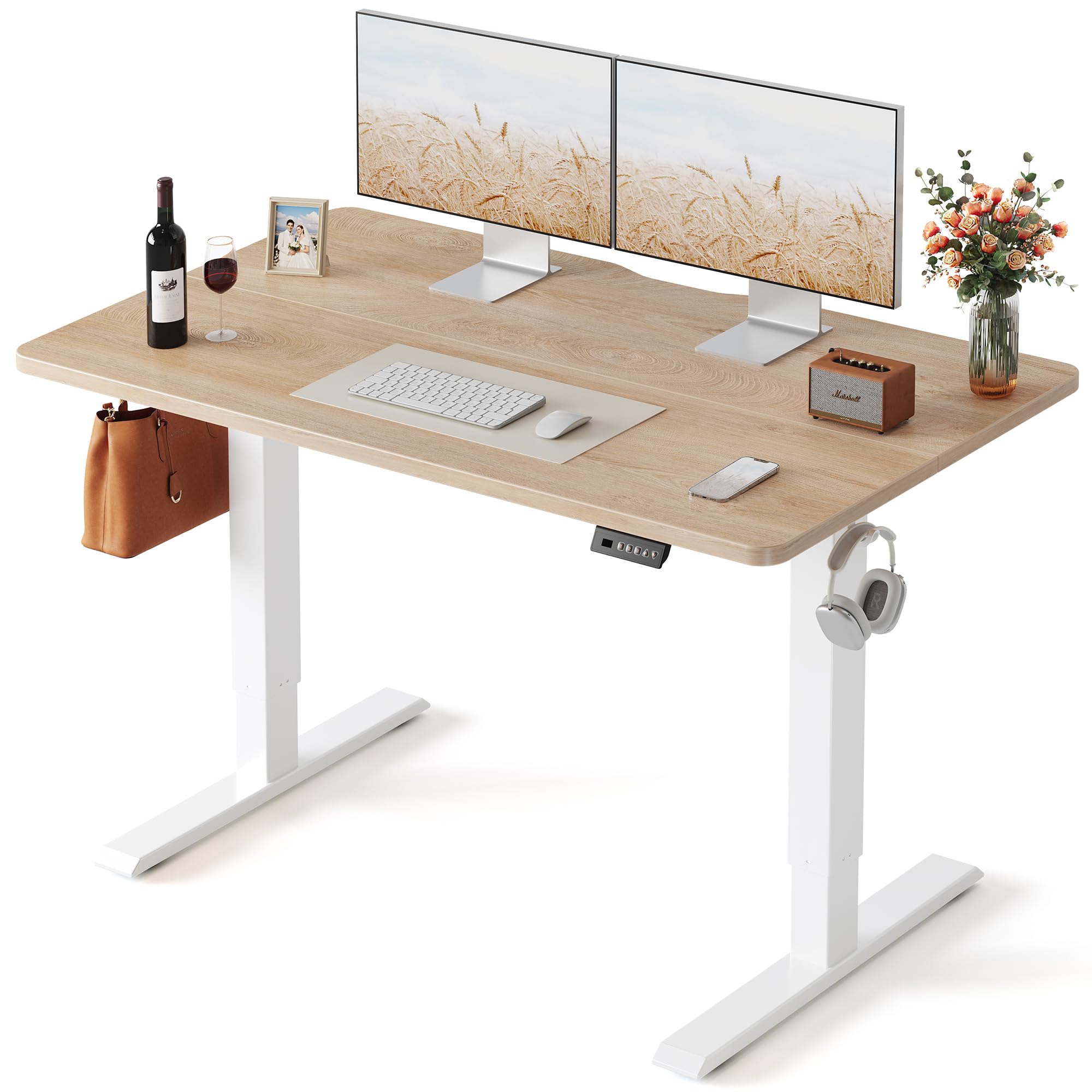
Twenty-eight and three-tenths inches is the number that makes this desk work. That's where the FEZIBO bottoms out, within a hair of a standard fixed desk, so the first surprise after assembly is that nothing about your chair, monitor, or typing position has to change. The top of the range, 46.5 inches, is high enough for most people to type standing. Plenty of sit-stand desks get bought for the standing and then live at sitting height; the ones that get used are the ones that feel ordinary when they're down.

The frame is what earns the recommendation. Fezibo rates it at 176 pounds, and the reinforced steel legs carried two monitors, a dock, and a pair of speakers through repeated raising and lowering without the desk announcing itself every time we leaned on the front edge. Three presets cover a seated height, a standing height, and a spare, and the motor is rated under 45 decibels — quiet enough that you stop noticing it after the first week.

There's 23.6 inches of depth here, which is the spec we'd point at first if you use a monitor arm or a display with a deep stand. It's a full four inches more than the budget desks in this group, and it changes how far back you can push the screen before your keyboard runs out of room. The top is FSC-certified wood over engineered board and wipes clean with a damp cloth.

What it doesn't do is store anything. There's a headphone hook and that's the lot, so if shelves and drawers are part of your plan, the L-shaped options below handle that better. For a single home-office desk that has to work seated all morning and standing after lunch, this is the one we'd buy.

Pros

  • Sits at normal desk height when lowered
  • Three presets store seated and standing heights
  • 176-pound frame stays steady while raised
  • Motor rated under 45 dB

Cons

  • Two-piece top leaves a visible centre seam
  • No storage beyond a headphone hook
Our verdict

The one we recommend by default: it sits at a normal desk height, rises to 46.5 inches, and carries a two-monitor load without a wobble.
Check Latest Price
2

Best Budget

VASAGLE 47.2-Inch Computer Desk

93 /100
Keeper Score Outstanding

Key details

Frame
Steel and particleboard
Height
29.9 inches
Desktop Size
47.2 x 19.7 inches
Weight Capacity
110 lb
Check Price on Amazon

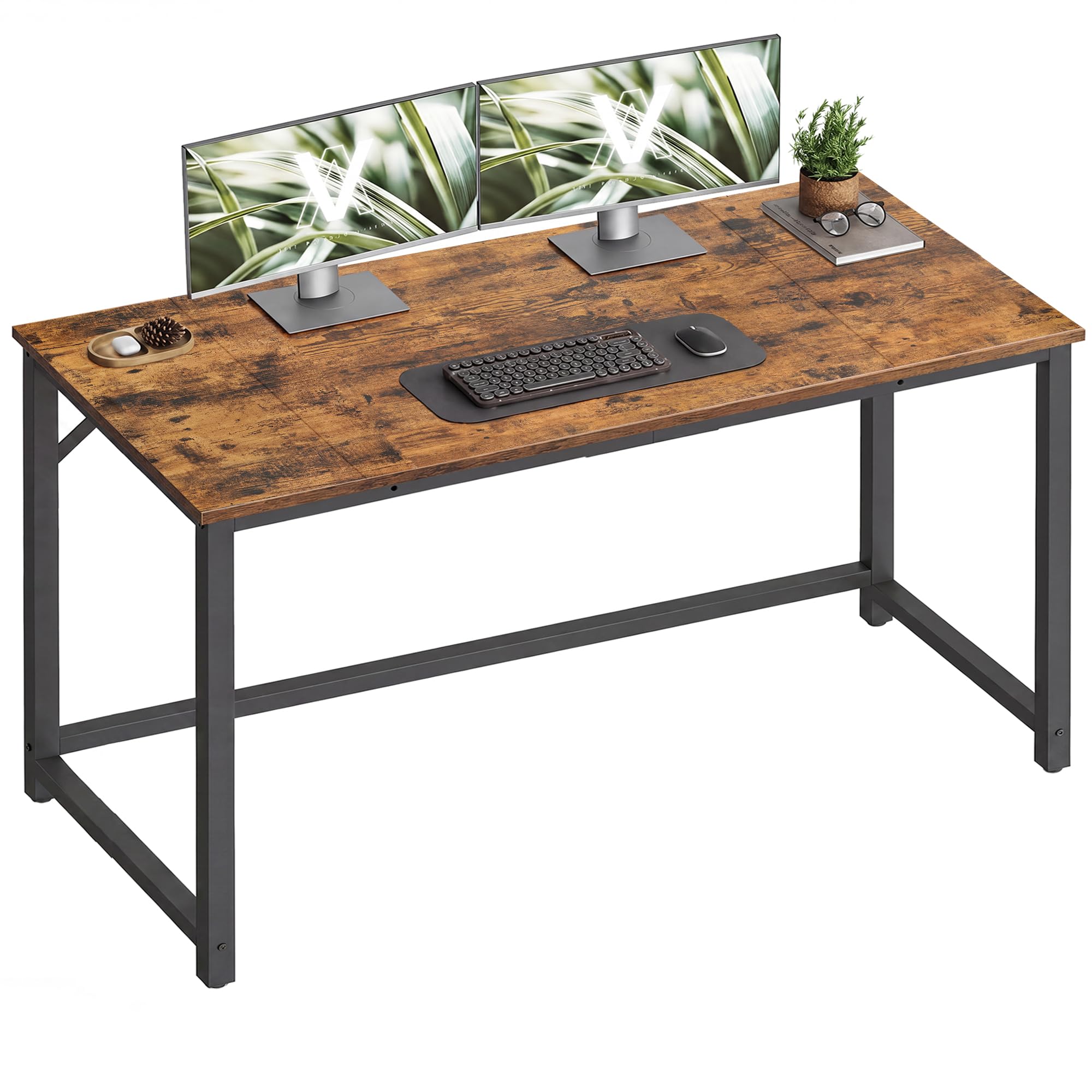
One person, a labeled hardware pack, and half an hour: this is the desk that goes together while dinner is in the oven. There's nothing clever about the VASAGLE and that's the appeal — a 47.2 by 19.7-inch top on a steel frame, four adjustable feet, and a 110-pound rating that covers a monitor, a laptop, and a lamp without argument.

The feet are the detail we appreciated most. A desk that rocks on an old floor is worse than a plain one, and being able to dial each leg is the difference between a work surface and a nuisance. The compromise is depth: 19.7 inches is comfortable for a laptop and a monitor on its own base, but push a large display back and there's not much left for a keyboard and your forearms. Check the footprint of your monitor stand before you order, or plan on an arm.

The rustic-brown laminate looks better than the build suggests, with a grain that reads as furniture rather than office furniture, and it wipes down without streaks. It's particleboard under that finish, so build it where it's going and lift rather than drag when you rearrange the room — the edges will stay tidier for longer if you do.

For a first desk, a teenager's study, or a second desk in a spare room, we'd take it without deliberating. The best thing we can say about it is that after a couple of months we stopped thinking about it entirely, which is more than we can say for desks with far more impressive spec sheets.

Pros

  • Goes together in about half an hour
  • Adjustable feet level it on uneven floors
  • 47-inch top takes a monitor and laptop

Cons

  • No cable routing or hooks included
Our verdict

Buy this if you want a plain, steady desk for a laptop and one monitor and you'd rather not think about it again.

Check Latest Price
3

Best L-Shaped

AODK 53-Inch Reversible L-Shaped Desk

92 /100
Keeper Score Outstanding

Key details

Outlets
3 AC, 2 USB
Shelves
2
Footprint
53.15 x 18.9 inches
Reversible
Yes
Check Price on Amazon

An L-shaped desk only earns its footprint if it turns the way your room does. This one's two side modules can be fitted on either side, so the return goes left or right while the whole desk spans 53.15 inches with 18.9 inches of depth on each run. We like that kind of flexibility: it means the desk fits the corner you have rather than the corner the box assumed.

Power at desk level is the feature we'd pay for. Three AC outlets and two USB ports sit in the desktop, so a monitor, a charger, and a phone cable all plug in within reach and only one cord goes to the wall. The LED strip underneath adds 10 colors, 8 brightness levels, 10 dynamic modes, and a memory function — a gaming flourish rather than a working necessity, and we're happy to treat it as one.

Storage is generous for a desk this size: two shelves, a headphone hook, a storage bag, and a CPU stand. That stand is the measurement to check. It's sized for compact towers and a full-size build won't sit on it, so if your case is on the large side, plan on the floor or a separate wheeled cradle.

Assembly is well labeled and genuinely a one-person job, with hardware bagged by step and a top an inch thick. What we'd measure before ordering is the room rather than the desk: an L needs two walls to work with, and the reversible build only helps if you have a corner to give it.

Pros

  • Reversible L fits either corner
  • Three outlets and two USB ports in the top
  • Shelves, hook, bag, and CPU stand included

Cons

  • Shallow 18.9-inch runs on both sides
Our verdict

The corner desk we point gamers and home-office setups to: it turns either way, puts power at desk level, and stores what a setup accumulates.

Check Latest Price
4

Best Wide Desktop

Huuger 55-Inch Computer Desk

90 /100
Keeper Score Outstanding

Key details

Frame
Steel and engineered wood
Height
29.5 inches
Desktop Size
54 x 19.7 inches
Tabletop Thickness
0.75 inches
Check Price on Amazon

Fifty-four inches is a lot of desk. Put the Huuger beside the 47-inch models here and the difference isn't cosmetic: two monitors side by side, a laptop open in front of them, and still a clear corner for a coffee. Depth is the trade — 19.7 inches is shallower than the sit-stand desks, so the width is doing the heavy lifting rather than the depth, and a big display on its own stand will sit closer to you than you'd like.

Underneath, it's a steel frame with reinforcement struts running under the top, and the top arrives in one piece with no centre seam. Assembly is otherwise simple, with one step that catches people: a support beam has to be driven home with the mallet in the box, and if it goes in crooked the holes downstream won't line up. Ours needed a few firm taps and a reset before everything seated.

The stained finish is the pleasant surprise. It's engineered board with a laminate, but the grain reads warm rather than printed, and it shrugs off a mouse pad, a monitor base, and a mug being moved around all day. Wipe it with a damp cloth rather than a spray bottle and it keeps that look.

As a fixed-height desk for someone who sits most of the day, this is the pick we'd make first when the setup has outgrown a 47-inch top. If you want to stand up halfway through the afternoon, the FEZIBO trades several inches of width for a motor and four more inches of depth, and that's the better trade for most people.

Pros

  • 54 inches of clear desktop width
  • Steel frame with under-top reinforcement
  • One-piece top, no centre seam

Cons

  • Top edges chip with daily use
Our verdict

For a fixed-height office where surface area beats movement, this is the desk we'd choose: 54 inches, one solid top, and a steel frame.

Check Latest Price
5

Best for Shared Workspaces

ErGear Electric Standing Desk 48 x 24

91 /100
Keeper Score Outstanding

Key details

Desktop Size
47.2 x 23.6 inches
Height Range
28.35 to 46.46 inches
Memory Presets
4
Weight Capacity
176 lb
Check Price on Amazon

The ErGear travels from 28.35 to 46.46 inches on alloy steel lifting columns and a 176-pound frame, under a 47.2 by 23.6-inch top. The depth is the number that matters most here: 23.6 inches is enough for a monitor arm or a display with a deep stand, which the shallower budget desks in this group can't manage without pushing the keyboard off the front edge.

Four memory presets sit on the control panel, one more than most of the sit-stand desks here. For one person that's a spare; for two it means each of you stores a seated and a standing height and switches with a button. Two cable access holes and a pair of storage hooks are built in, and the top uses low-VOC materials — a quiet advantage in a small room with the door shut.

Against the FEZIBO these two are close on height and capacity, and we'd choose between them on two things: the ErGear has the extra preset and the tidier cable route, while the FEZIBO asks less of your budget. Assembly is listed for two people and we'd agree with the listing — the frame and the top are awkward to line up single-handed, and the moment you get one corner aligned another lifts.

What we watched for over a few weeks was how it felt at full height, because a standing desk lives or dies there. Ours settled quickly and stayed settled through daily raising and lowering. The one thing it doesn't do is store anything, so if a printer or a filing tray has to live on the desk, the L-shapes cover that better.

Pros

  • Four presets suit two shared users
  • 24-inch depth takes a monitor arm
  • Cable holes and hooks built in

Cons

  • No storage beyond a pair of hooks
Our verdict

The standing desk to buy when two people share it: four presets, a 176-pound frame, and a 24-inch top that takes a monitor arm.

Check Latest Price
6

Best for Small Rooms

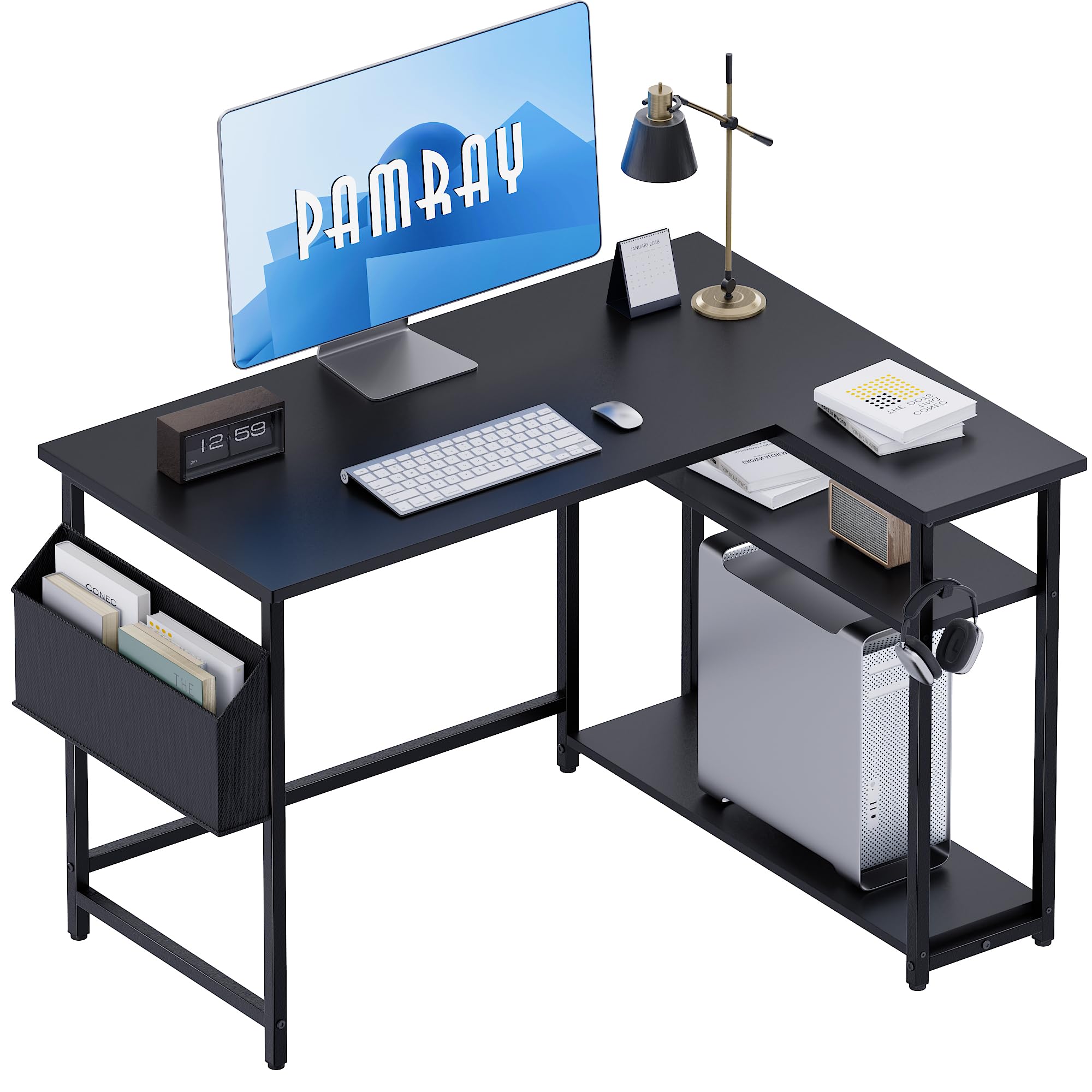
Pamray 40-Inch L-Shaped Desk

91 /100
Keeper Score Outstanding

Key details

Height
29.2 inches
Shelves
2 adjustable
Footprint
39.4 x 27.5 inches
Weight Capacity
150 lb
Check Price on Amazon

Corners are where small rooms hide their desk space. This is the smallest L in this group that still takes two monitors: 39.4 inches along the wall, with a return that runs 27.5 inches deep. That depth is the part that matters — you get a real working surface on the return rather than a shelf with pretensions.

The side shelf reverses, and the two shelves inside it adjust in height, so a printer, a stack of books, or a plant can all find a home. Six adjustable feet is two more than most desks here, and on a floor that slopes you'll be glad of every one of them. The top is FSC-certified wood, which is a nicer answer than the bare laminate on some budget desks.

It's rated to 150 pounds on a metal frame with X-supports on the sides. Assembly comes with a QR-code video, and the shelves are the part to get right — fit them to the side you want before you tighten anything, because moving them afterwards means taking half the desk apart. Budget a bit more than an hour if you're doing it alone.

Where it earns its place is a bedroom, a dorm, or the awkward corner of a living room where a 55-inch desk simply won't go. It's the desk we'd hand a student with a laptop, a second screen, and no floor space to spare — and the one we'd steer away from anyone whose setup keeps growing.

Pros

  • 39-inch L tucks into tight corners
  • Shelves reverse and adjust in height
  • Six adjustable feet on uneven floors

Cons

  • Long run too short for two wide monitors
Our verdict

The smallest L here that still takes two monitors, with shelves that swap sides and enough depth to actually work on.

Check Latest Price
7

PC Showcases

AODK 59-Inch Gaming Desk with PC Stand

91 /100
Keeper Score Outstanding

Key details

Drawers
3 fabric
Lighting
RGB LED strip
Reversible
Yes
Desktop Size
59.44 x 19.69 inches
Check Price on Amazon

If your PC has a glass side panel, hiding it under a desk is a waste, and this is the desk built around that instinct. An elevated stand lifts a compact tower up beside the monitor shelf, an RGB strip runs underneath, and a side shelf with an overhead board gives you somewhere to put the things that normally line up along the front edge of a desk.

The three drawers are the practical surprise. They're soft-sided boxes with wooden fronts rather than solid joinery, and we think that's the right call for what they hold — controllers, cables, a headset, the general debris of a desk — without adding a filing cabinet's worth of weight to the frame. Don't expect to fill them with books or binders.

The stand is the measurement that decides it. It's sized for compact towers, a mid-tower case is a squeeze, and a full-size build won't go at all. If your case is a full tower, plan on the floor and buy this for the geometry and the workspace rather than the showcase.

The desk is 59.44 inches wide and 19.69 inches deep, reversible left or right, and it assembles easily with labeled parts and a clear instruction set. It isn't a neutral desk — it has opinions about how a setup should look — and if you don't share them, the AODK L-shape above does a similar job with less theatre.

Pros

  • Elevated stand shows off glass-panel towers
  • Three drawers swallow cables and controllers
  • Reversible left or right assembly

Cons

  • Monitor shelf too narrow for wide bases
Our verdict

Built around showing off a glass-panel tower: an elevated stand, RGB underneath, three drawers, and 59 inches of desk. Measure your case first.

Check Latest Price
8

Bedroom Study

Lufeiya 40-Inch Desk with Drawers

90 /100
Keeper Score Outstanding

Key details

Height
29.5 inches
Drawers
2 fabric
Shelves
1
Desktop Size
39.4 x 19.7 inches
Check Price on Amazon

Most desks here are black or rustic brown, and in a small bedroom that reads heavier than it needs to. This one comes in white, 39.4 by 19.7 inches, with two drawers and an open shelf tucked under one side — the sort of desk that disappears into a room rather than dominating it. One thing the photos don't show: the drawers are soft-sided with wooden fronts, so they suit pens, notebooks, and chargers rather than anything heavy.

The shelf reverses, so the storage block can live on whichever side of the desk suits the room, and the adjustable pads under the legs take up the wobble on an uneven floor. It goes together with the included tool in about half an hour, and the result is steady under a laptop, a monitor, and a lamp.

As a workstation with a tower and two large screens, this isn't the desk. As homework, a laptop, and somewhere to put the pens, it's a neat, inexpensive answer that doesn't take over a bedroom. The 29.5-inch height lines up with a standard chair and keyboard, which matters more for a teenager than any feature on this page.

Pros

  • White finish suits bedrooms and kids' rooms
  • Two drawers and a reversible shelf
  • Assembles with the included tool

Cons

  • Light board and fittings flex under heavy loads
Our verdict

The small-space desk we'd pick when storage matters more than muscle: 40 inches wide, two drawers, and a shelf that swaps sides.

Check Latest Price

How We Tested These Desks in Real Homes

We started with the desks shoppers actually compare: fixed straight desks, corner and L-shaped models, compact tables for tight bedrooms, and electric standing desks with memory presets. We filtered by available sizes, storage, cable management, and price tier, then read through reviews for repeated complaints about assembly, wobble, and drawer quality. That left 14 desks, which we built and used for six months.

Each desk was assembled solo with a stopwatch running; we noted missing or misaligned pilot holes, unclear steps, and whether the finished frame felt tight. We loaded desktops with a monitor, laptop, stack of books, and, where there was a shelf, a printer. We typed hard, leaned on the front edge, and on standing models ran the height range repeatedly, saved memory presets, and checked for shake at the top setting. Drawer bottoms got flexed and filled with notebooks; we checked glides and whether the material was stiff board or a fabric bin.

In daily use, we worked, gamed, wrote, and supervised homework at these desks, paying attention to legroom, cable routing, reversible shelves, built-in outlets, and LED lighting. Finishes were judged in daylight and after six months of mugs, keyboards, and a monitor arm; we looked for edge banding lifting, welds, and scratches. Value came down to what was included at each price point, not the sticker alone. We moved a few between rooms to see how they held up.

How to Choose a Computer Desk

Measure the floor before the desktop

Width decides how many screens you can run side by side; depth decides whether a monitor on its own stand, or an arm, sits far enough back. The budget desks here run 19.7 inches deep, the sit-stand models 23.6, and those four inches are the difference between a keyboard with room to spare and a keyboard jammed against a monitor base. On an L-shaped desk, measure the long run rather than the total footprint: a 39-inch L gives you a 39-inch working wall, not the 60-odd inches the corner suggests. Tape the outline on the floor and stand inside it before you commit.

Fixed height or electric sit-stand

Electric desks have come down to roughly what a decent fixed desk costs, which makes the question practical rather than financial: will you actually change posture? A sit-stand desk only works if its lowest setting matches a normal desk height, around 28 inches, so it functions seated from day one. If you sit for eight hours and know you'll never raise it, put the money into width and depth instead. If two people share the desk, count the presets: three covers one person's seated and standing heights plus a spare, four covers two people properly.

What actually keeps a desk steady

Leg design and bracing matter more than the weight rating on the box. A 110-pound desk with a crossbar and adjustable feet can feel steadier than a 300-pound one with thin legs and no bracing, because the rating describes a static load, not what happens when you lean on the front edge at standing height. Look for side X-supports, an under-top beam, and feet you can dial. Top thickness helps too, and the boards here vary more than the photographs suggest: 0.67 inches on one sit-stand desk against a full inch on the L-shapes.

Storage, outlets, and what the shelves hold

Built-in power changes daily life more than any other extra: three AC outlets and two USB ports in the desktop mean one cable to the wall instead of a power strip on the floor. Shelves and drawers are worth having only if they suit what you own. Soft-sided drawers are for controllers, cables, and pens, not binders; a side shelf sized for a printer won't take a tower; an open shelf under a desk collects dust unless something specific lives there. Decide what has to be on and under the desk before a layout wins you over.

Assembly, edges, and the surface you'll live with

Most of these desks go together in half an hour to an hour with labeled parts and an included tool. The electric ones add a frame-to-top alignment step that's much easier with two people, and the L-shapes need a second pair of hands for the last flip. Build on the box or a rug, because the vulnerable part of an engineered-wood top is its edge, and the second risk is water: a sweating glass left overnight can leave a ring that doesn't come out. Keep a coaster, wipe with a damp cloth rather than a spray, and lift rather than drag.

Frequently Asked Questions

Final Verdict

The FEZIBO is the desk we'd put in most home offices, because it does the whole job: it sits at a normal height when you're tired, rises to 46.5 inches when you're not, and has the depth for a real monitor setup without asking you to rearrange the room.

Let a specific requirement pull you elsewhere. If you never stand, the Huuger's 54 inches of fixed surface buys more room for the money. If the room is a corner, the Pamray. And if two people share the desk and want their own heights saved, the ErGear's fourth preset is the deciding difference.